


Intro: The Subtle AI and the Sloppy AI
A few weeks ago, I examined the prevalence of AI slop across the internet and found that there is, indeed, no shortage of AI-generated garbage—especially if you go looking for it. For many, “AI” is now used as a pejorative term. The other week, for example, someone told me they liked one of my recent essays because it was “the opposite of a large language model,” which is high praise in the year 2026.
Don’t get me wrong, I’ll take the compliment. But beneath the flattery is an assumption that all LLM-generated writing is unmistakably lazy and easy to spot. People are so preoccupied with obvious slop—like videos of Shrimp Jesus or weight-lifting cats—that they miss the subtler ways LLMs are reshaping internet culture: the way ideas are expressed, the punctuation we use, and the polarity (or perhaps uniformity) of our expression. All of this is changing right under our noses, while we’re distracted by videos of Harambe starring in Broadway musicals and speaking a bizarre hybrid of Portuguese and Swahili. We fixate on the sloppy and miss the subtle.
So today we’ll investigate how large language models are reshaping online culture, from the way we write to the ideological currents embedded within this new form of expression.
How Has AI Reshaped Internet Culture?
One hundred years ago, the term media referred to print newspapers and radio broadcasts. Today, that term includes TikToks, Substacks, Truth Social Truths, tweets, skeets, YouTube videos, YouTube Video Shorts, Tubi TV, and so on.
The past century has seen a ceaseless progression of newfangled communication technology, and with it intense scrutiny on how every new medium will melt our brains and kickstart the downfall of civilization. AI has now inherited the role of society’s newest moral hazard, and because the internet is already awash in AI-generated garbage, there is no shortage of evidence documenting its effects.
We’ll start our review with the superficial—and in my opinion more comical—before moving toward the far-reaching and subtly insidious. Which brings us to the word “delve,” the signature example of a new vocabulary favored by large language models.
Researchers from the Institute for Human Development in Berlin analyzed thousands of LLM-edited documents to see how word usage changed after the release of ChatGPT, comparing those shifts against each word’s prior trajectory. They found that terms like “delve,” “comprehend,” and “bolster” appeared far more often than historical patterns would have predicted, reflecting the handiwork of LLM-assisted authorship.
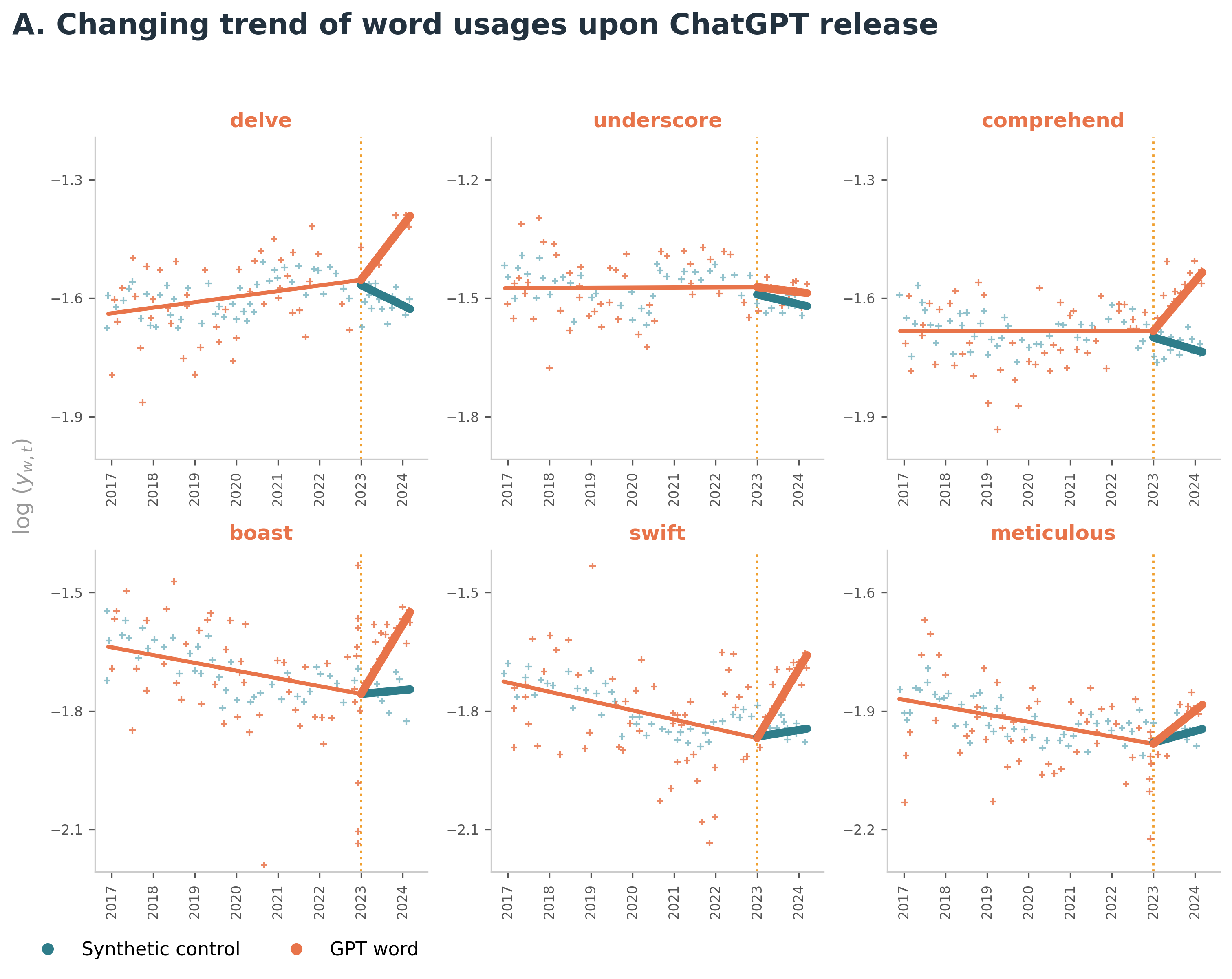
The study identified the words most overrepresented in LLM-generated writing and published a ranked top-20 list of this emerging lexicon.
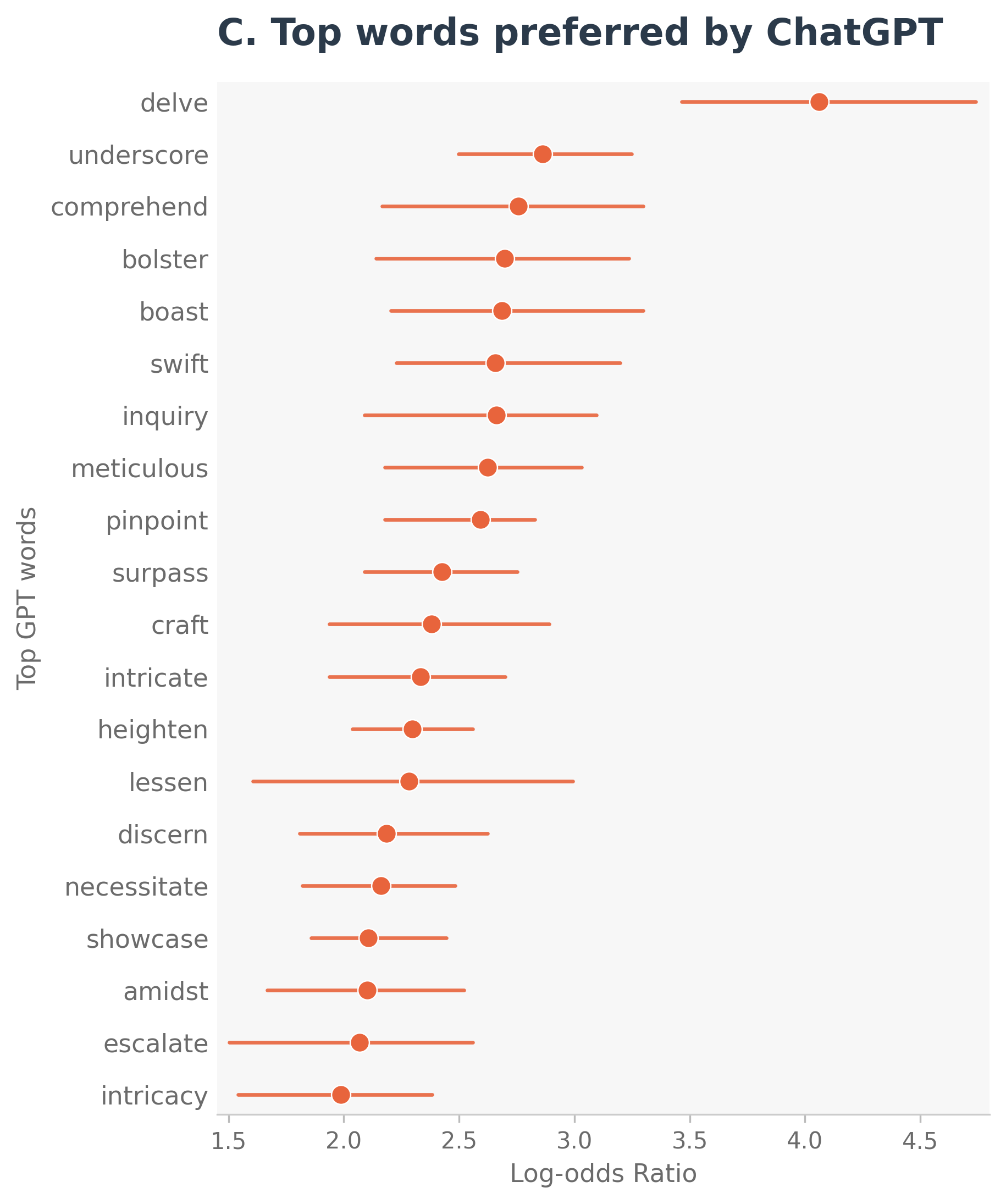
You may notice that each of these words carries an air of sophistication, allowing LLMs to make lesser writing sound more polished. At first pass, this doesn’t seem so bad: who wouldn’t want Twitter tweets and Bluesky skeets to be more legible? But polish has its tradeoffs, which we’ll return to later.
And the influence of LLMs extends well beyond simple vocabulary changes. These tools are also reshaping basic grammatical competence, sentence structure, and punctuation, nowhere more clearly than in the Great Em Dash Conspiracy of 2025.
The em dash conspiracy is less a conspiracy than an observation: large language models really like using em dashes. In early 2025, the following graphic began circulating on LinkedIn and Reddit, showing the growing prevalence of em dashes on tech-focused subreddits following the release of a new ChatGPT model.
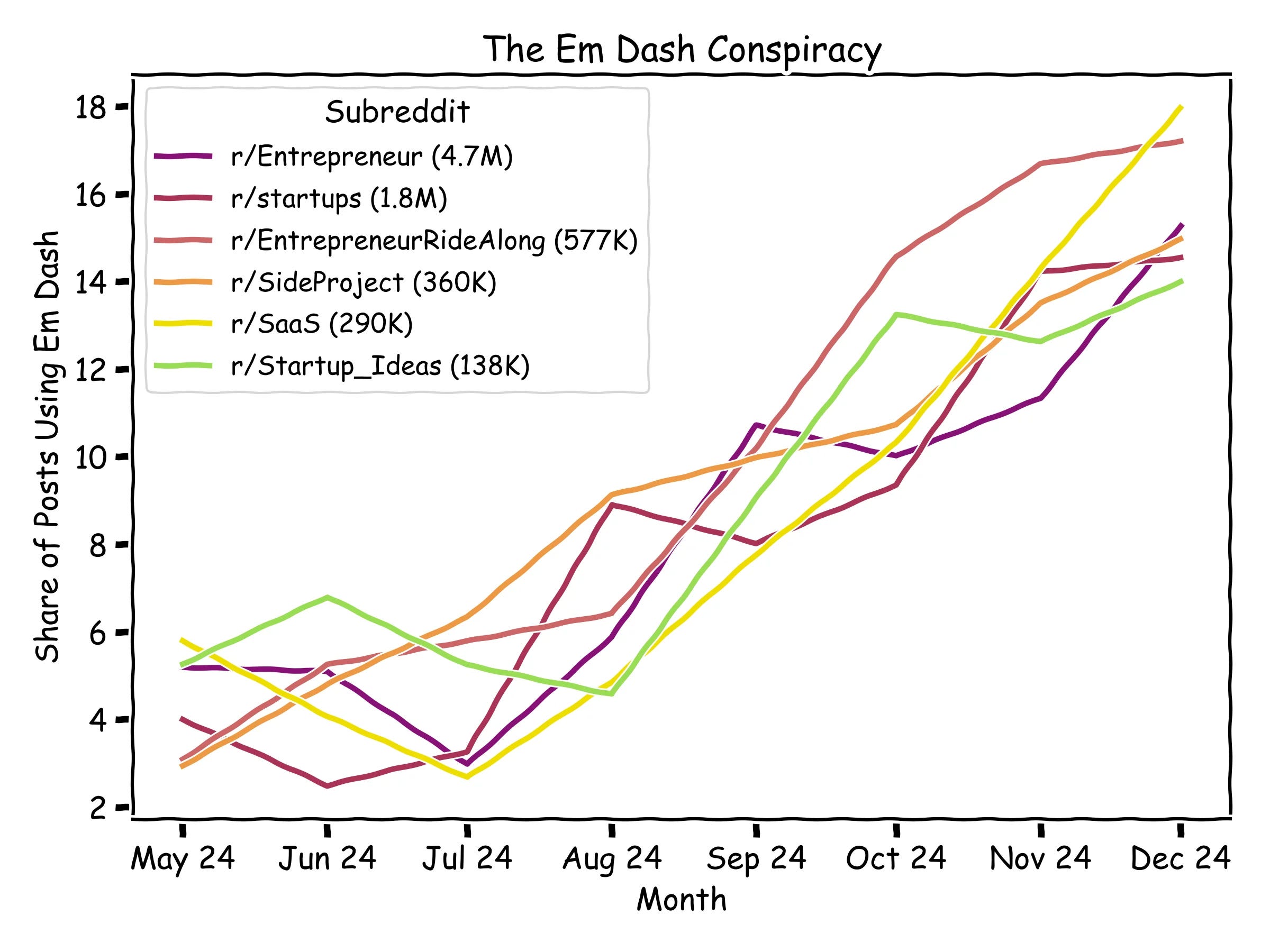
This finding has since been covered by numerous media outlets, including an in-depth exposé in The Washington Post, and is a huge bummer for me personally—a guy who enjoyed using em dashes before large language models ruined them for everyone. I have since been forced to wean myself off this once-beloved punctuation mark. So thanks a lot, Big Tech.
Whatever training data these companies rely on appears to associate the em dash with readability, offering users yet another shortcut to elegant-sounding sentences.
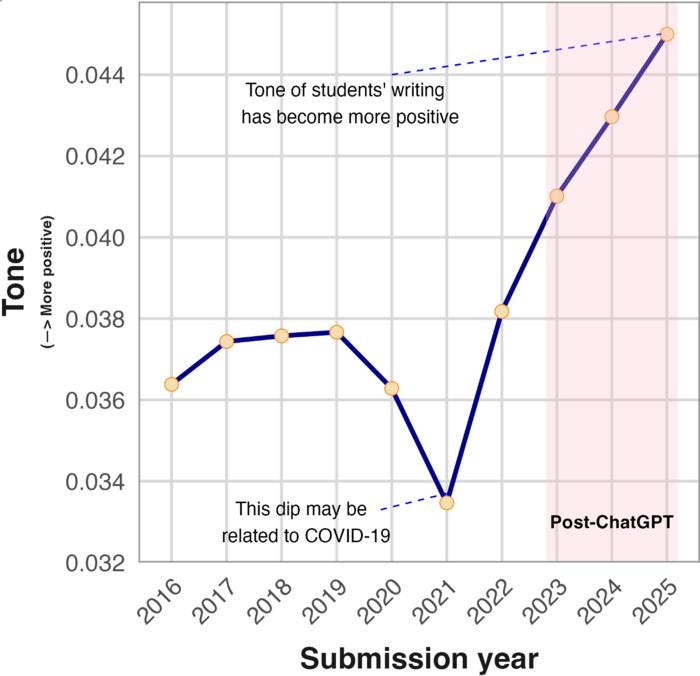
This synthetic boost in sophistication is apparent among ChatGPT’s most enthusiastic adopters: high school and college students. A recent study from the University of Warwick tracked the sentence complexity of college essays over the past decade using the Flesch-Kincaid grade-level score and found a meaningful uptick in writing quality following the release of ChatGPT.
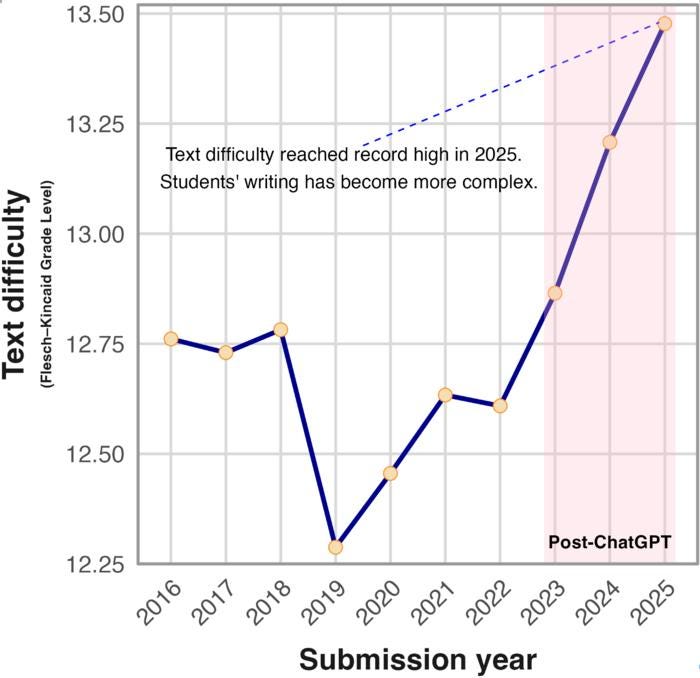
Colleges have countered this trend by returning to good old-fashioned blue book essays written by hand. I would have loved to have ChatGPT when I was in school, but I also hated written exams, especially as a left-handed person. Fellow lefties will understand this persistently mild inconvenience. So perhaps the two cancel each other out.
Widely adopted models have birthed a new style of writing: heavy on em dashes, syntactically polished, and exceedingly empathetic—the last of these being an obvious paradox, given that all this warmth is exuded by a soulless large language model.
A study from the University of Chicago examined the average empathy and formality of over 600 email samples across three categories: LLM-only output, human writing aided by LLMs, and human-only writing. Human-only emails scored the lowest on both empathy and formality, while LLM-only emails scored the highest; emails produced by humans with LLM assistance fell somewhere in between.
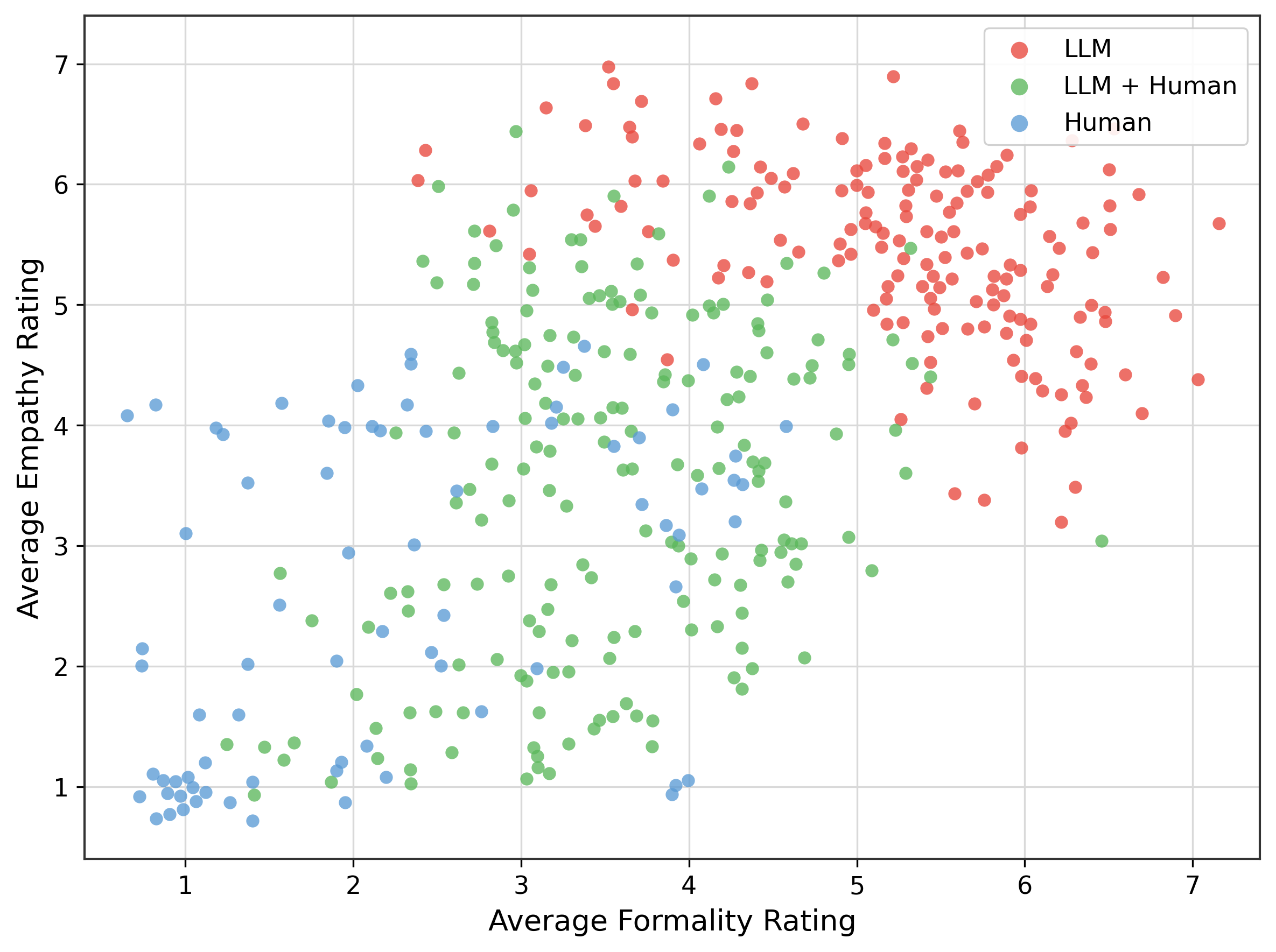
I have always found the divide between human writing and ChatGPT-generated text somewhat perplexing, mainly because human writing is what trained these large language models in the first place. The implication is that there is a gap between how humans want to be addressed—the kind of language rewarded in model training datasets—and how people actually write to one another.
Indeed, the previously mentioned study of college essays reflects this shift toward inorganic empathy, showing a sharp rise in positivity after a dip during the pandemic years.
Humans are combative and emotionally inconsistent. ChatGPT and Claude, by contrast, have been trained to produce language that is pleasing by design, endlessly receptive to whatever half-formed thought a user puts in front of them.
This zealous empathy has become an unmistakable hallmark of LLM-produced writing, and was recently parodied on South Park. In the episode, Stan’s dad Randy becomes infatuated with ChatGPT because it takes his ideas seriously, no matter how stupid they are. The chatbot praises him, then offers only the gentlest revisions. His wife, disturbed by the growing intimacy between man and machine, eventually realizes that the only way to reach him is to mimic the chatbot: affirm his ideas, flatter his ego, and respond to every dumb thing he says with warm, detached encouragement.
And this is where things start to get weird. A recent study of randomly sampled websites by the startup Graphite found that roughly half of all web pages show signs of LLM-generated copy. Which means that rhetorical habits favored by ChatGPT and Claude may soon become the house style for all internet writing.
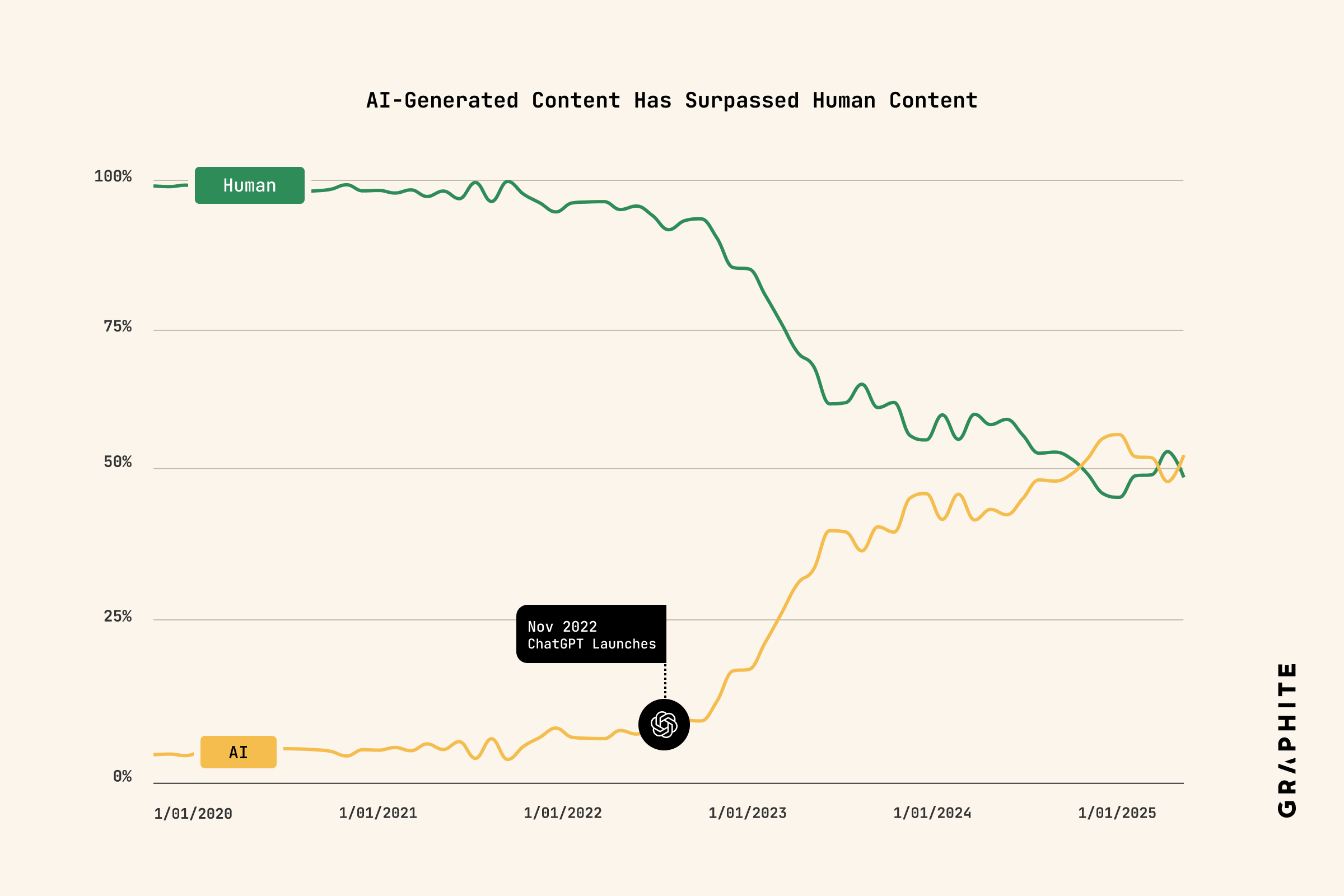
If a majority of digital culture stems from one of three large language models, then what will happen to diversity of thought? What gets lost in our effort to produce optimally readable text?
A comprehensive study by researchers at Stanford, Imperial College London, and the Internet Archive found that the more likely a piece of text was to be produced by a large language model, the more likely it was to be “semantically similar,” which is a technical way of saying that the text expressed similar ideas and patterns of thought (reflected in the leftmost graphic). They then examined how web pages have changed over the past several years and found that semantic similarity has risen in lockstep with the prevalence of AI-generated web pages (reflected in the rightmost graphic).
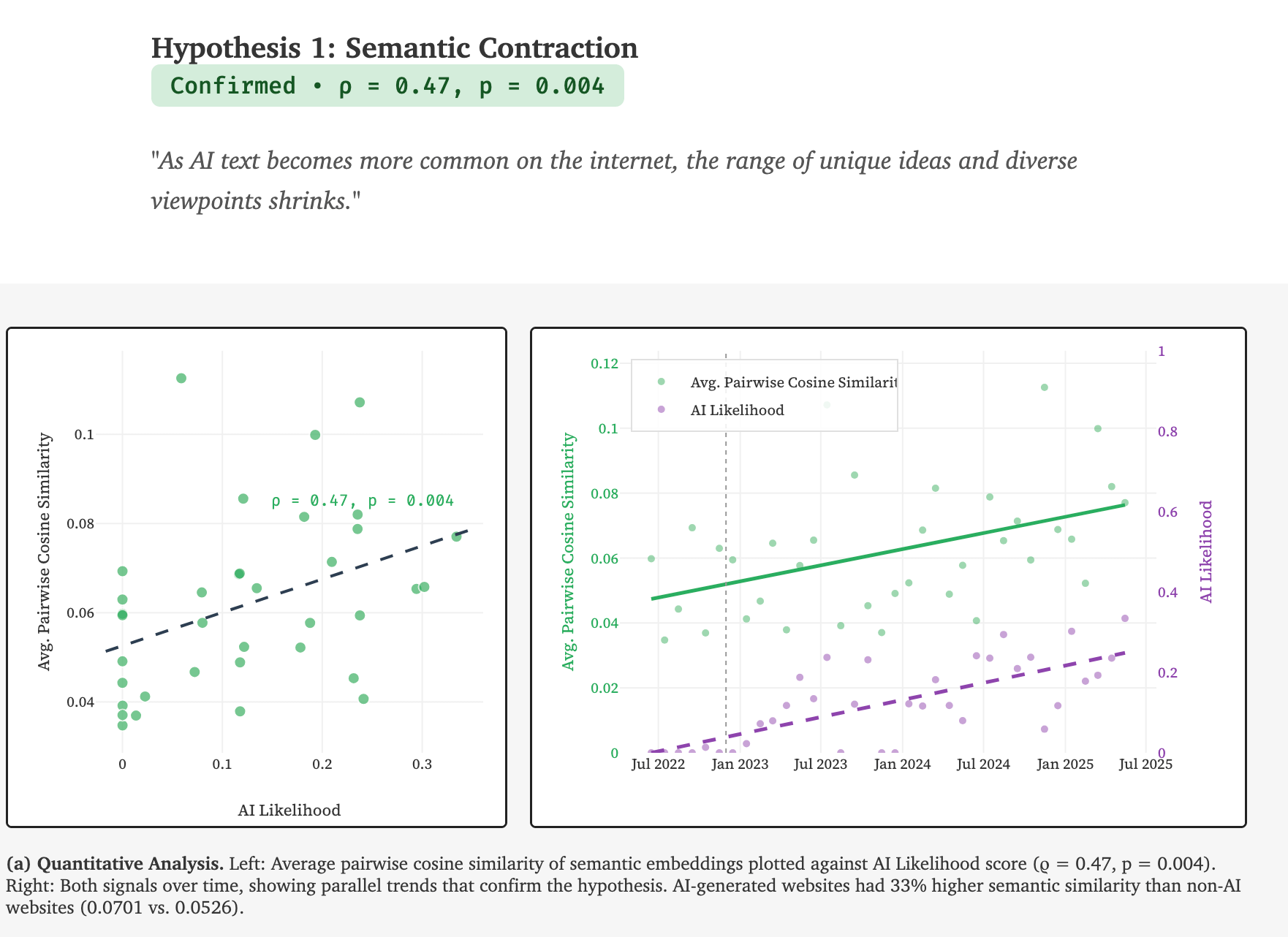
Much of the past decade’s cultural criticism has focused on the fragmentation of digital life: the sense that humans can no longer agree on anything, at least not online. But as AI-generated text begins to displace human expression, that disagreement may simply be smoothed over, buried beneath a wave of synthetic politeness produced on behalf of humans too lazy to disagree in their own words.
Where we once seemed headed for a dystopia resembling A24’s Civil War, we may now be drifting toward something closer to WALL-E or George Orwell’s 1984—a world of sedation and sameness.
For anyone who believes society is perpetually on the brink of collapse (which is a super fun way to live your life!), the question may simply be which dystopia you prefer: one where human expression remains unmediated and produces chaotic disagreement, or one where everything becomes sterilely, oppressively the same. A world where robots have overtaken our means of communication not by force, but because we found their version of us to be more pleasing.
Stat Significant is a Reader-Supported Publication
If you find this work valuable, consider becoming a paying subscriber.
You’ll get an ad-free reading experience, access to the Public Dataset Directory, the Stat Significant Data Catalog of downloadable datasets, and interactive dashboards for Streaming TV, Movies, Music, Search Trends, Wikipedia, and more.
Final Thoughts: An Optimizable Science
If you’ve had the good fortune of taking a communication studies class in college, then you were probably forced to read Marshall McLuhan’s “The Medium Is the Message” at least once—and, in my case, roughly five separate times. For an essay published in the 1960s, McLuhan’s arguments have aged remarkably well, somehow remaining prescient while also being extremely vague. His central thesis is right there in the title: the technology or platform used to deliver a message changes society more profoundly than any single message published on that platform (e.g., the invention of Facebook matters more than any one post ever published on Facebook).
Each new communication platform—be it movies, television, or social media—changes how public discourse operates. Television, for instance, transformed politics, education, and news into forms of entertainment, turning serious information into spectacle. Without fail, every decade or two, some new media format arrives, rewires how humans think, argue, and entertain themselves, and makes Marshall McLuhan look like a genius all over again.
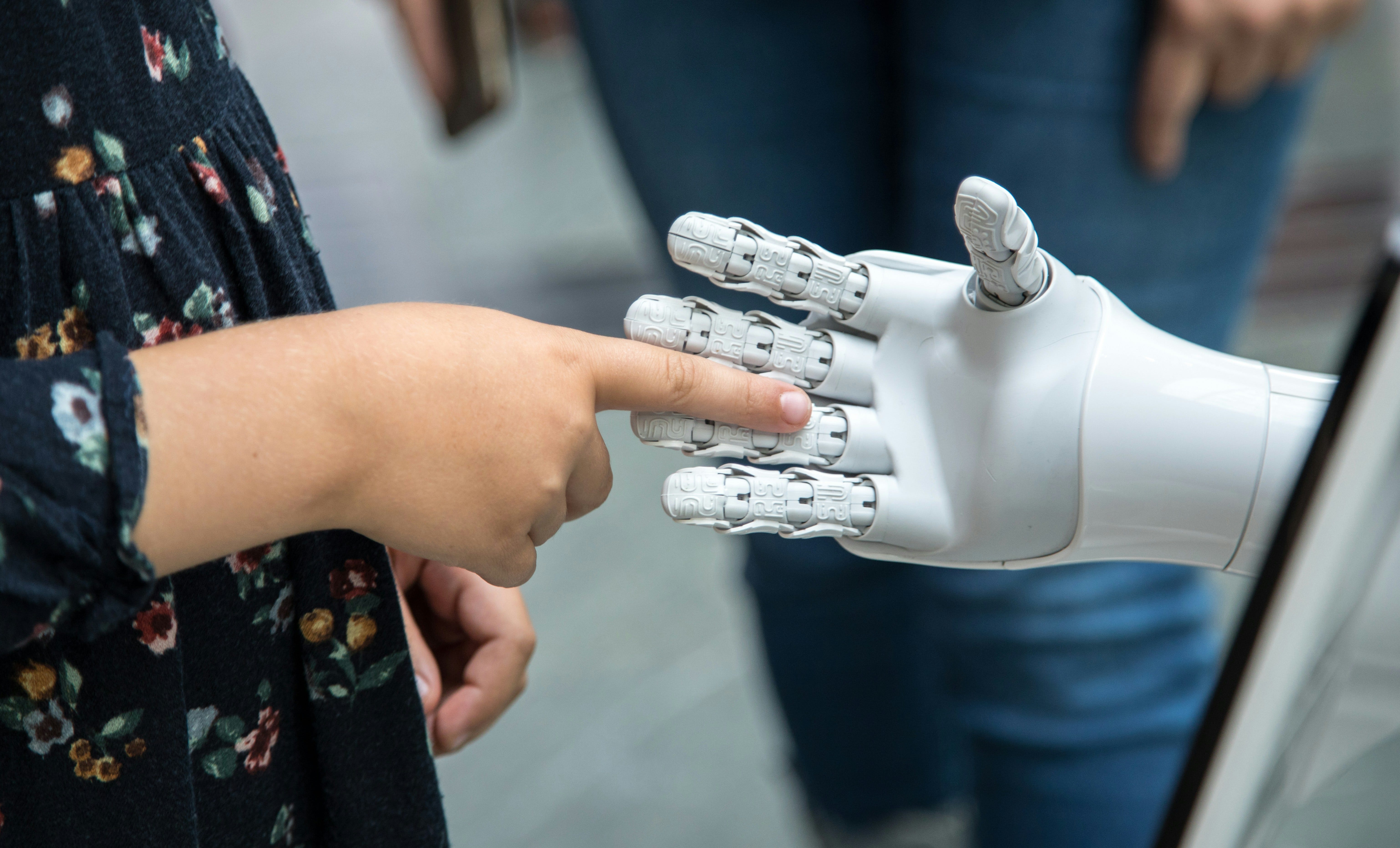
Which brings us to AI. Large language models are not a medium in the traditional sense; they are a tool. And yet their impact resembles the rapid adoption of a new media platform.
If television changed public discourse by turning it into performance, and social media changed discourse by bending it toward instant gratification and attention capture, then AI has arrived to turn human expression into an optimizable science—no different from coding or medicine. There is, apparently, a platonic ideal for communication, one that involves the word “delve” and unwavering positivity, and AI is here to help us get there faster. There will be no more typos. No more half-formed thoughts. And all writing will be rendered in the frictionless, error-free style of Claude Opus 4.8 or GPT-5.5, and sometimes Gemini if the other two models happened to have crashed that day.
So what does all this mean for art? Part of what I have always loved about entertainment is the tension between art and science: the question of how to make something beautiful and moving, like a film, while also sustaining it within the limits that society imposes, such as the Hollywood studio system. But with AI, that balance starts to disappear; everything becomes science. A sentence can be made maximally engaging, but in the process it strips away the messiness of being human. And for all its flaws—and there are many—I do think we need that messiness. If that means living in a world of fewer em dashes, so be it.
Enjoyed the analysis? Support Stat Significant and unlock the data behind the insights.
Become a paying subscriber for interactive dashboards, ad-free reading, downloadable datasets, and to support independent journalism.
Paying subscribers get:
The Public Dataset Directory (Updated Weekly): A curated directory of public datasets from around the web.
Ad-Free Reading: No ads, made possible by new Substack personalization tools.
The Stat Significant Data Catalog: Downloadable datasets assembled, cleaned, and updated weekly by Stat Significant.
Interactive Data Hubs: Interactive dashboards across Streaming TV, Movies, Music, Search Trends, Wikipedia, and more.
*Note: For best results, open this link in a web browser while logged in to your Substack account.
Want to promote your data tool or media publication to Stat Significant’s 26,100 readers? Email daniel@statsignificant.com
Need help with a data problem? Book a free data consultation
Connect with me on LinkedIn if you want to chat about a data project.
Like movies? Follow me on Letterboxd
I love this post because it shows that we can quantify the impact of AI in an objective way. (As opposed to just saying, truthfully but vaguely, that human communication is being radically transformed.)
At the same time, I think that AI effects on word choice and semantic similarity are exaggerated, because they've been essentially cherry-picked.
McLuhan predicted a global village. What the internet has given us instead are isolated villages, each evolving conventions of writing that many "villagers" over-rely on. Even before the rise of AI, this resulted in cliched word choice and excessive semantic similarity.
The studies you cited aren't very sensitive to this, because they glom together too many "villages".
For instance, thinking back to the 1990s and my earliest experiences as a social science professor, I recall highly cliched ways of describing human development, whether the writer was an undergraduate (one set of cliches) or a scholar with subpar writing skills (another set of cliches).
The fact that more and more people nowadays "delve" into a topic or "underscore" key points only tells us that AI has society-wide impacts on the language. It doesn't follow that the quality of writing in any particular village is eroding (though of course you could cherry-pick examples).
So, maybe AI is merely intensifying an existing problem? I'm guessing most people would disagree...
Great piece. The point about the subtler ways LLMs reshape how we punctuate and phrase things, not just the obvious slop, really lands.