

Intro: The Peak of Peak-Superhero
There was once a time when the single biggest thing in pop culture was a series of stories written for preteens about people dressed in form-fitting spandex. What we now recognize as peak-superhero was, at the time, touted by Marvel as “Phase Three” of its vast cinematic universe. And if one were attempting to locate the zenith of peak-superhero, that date would be April 2nd, 2019, when tickets for Avengers: Endgame went on sale.
When the presale window opened, AMC’s site crashed, causing its social media team to make a lame joke about Thanos “snapping” the website out of existence—a reference that the superhero-agnostic will simply not understand. According to moviegoing platform Atom Tickets, Endgame sold three times as many presale tickets in its first hour as Avengers: Infinity War had the year before. When the film finally premiered, the AMC in Times Square reportedly scheduled 41 opening-day showtimes, including screenings at 3:30 a.m., 4:30 a.m., and 5:30 a.m. Demand was so extreme that AMC kept 64 locations open overnight, with 17 theaters operating for 72 consecutive hours.
If you had lived your entire life loving superheroes, then this was your moment. Something that had once been niche, the province of nerds at sparsely attended Comic-Cons, had become one of the biggest events in pop culture history. Unfortunately, that moment did not last.
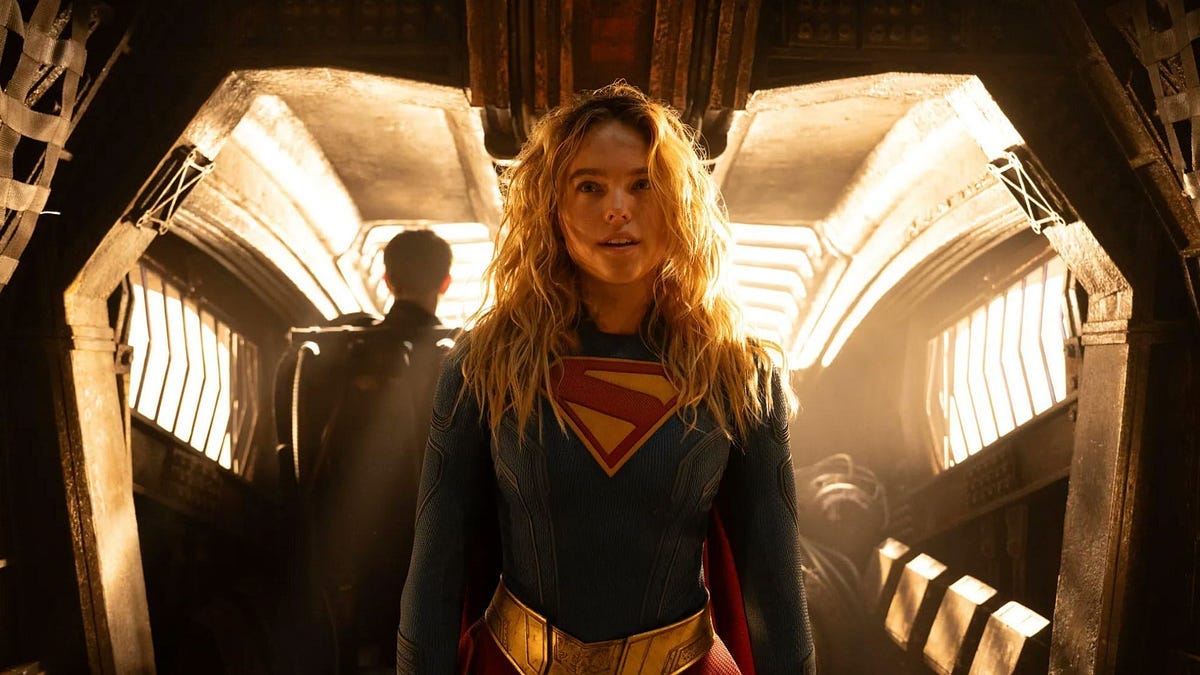
Fast forward to last weekend, a mere seven years after the premiere of Avengers: Endgame, when the newest comic-book adaptation, Supergirl, debuted to just $37 million at the U.S. box office, one of the weakest openings for a superhero movie in recent memory. And this follows a long string of underperforming titles, including The Marvels, Eternals, The Flash, Blue Beetle, and pretty much everything else released after 2020, with a handful of exceptions we’ll get to later.
Peak-superhero is over. The format is now in decline, like so many entertainment fads before it—though few pop-culture phenomena have matched the cultural heights, scale, or corporate engineering of the Marvel Cinematic Universe. Which means the genre’s fall may be especially steep.
So today, we’ll quantify the rise and fall of the superhero film, examine the forces now plaguing the format, and consider the historical precedent for once-dominant genres falling out of fashion.
Today’s newsletter is sponsored by The Stat Significant Dataset Hub
Access 265+ Curated Datasets to Elevate Your Analysis

Want the data behind the deep dives? The Stat Significant Data Hub gives you access to 265+ curated datasets across movies, music, TV, economics, and more.
New datasets are added weekly, with full archive access for Stat Significant paid subscribers. Since last week’s post, we’ve added 18 new datasets, covering everything from gold prices and trending Twitter topics to Waymo crash rates and daily Google Trends tracking.
How Superhero Movies Lost Their Power
In the mid-20th century, comic-book adaptations were considered lowbrow fare, confined mostly to janky television shows. The most prominent of these small-screen projects was the live-action Batman series, which ran from 1966 to 1968 and regularly punctuated its fight scenes with title cards shouting “BAM!” and “POW!”—or simply tilted the camera sideways to simulate Batman and Robin scaling a building. In fact, much of the show’s legacy centers on its thriftiness.
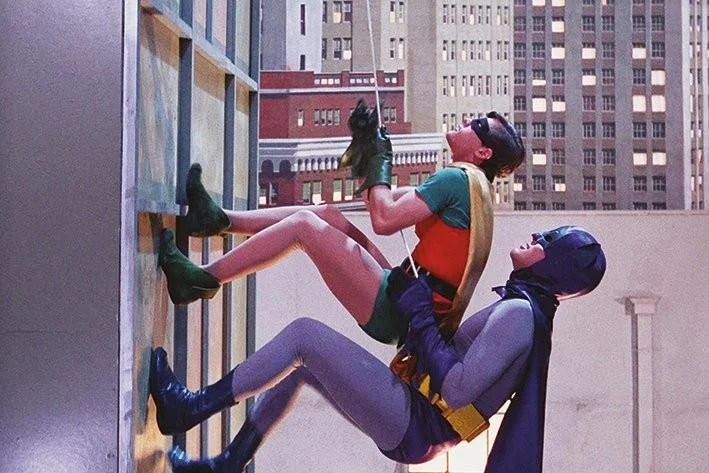
These adaptations achieved a level of camp no human being could earnestly replicate today—though that will never stop Ryan Murphy from trying his darndest.
The place of superhero stories in popular imagination changed dramatically with 1978’s Superman, starring Christopher Reeve, and again in 1989, when Tim Burton brought Batman to the big screen. Children who had grown up on Marvel and DC comics were now adults with credit cards, ready to buy tickets to see their childhood fantasies realized as blockbuster spectacle.
In the 2000s, comic-book stories increasingly took place in worlds that looked much like our own. Within a five-year span, audiences got Sam Raimi’s Spider-Man 2, Christopher Nolan’s The Dark Knight, and Robert Downey Jr. as Iron Man—three films that treated superheroes not as camp curiosities, but as vehicles for romance, crime drama, political allegory, and movie-star charisma. The success of these films, and more specifically the enormous box-office upside of their sequels, helped trigger a boom in superhero releases. At the height of this phenomenon, Hollywood was producing between four and eight comic-book adaptations a year. That is, until the pandemic.
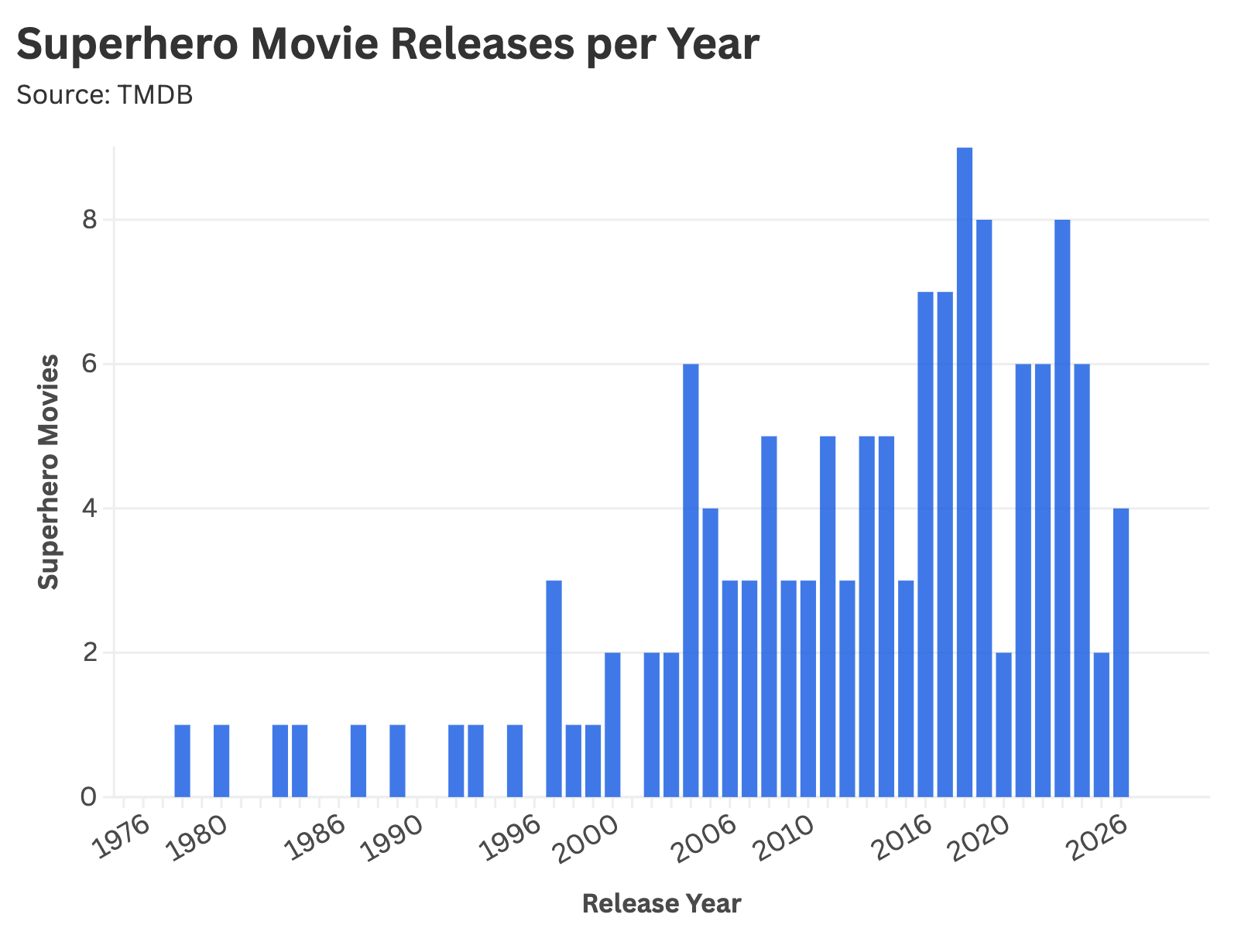
The pandemic could hardly have come at a worse time for Marvel. The studio’s seemingly conclusive Avengers: Endgame arrived a few months before March 2020, and the chaos surrounding theatrical exhibition scrambled the studio’s transition into its next phase—assuming such a plan ever existed.
Between 2015 and the start of 2020, superhero films averaged roughly a billion dollars at the global box office (per release). After the pandemic, that figure fell off precipitously.
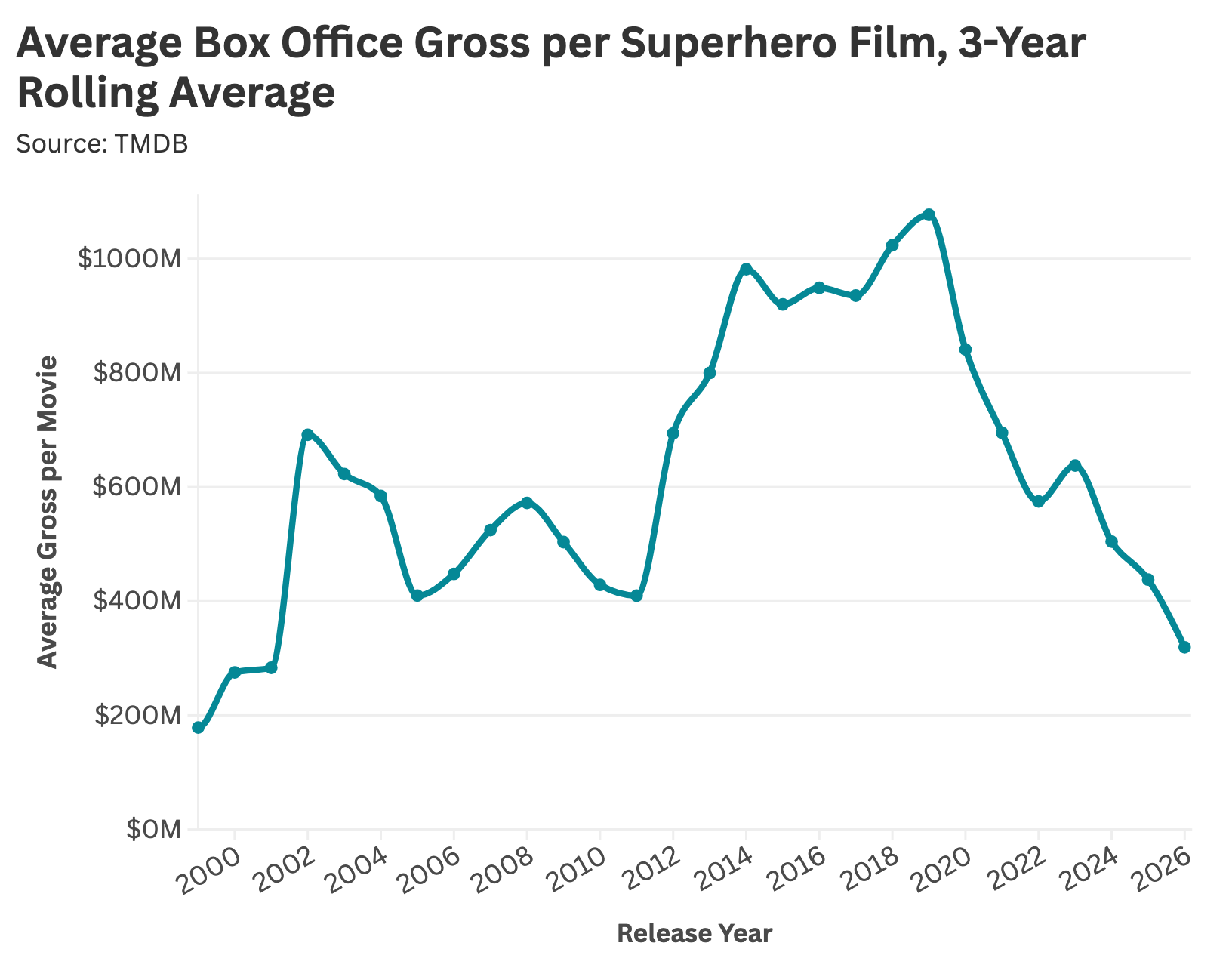
It is tempting, then, to conclude that COVID-19 made the superhero film obsolete. And to some extent, that is true. But the story is more complicated.
While the box-office value of comic-book IP declined during the pandemic years, interest in the Marvel Cinematic Universe actually peaked in 2021 and 2022, as Disney began turning comic-book stories into streaming series for Disney+. In the short term, this worked: Marvel stayed culturally relevant while theaters struggled to recover.
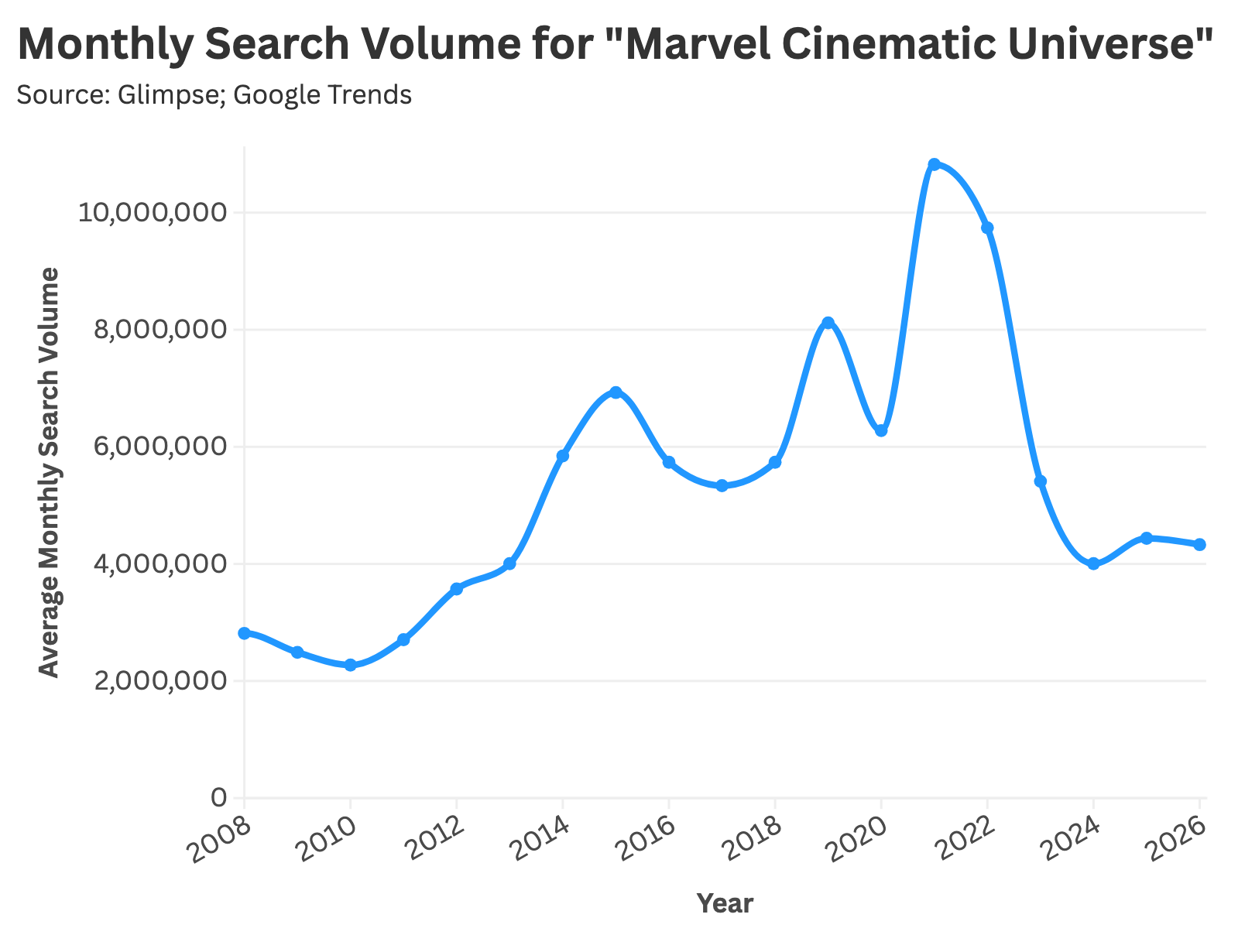
You’ll notice, however, that interest in Marvel began to fall in 2023, likely due to some combination of theatrical disappointments—such as Eternals and Shang-Chi—and the broader cheapening of the Marvel brand through the aforementioned Disney+ series, which undermined the scarcity of superhero storytelling.
And yet, comic-book movies still have one overwhelming bright spot: a single character who retains an unusually firm grasp on popular imagination—Spider-Man.
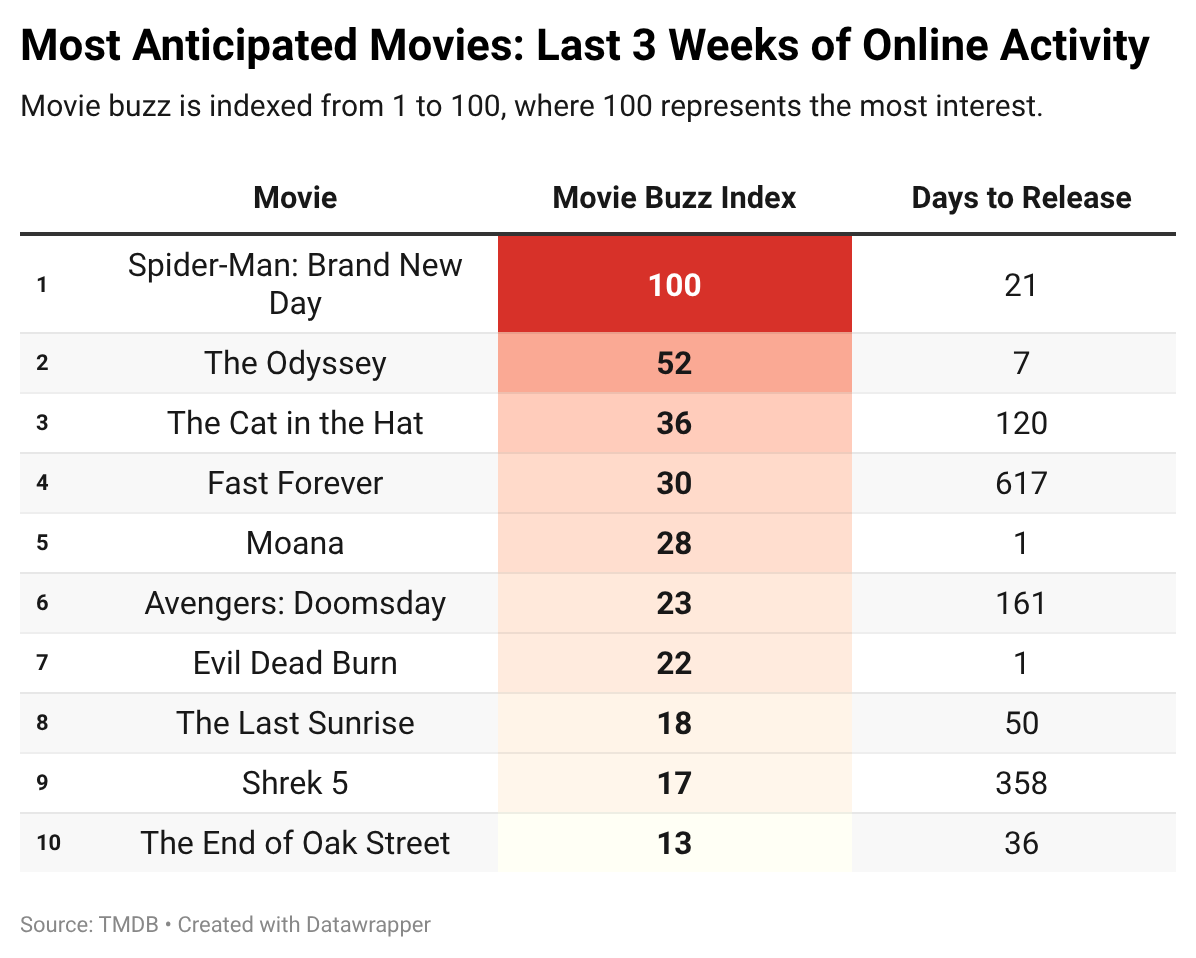
Over the past few weeks, the forthcoming Spider-Man: Brand New Day has generated the most TMDB web traffic and the highest number of YouTube trailer views for any upcoming release, suggesting that even as the broader superhero machine sputters, this particular character retains cultural cachet.
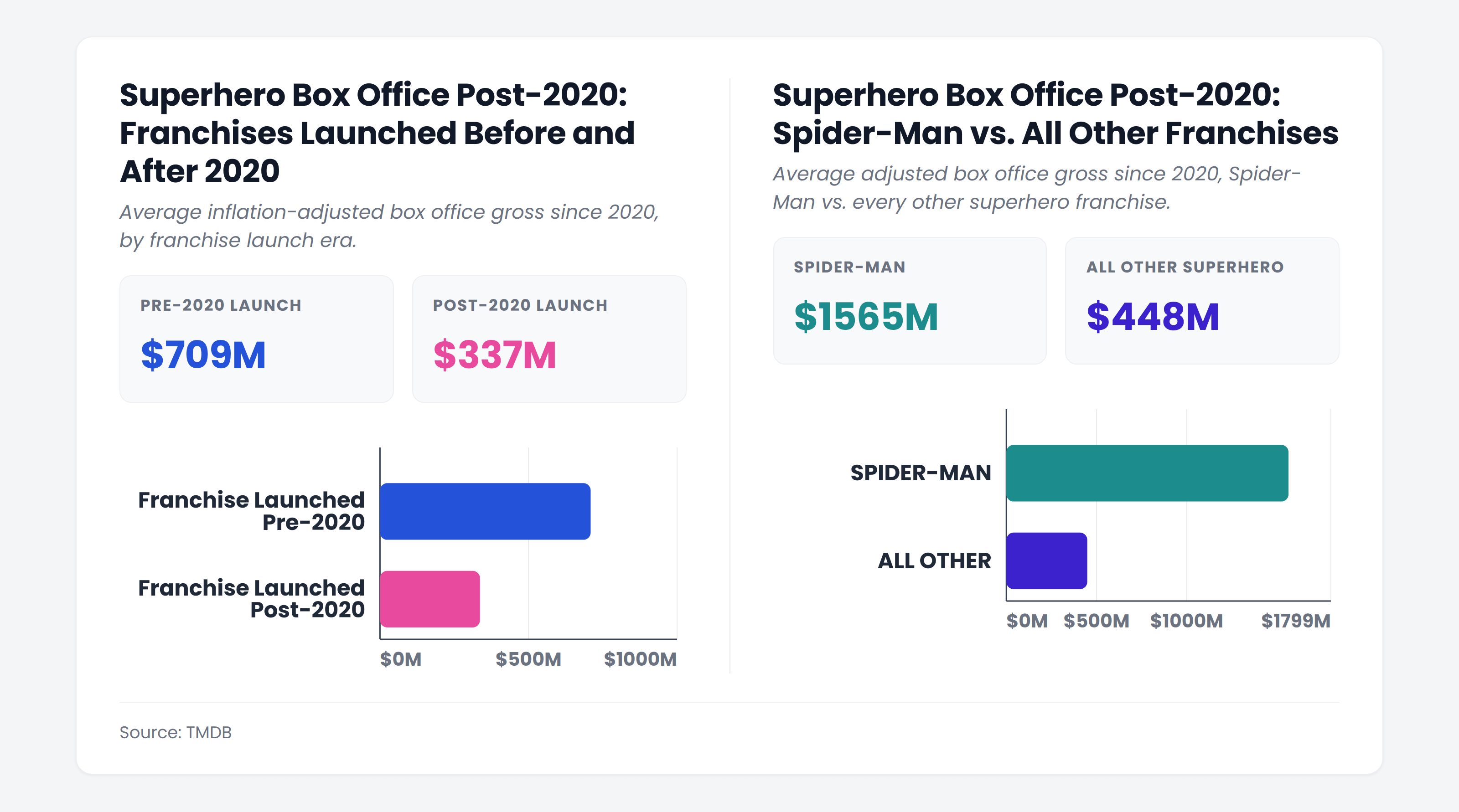
Spider-Man: No Way Home grossed nearly $2 billion in 2021 despite lingering COVID-19 disruptions, while the animated Across the Spider-Verse was rapturously reviewed and earned nearly $700 million worldwide in 2023.
The success of these films gets to the heart of Marvel’s post-Endgame problem. Legacy characters can still summon something like event-level excitement; new ones, for the most part, cannot. Try as Disney might, it has struggled to introduce a fresh generation of heroes capable of replacing the original Avengers. Split the post-2019 superhero landscape into Spider-Man and non-Spider-Man films, or into legacy characters and new character launches, and the pattern becomes hard to miss: the holdovers still perform, while new mythology does not.
Throughout the 21st century, Hollywood has increasingly sought out stories with built-in audiences. For most of the 2010s, this meant adapting comic books and rebooting once-profitable franchises as nostalgia bait. But recently, commercial appetites have shifted.
Built-in demand still matters, but the sources of that demand are changing. Consider the 10 highest-grossing movies of the year thus far: a mix of video game franchises, music biopics, book-to-screen adaptations, and YouTube creators converting their online followings into theatrical audiences.
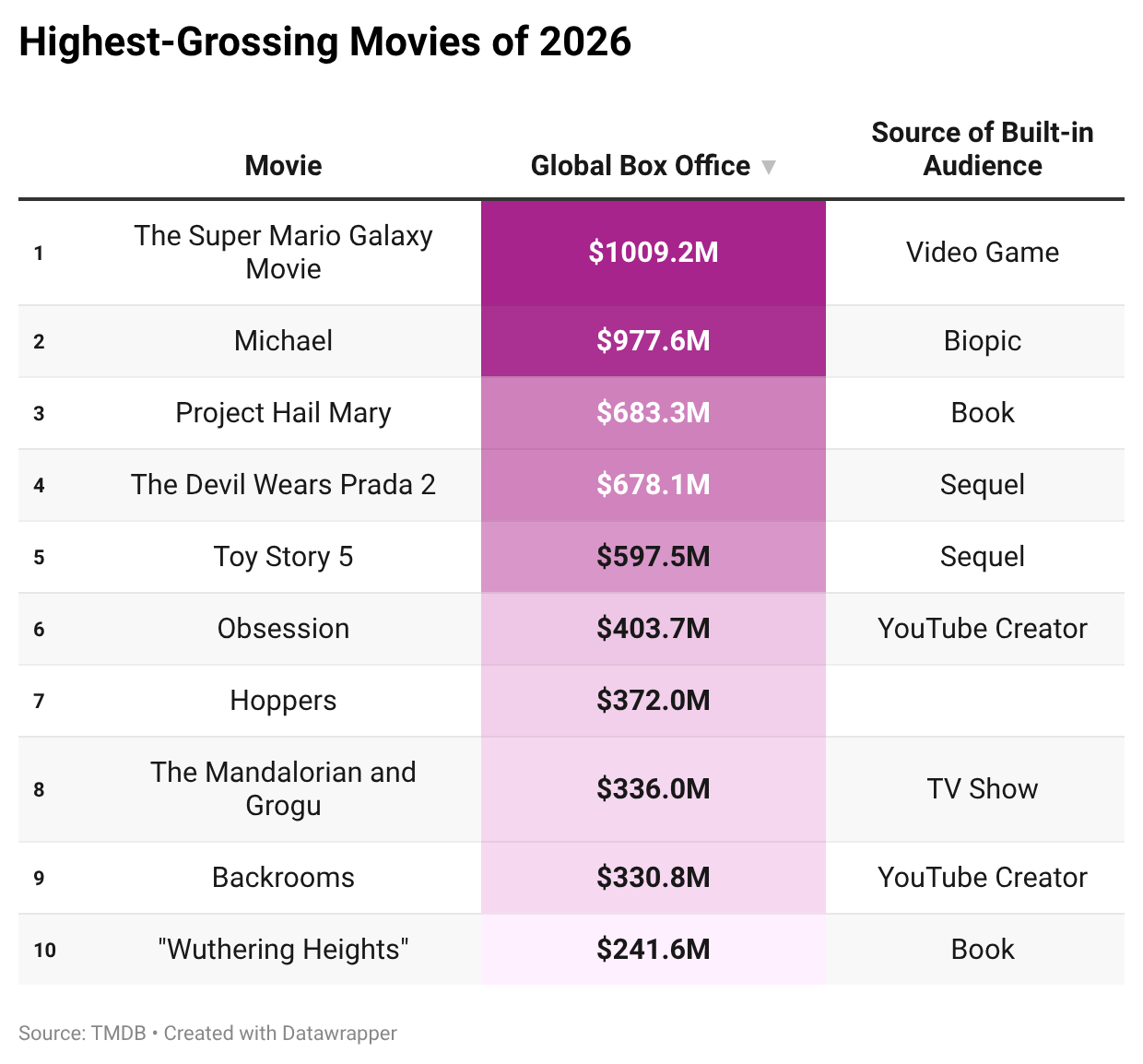
The box office is moving in a new direction—one that is indifferent to superheroes not named Spider-Man.
And if what I’m describing sounds inconceivable to you—because superhero films are simply too big to fail, and because they have defined the mainstream for the better part of 15 years—know that there is ample precedent for this cultural shift.
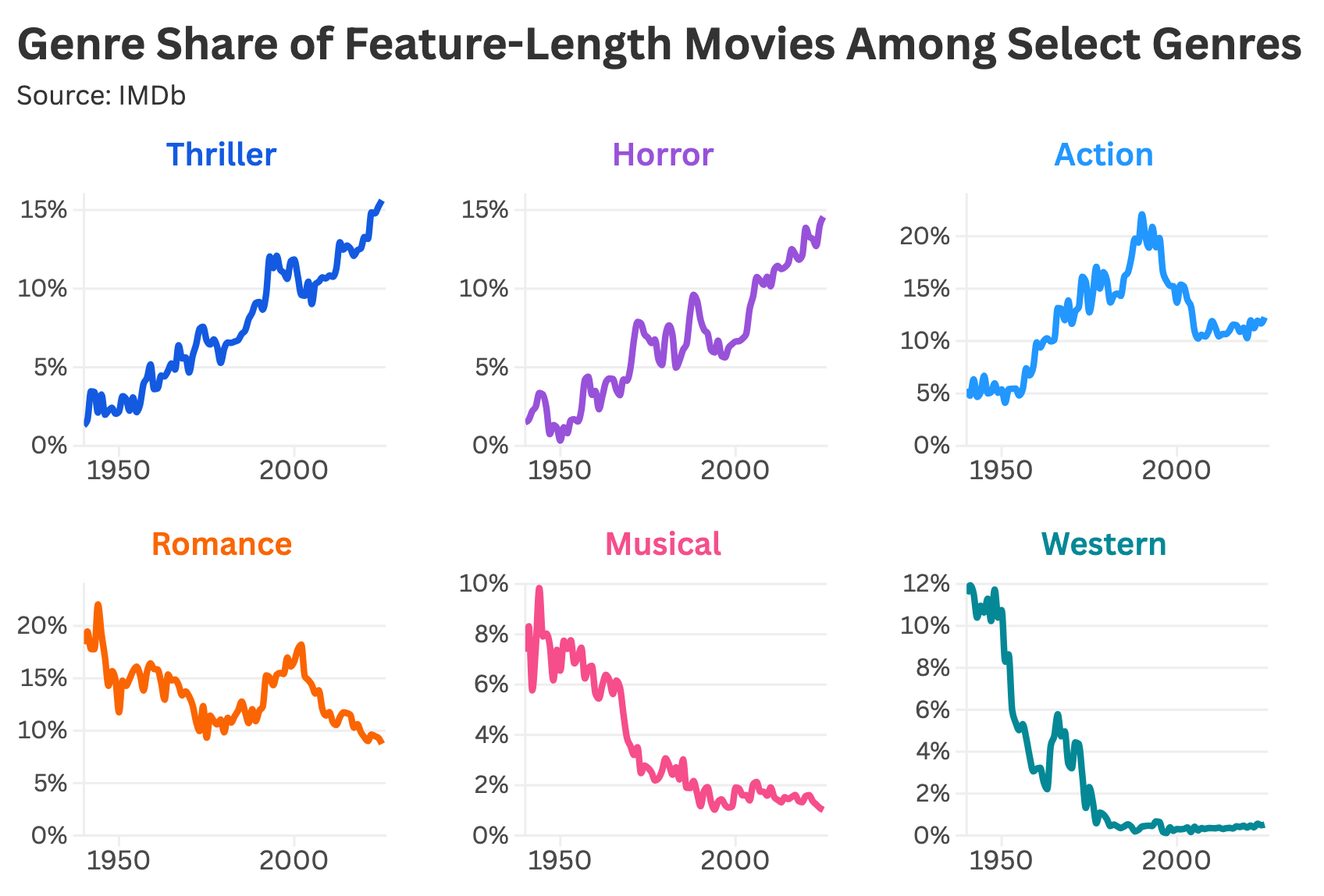
Genres and storytelling concepts come and go. Musicals and westerns were among the most popular genres of the 1950s and 1960s. Now, these formats are essentially extinct, while thrillers, action movies, and horror films have taken their place.
Sometimes I like to envision telling my son about the MCU, but in the past tense: how these films dominated the zeitgeist for a decade and how Avengers: Endgame offered one of the greatest moviegoing experiences of the 21st century, and how, when the enterprise came to its logical conclusion, people simply refused to let it go. And he’ll say something like “That’s interesting, I guess,” and then go back to scrolling on TikTok.
Enjoying the article thus far and want more data-centric pop culture content?
Final Thoughts: An Unfortunate Hangover
I have always been a casual consumer of comic-book content: if it’s good, I’ll go. So when a friend offered me midnight premiere tickets to Avengers: Endgame, I said, “Sure, why not? This seems like a big deal.”
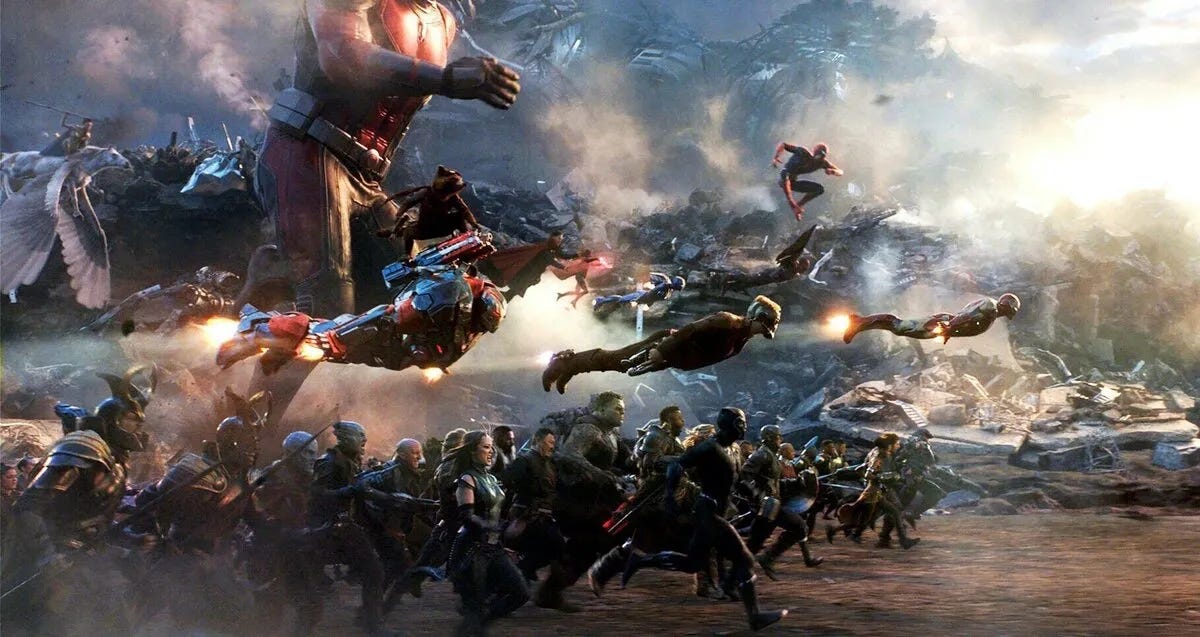
And it was. When an MCU’s-worth of Avengers assembled during the film’s climactic battle, people in the theater stood up and started clapping.
As we walked out of the theater, I told my friends how impressed I was that Marvel had “ended on such a high note.” After a few moments of genuine confusion, they informed me that the Marvel Cinematic Universe was not, in fact, “done.” A Spider-Man movie was coming out in a few months.
This was not a bit. I simply assumed that if a franchise put the word “End” in the title, it meant some kind of actual ending. Had the film been called Avengers: We’ll Keep Making These Until We Go Bankrupt, I would have adjusted my expectations accordingly.
While I was thoroughly uninformed on this topic, I believe my misreading was a feature, not a bug. Marvel wanted to have its cake and eat it too: they got the box-office frenzy of a conclusive chapter without actually concluding anything. And yet something really did end with that movie. In many ways, the strategy resembled a booze bender: you borrow future happiness for the present, and in return, you wake up with a hangover. Unfortunately, this particular hangover is now enshrined across 25% of Disneyland.
All stories, whether standalone or serialized, require an ending. Even inside a sprawling fictional universe, there comes a point when the narrative simply runs out of gas. Marvel’s mistake was eventizing that logical endpoint so the film would make $3 billion.
What remains of peak-superhero is reheated leftovers: Robert Downey Jr. was paid $100 million to return for two Avengers films; Chris Evans is coming back despite his character dying; Hugh Jackman was also resurrected; Spider-Man remains the one beloved holdover; and audiences broadly refuse to embrace anything new.
It’s as if the year were 1972 and the world’s largest entertainment conglomerate bet its future on the eternal dominance of Hollywood westerns. Nothing lasts forever, no matter how hard Disney tries.
Enjoyed the analysis? Support Stat Significant and unlock the data behind the insights.
Become a paying subscriber to get bonus graphics, interactive dashboards, downloadable datasets, and to support independent journalism.
Paying subscribers get:
Bonus Data Stories: Full access to the Monday Roundup, a twice-monthly bonus edition with bonus culture data stories, curated datasets, and recommended reads.
The Public Dataset Directory (Updated Weekly): A curated directory of public datasets from around the web.
Interactive Data Hubs: Interactive dashboards across Streaming TV, Movies, Music, Search Trends, Wikipedia, and more.
*Note: For best results, open this link in a web browser while logged in to your Substack account.
Want to promote your data tool or media publication to Stat Significant’s 26,200 readers? Email daniel@statsignificant.com
Need help with a data problem? Book a free data consultation
Connect with me on LinkedIn if you want to chat about a data project.
Like movies? Follow me on Letterboxd
As a close observer of the MCU, I approve of this great analysis. The only thing I’d add is Marvel was hurt more by what I’d call politics than the pandemic.
After Endgame, there was an announced effort to diversify the MCU, especially by adding women. That was seen in the Eternals, the first creative and box office disappointment for the MCU. It led to two of the biggest comic book movie failures, The Marvels and now Supergirl.
It’s not that women are rejected per se in these films; Wonder Woman was a huge hit a decade ago. Instead, the push has had two problems. The first is directors and screen writers being hired because they are women instead of because their proven talent in the genre (like Supergirl’s novice scriptwriter). Second, and more importantly, there’s a reluctance to have female characters undergo a hero’s journey because of concerns about them ever appearing weak or incompetent.
I understand that thinking. But the result is overpowered characters who are too perfect to be engaging. Compare the character arcs of, say, Tony Stark and Riri Williams. Or, in a related genre, Luke and Rey in Star Wars.
Pattern recognition now causes many to avoid these films—unfairly in cases like Furiosa—while putting the last Deadpool over $1B. And, critically, the female leads have not grown the female audience. It’s notable that 60% of the opening weekend for Supergirl was male.
It seems critical that you're excluding the massive drop in quality and audience appeal around 2020.
Streaming and superhero fatigue are certainly aspects, but large swathes of the new content was made with a much lower bar of quality and attempts at audience appeal - instead prioritizing political posturing first at all levels, from the characters and writing to the people hired/promoted to create those stories.
Spider Man famously keeps both the existing spider man and high quality standards. Meanwhile most of the avengers that were replaced have not been able to spark new interest. And the pattern matching has been working against them - so many recent movies in these genres with DEI-based leads also had terrible writing, which now has people shunning even the well-written ones if they give the signs of maybe being another girlboss project with no character arc or growth.
The surprise success of KPop Demon Hunters was in many ways a rejection of the "unfallible girlboss without a character arc"-trope that's been dooming many of the recent superhero and Star Wars projects. With people eagerly embracing great female (and non-white) characters when those tropes are replaced with deep characters and great writing.