

Today’s essay draws on insights from Stat Significant’s new Movie Report data hub. This page features interactive charts, updated daily, tracking which movies people are watching in theaters and on streaming, and which upcoming films are generating the most online buzz—with the underlying data available for download.
Intro: The Imprecision of Genre
Technically speaking, the films Dumb and Dumber, White Chicks, Deuce Bigalow: European Gigolo, Groundhog Day, Airplane!, and Dr. Strangelove all qualify as “comedies.” Taken in one sitting, however, they would make for an incomprehensible movie marathon. These films have almost nothing in common tonally or intellectually, except for one basic ambition: to make people laugh.
Such is the strange imprecision of genre. A label like “comedy” or “thriller” isn’t a strict definition so much as it is a signal—shorthand for a bundle of storytelling tropes that audiences recognize and actively seek out. A rom-com promises the thrill of a meet-cute and final kiss, a horror film provides scares in a controlled setting, and a musical offers spectacle and sensory pleasure. These categorizations serve as a heuristic, guiding moviegoers toward a desired emotional experience.
So what does it mean when the world’s oldest and most prolific genre enters a period of sustained decline?
For years, Film Twitter and Letterboxd devotees have lamented the death of the movie comedy. According to these online critics, laughter has been canceled, replaced by quippy Marvel slop and self-serious Vin Diesel car garbage. Yet while building a recent dashboard, I noticed an even sharper decline among dramas—one that significantly outpaces the demise of movie comedies.
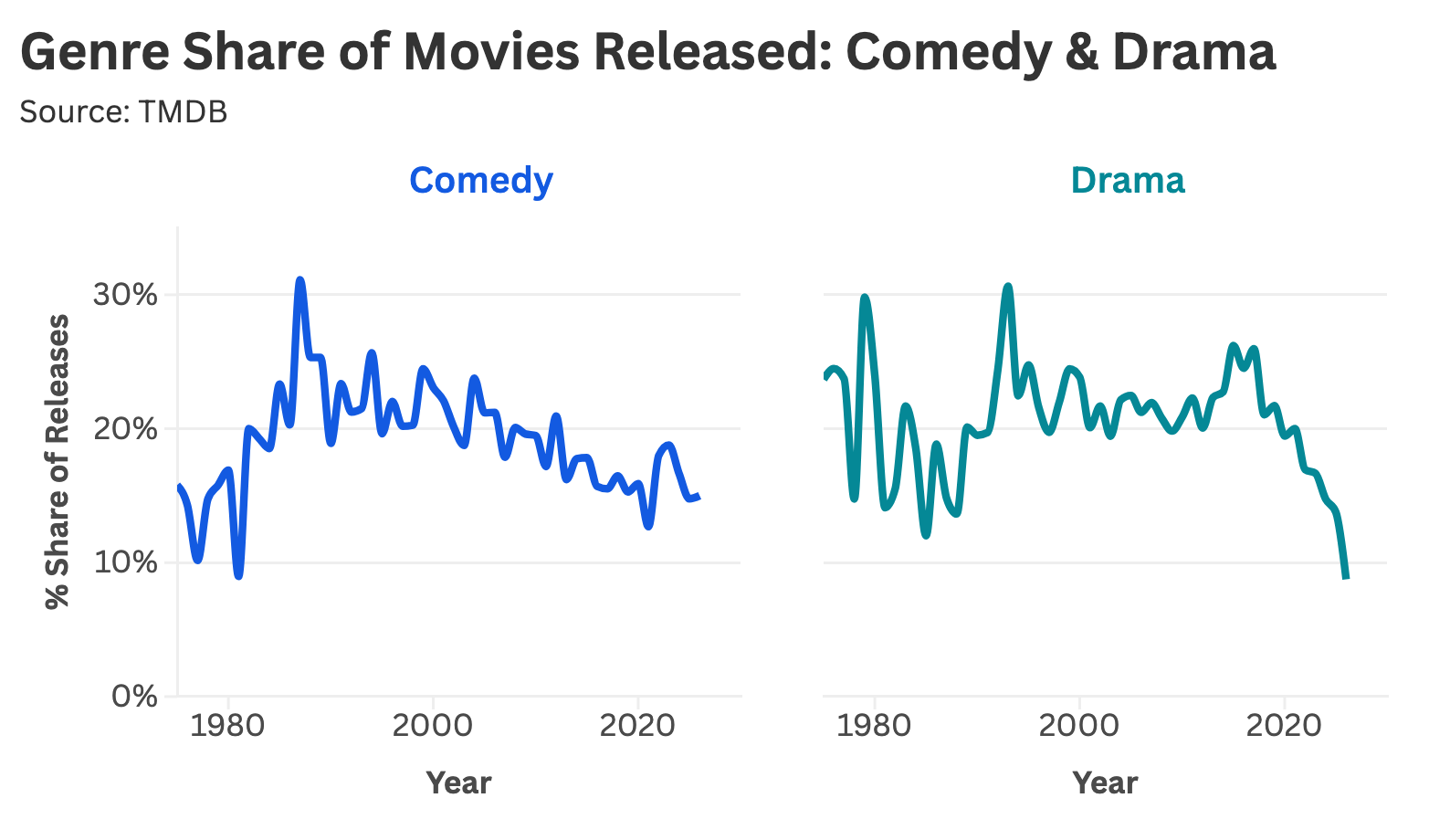
After confirming that this dip was, indeed, legit, I set off on a new quest: to uncover the dramatic collapse of the studio drama.
So today, we’ll examine the case for and against the commercial viability of dramatic films, uncover the storytelling formats that have taken their place, and identify where the genre has found a new home.
The Case for Drama Films
The 1990s marked the peak of the modestly budgeted adult drama. Indie darling Good Will Hunting grossed $225 million on a $10 million budget, Sex, Lies, and Videotape earned $36 million on a $1.2 million budget, and The Brothers McMullen brought in $10 million on a budget of roughly $25,000. Distributors regularly scooped up these films at festivals like Sundance and successfully marketed them to moviegoers seeking small-scale, character-driven stories.
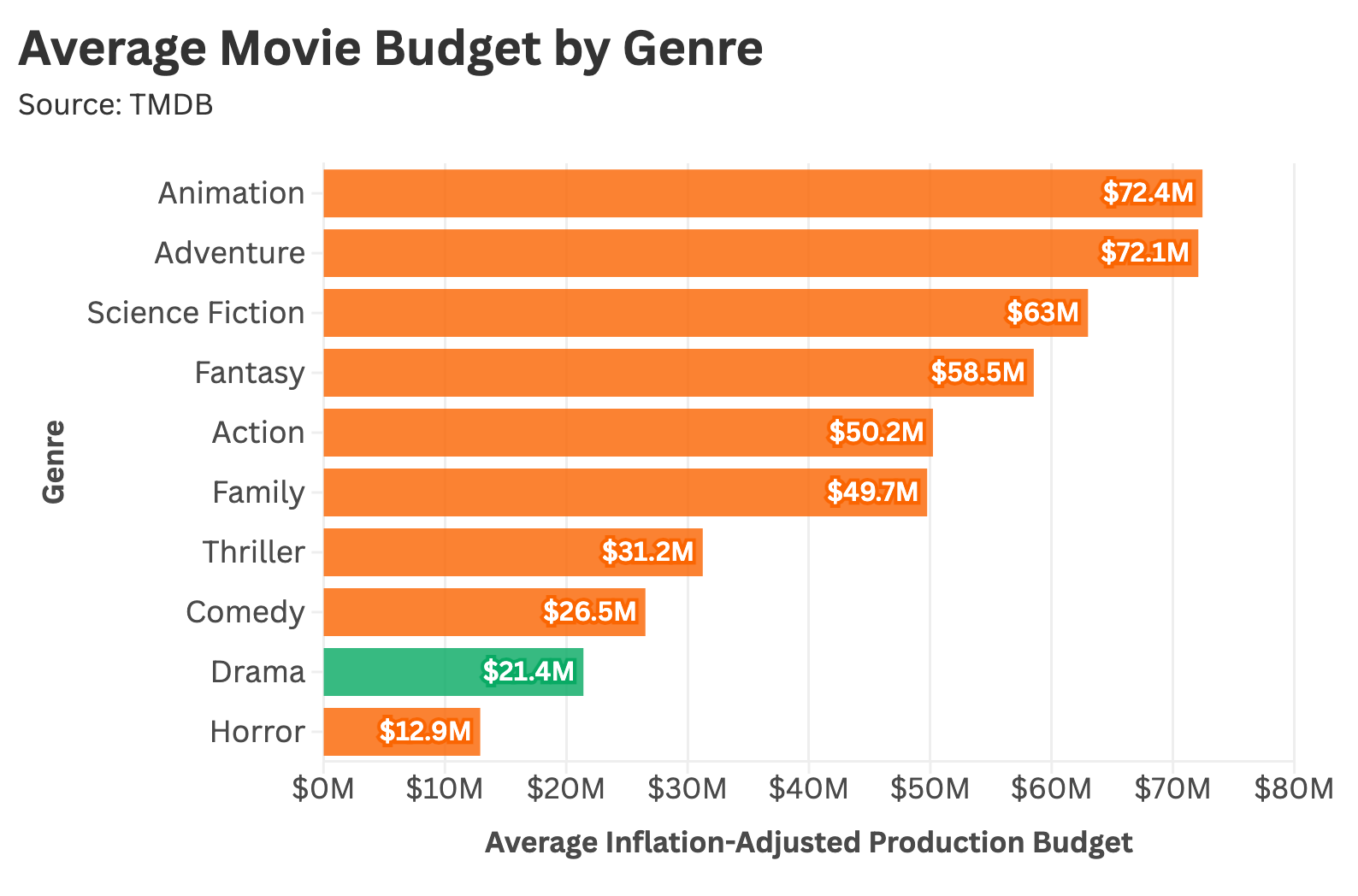
Which brings us to the first commercial advantage of the drama format: these films are inexpensive to produce.
Adjusted for inflation, dramas rank among the lowest-cost genres, surpassed only by ultra-low-budget horror.
The appeal of these films is not epic scale or intricately choreographed action. In the case of Good Will Hunting, it’s the charm of a janitor solving difficult math problems. In 1997, that concept drew thousands of people from their homes.
Good Will Hunting was eventually nominated for nine Oscars, winning two, and continues to rank among the top 250 films on sites like IMDb and Letterboxd.
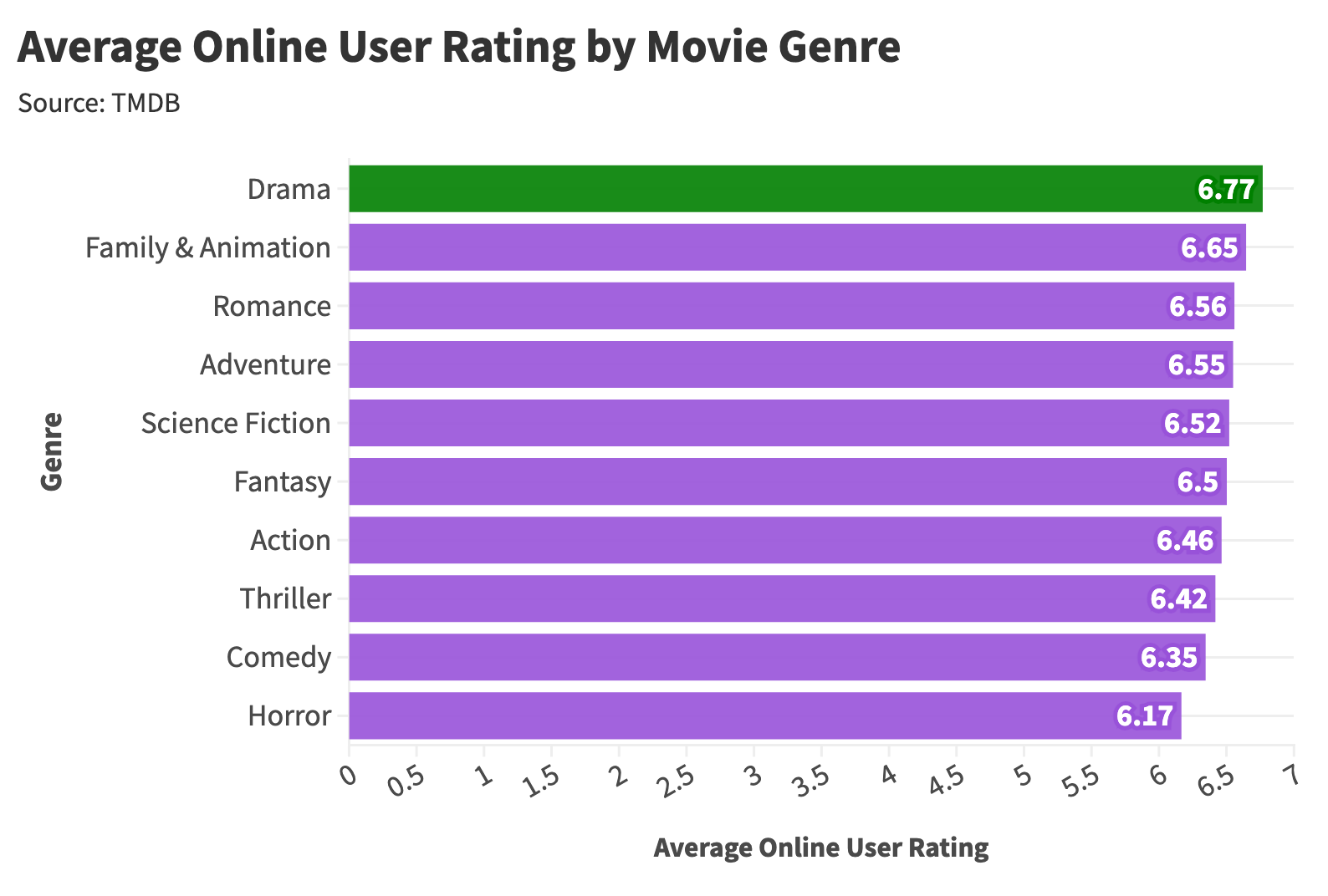
Which brings us to the next artistic advantage of the movie drama: audiences tend to like them. The genre regularly outperforms other formats in online user ratings, and historically, 60% of Best Picture nominees have been primarily classified as dramas.
If you’re in search of prestige, because who needs money, then a low-budget drama is your best bet.
The genre’s precipitous decline does not square with its reputation. In a survey of 65,000 consumers that asked which genres they “want to see more of,” dramas consistently landed in the middle of the pack across all age groups. That’s not a sign of breakout demand, but it hardly suggests a format worthy of wholesale abandonment.
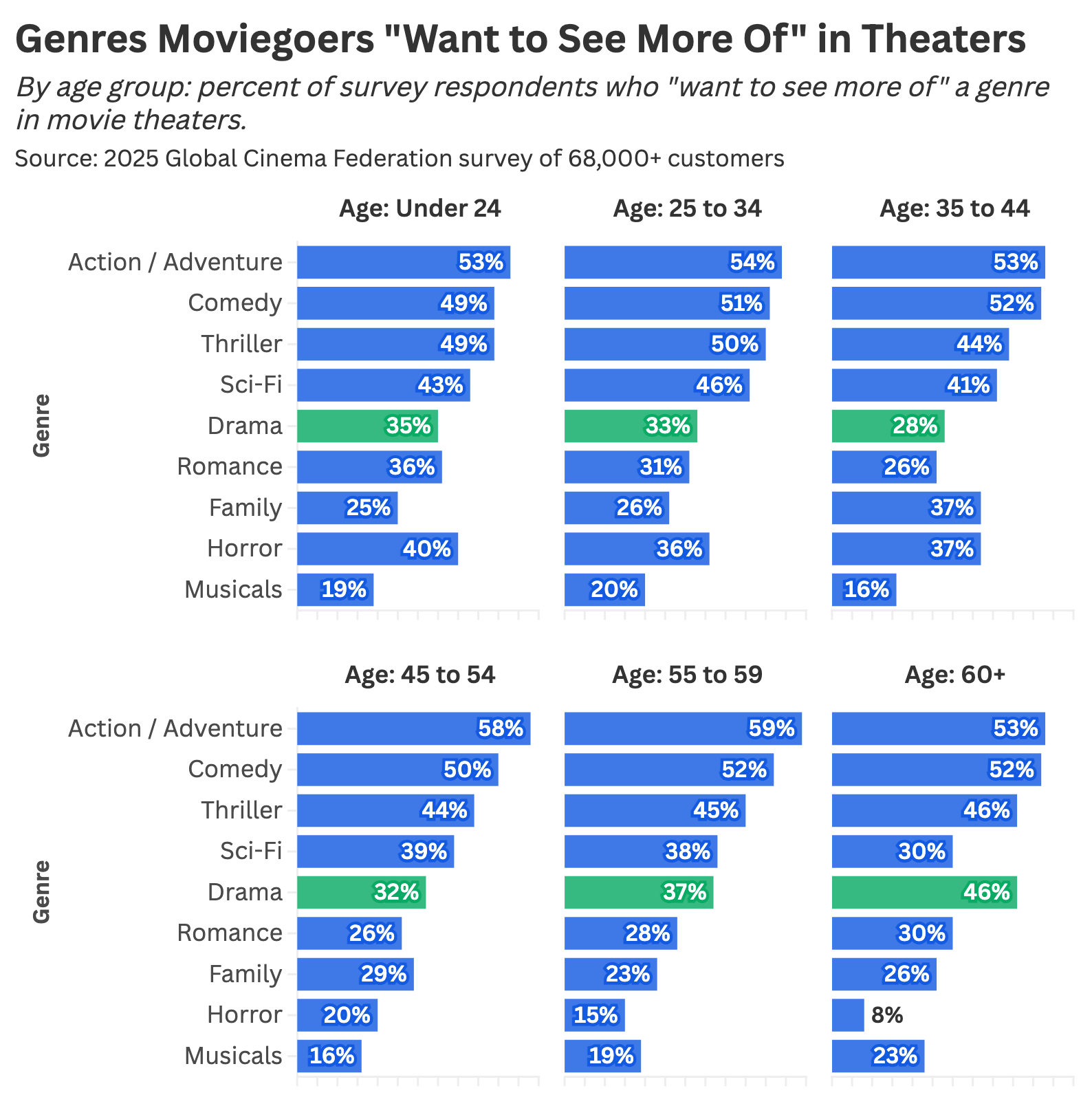
So, if these films are inexpensive, well-liked by viewers, and remain reasonably popular with general audiences, why are they disappearing from movie theaters and streaming services?
The Case Against Dramas Films
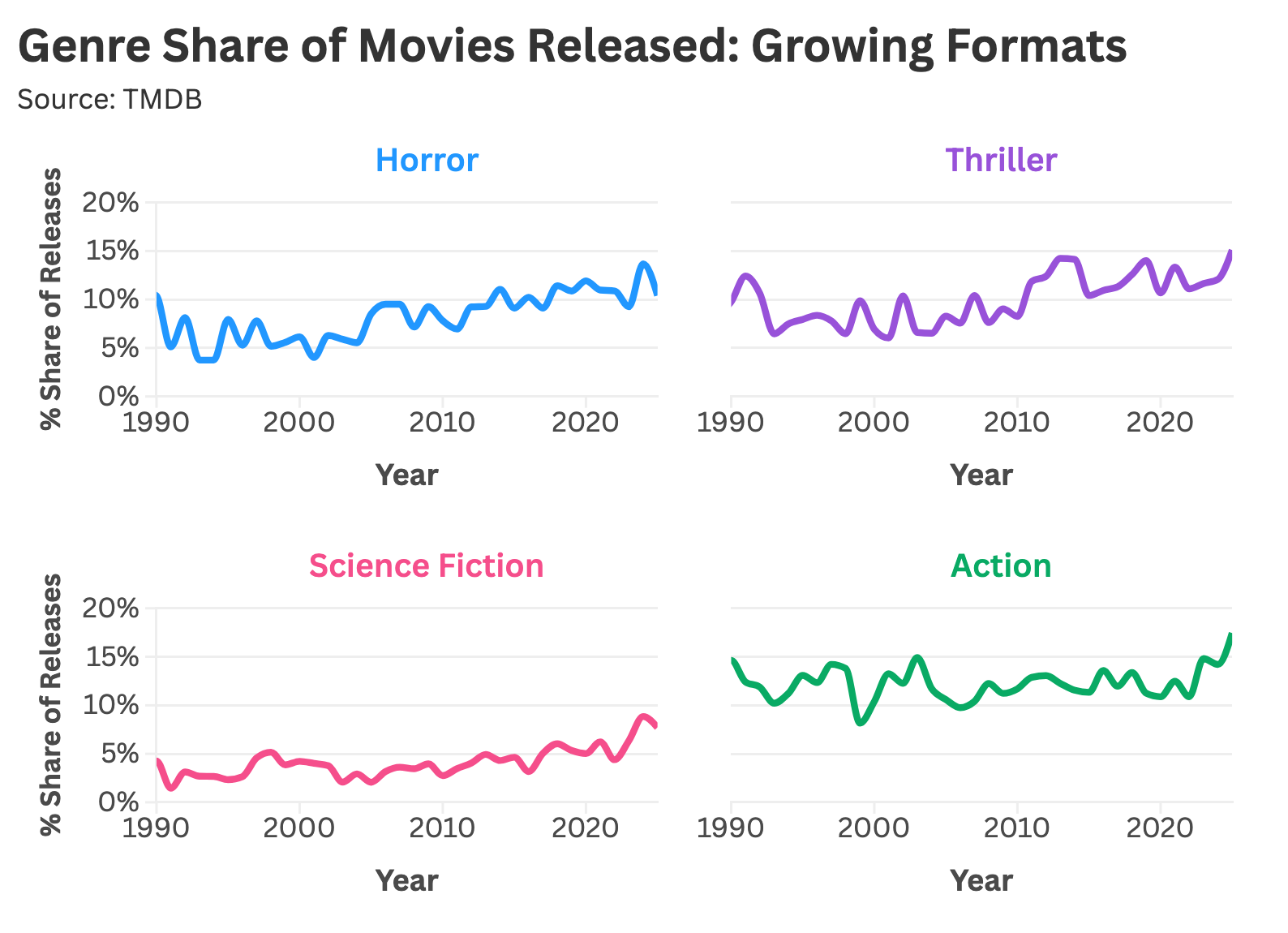
Over the last decade, studios have gravitated toward “genre filmmaking.” This label is confusing—because every film belongs to a genre—but in practice it’s shorthand for everything outside traditional comedies and dramas: action, horror, sci-fi, even rom-coms.
Historically, these “genre” categories were treated as niche, with limited audience potential. But not anymore.
When we look at the formats gaining ground in theaters and on streaming, the list is dominated by quintessential “genre” categories—horror, thriller, and sci-fi.
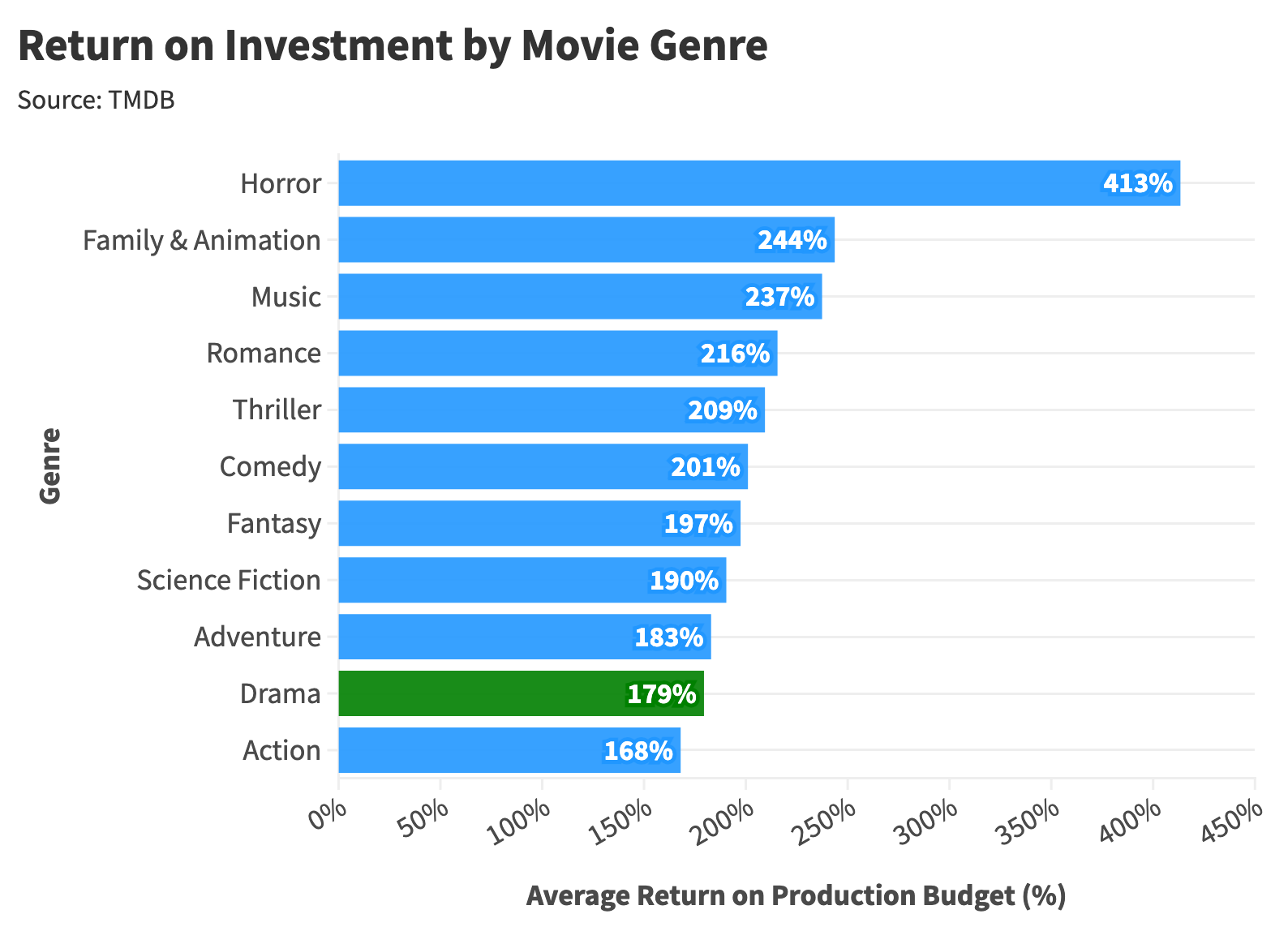
“Genre” films have long offered greater commercial upside, delivering a return on investment that far exceeds that of the prototypical drama, which ranks near the bottom of all formats.
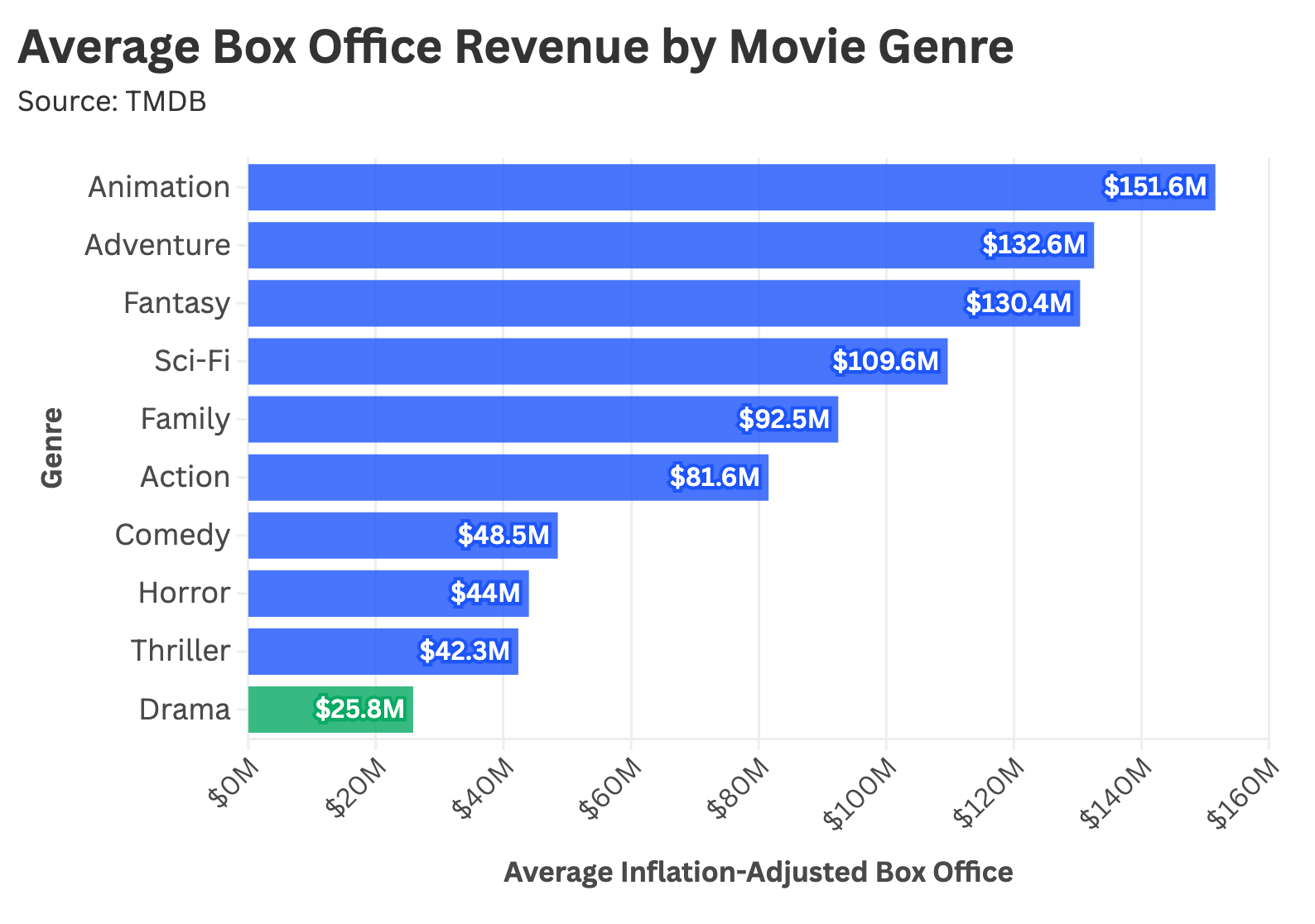
And it gets worse. The comparison above is a relative percentage calculation, while studios ultimately care about absolute dollars. By that measure, dramas have the lowest box office ceiling, consistently grossing less than any other major format. Making $15M on a $10M budget sounds good on paper (50% ROI!!), but grossing $400M on a $225M budget will get you promoted ($175M ROI!).
A major driver of these commercial limitations is international box office. Dramas and comedies are dialogue-heavy and rely on cultural nuance that doesn’t always translate well abroad. As a result, these formats earn the majority of their box office revenue domestically.
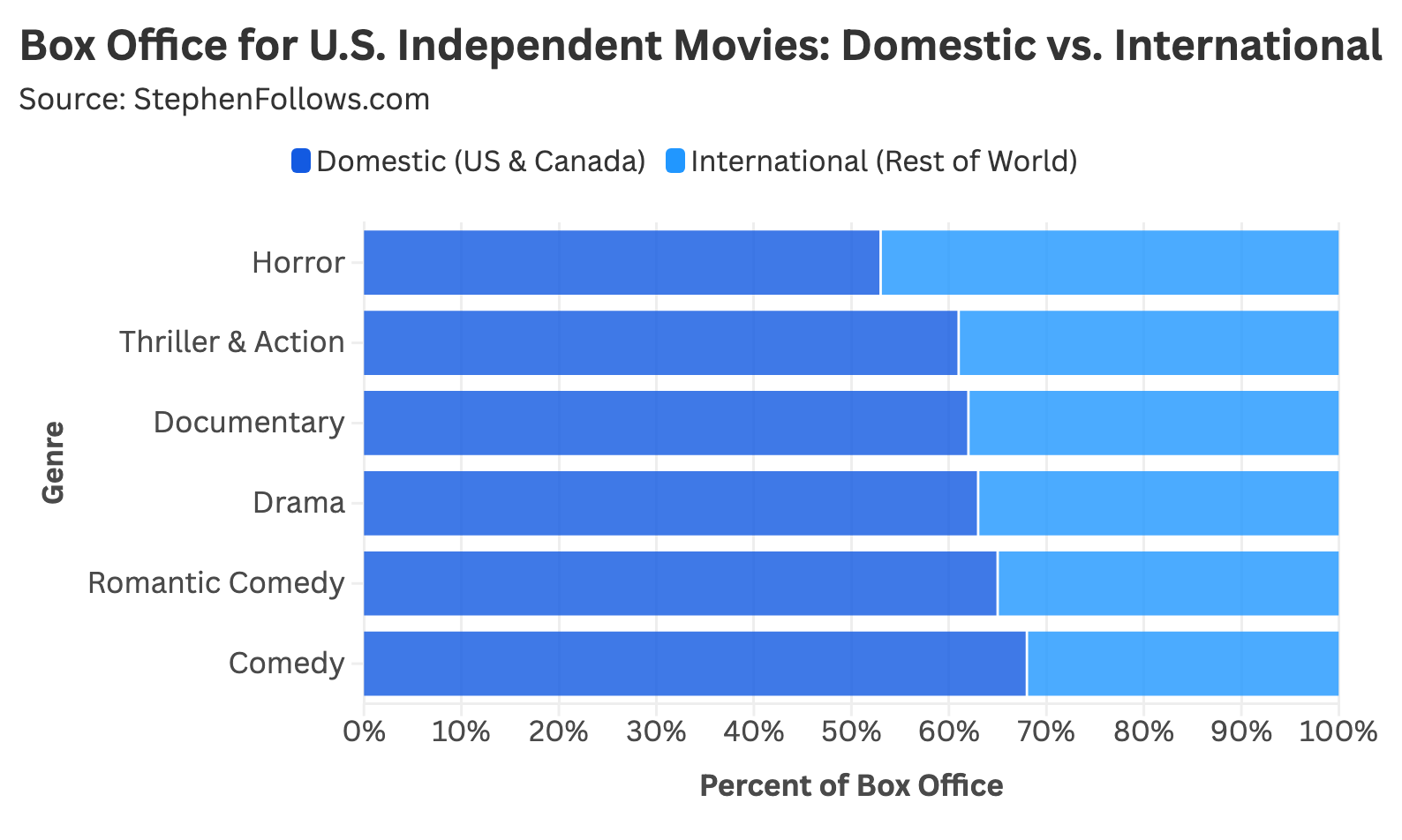
You know what does translate well across all languages and continents? A gigantic dinosaur. Which is why we have seven Jurassic Park films and only one Manchester by the Sea or Requiem for a Dream.
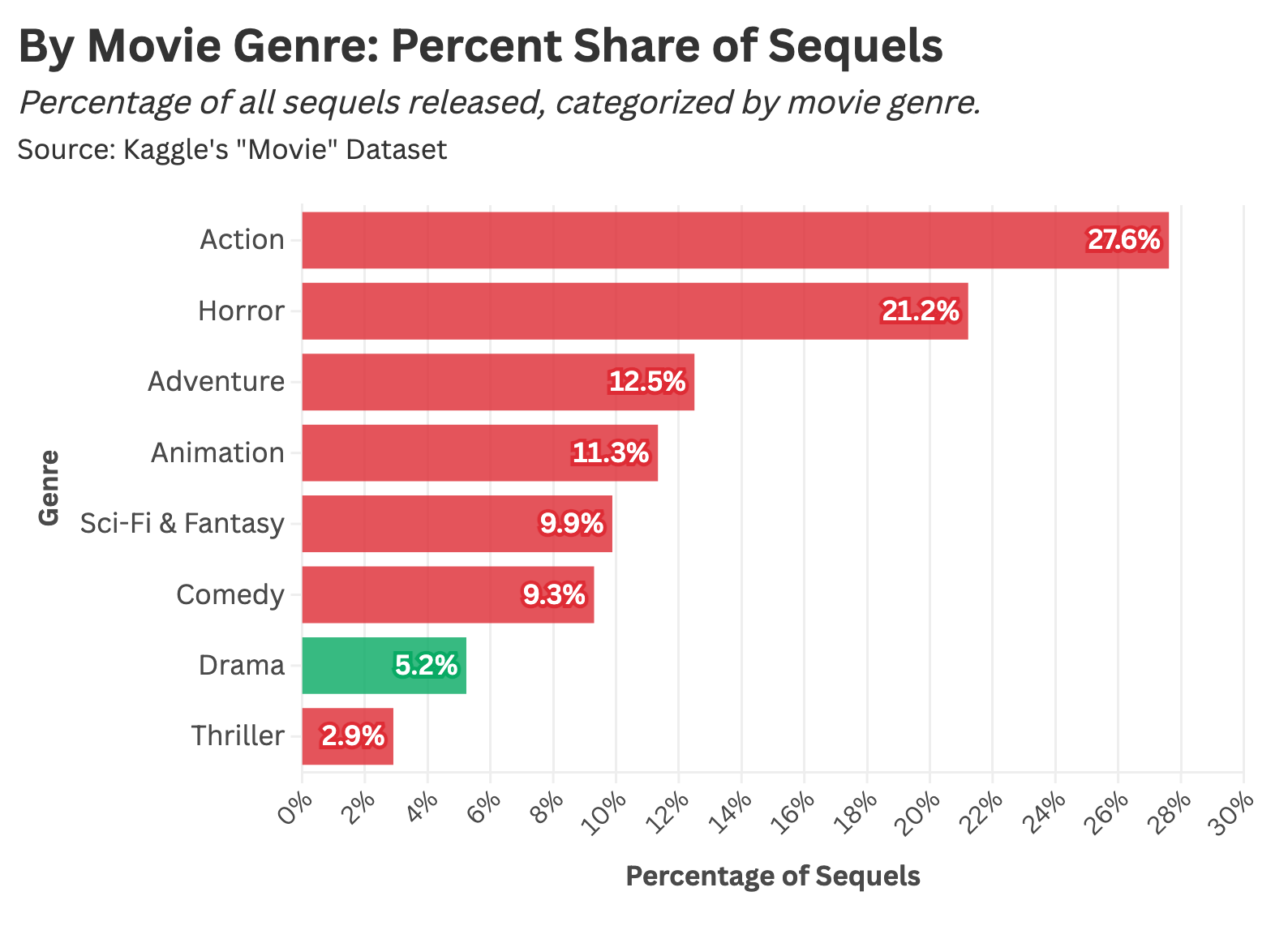
In fact, among all sequels produced over the last 50 years, dramas consistently rank among the least represented—which is great because I don’t need films like Hamnet or The Brutalist to become a franchise.
Part of what makes dramas effective is their sense of finality. I love the final scene of The Social Network because it perfectly captures Mark Zuckerberg’s self-imposed isolation: he has created the world’s largest online community, yet remains profoundly alone, waiting for his ex-girlfriend to accept his friend request. Great ending! Story over, right? Nope! Unfortunately, a sequel called The Social Reckoning is set for release in late 2026. I will be obligated to see this movie, and it will almost certainly leave me bummed. Can’t wait!
And while The Social Network has aged well enough to justify a sequel 16 years later, most dramas tend to lose their cultural standing over time.
To be honest, I don’t have a perfect explanation for this next finding. I’m mostly beholden to the data, and the data suggests that dramas do not age well.
When we compare a movie’s average online rating across two separate periods—1995 to 2004 vs. 2018 to 2023—we find that comedy and drama films see a marked decline in appraisal over time.
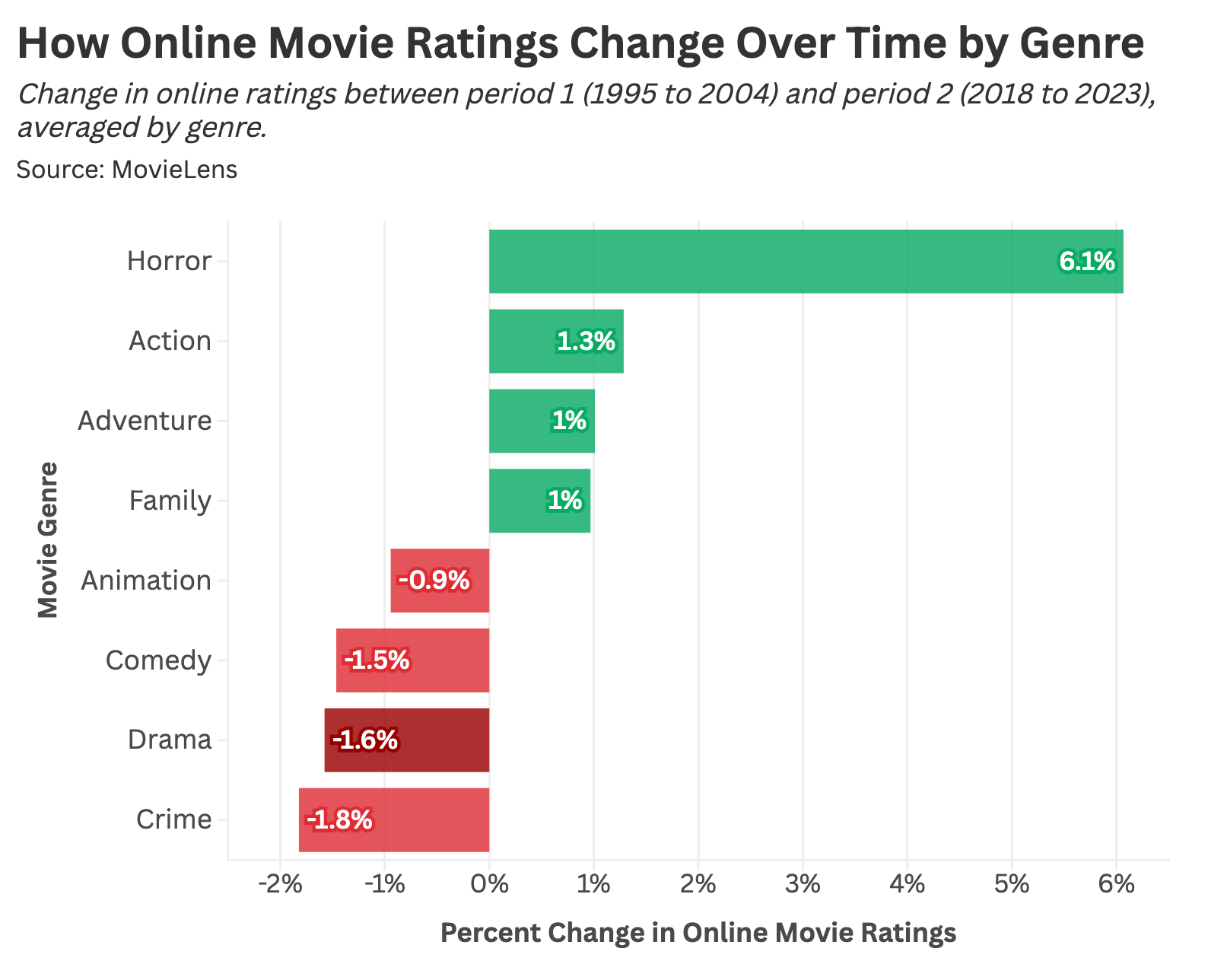
My best guess is that these formats are tightly bound to contemporary taste. When I was a kid, I would watch Turner Classic Movies and try to appreciate films from the 1940s, only to find the exercise strangely difficult. I could admire them—in theory—but I struggled to experience these stories the way their original audiences did.
I feel similarly about many Oscar-bait dramas of the 1990s, including but not limited to: Chocolat, American Beauty, Shakespeare in Love, Scent of a Woman, The English Patient, and Life Is Beautiful. I simply don’t understand what contemporary audiences saw in these films.
Action and horror, meanwhile, have visceral elements that translate across generations: big dinosaurs, jump scares, campy set pieces, and other straightforward pleasures. The first ten minutes of Raiders of the Lost Ark are timeless and feature almost no dialogue.
So if dramas age poorly, earn less, and rarely spawn sequels, do those limitations also carry over to other mediums? Are TV showrunners and playwrights abandoning the form as well? Not at all. If anything, theatrical dramas are simply migrating elsewhere.
Perhaps the most significant driver of the studio drama’s decline is the rise of prestige television. The format has exploded on streaming, where dramas now account for ~30% of all new series, well ahead of any other category.
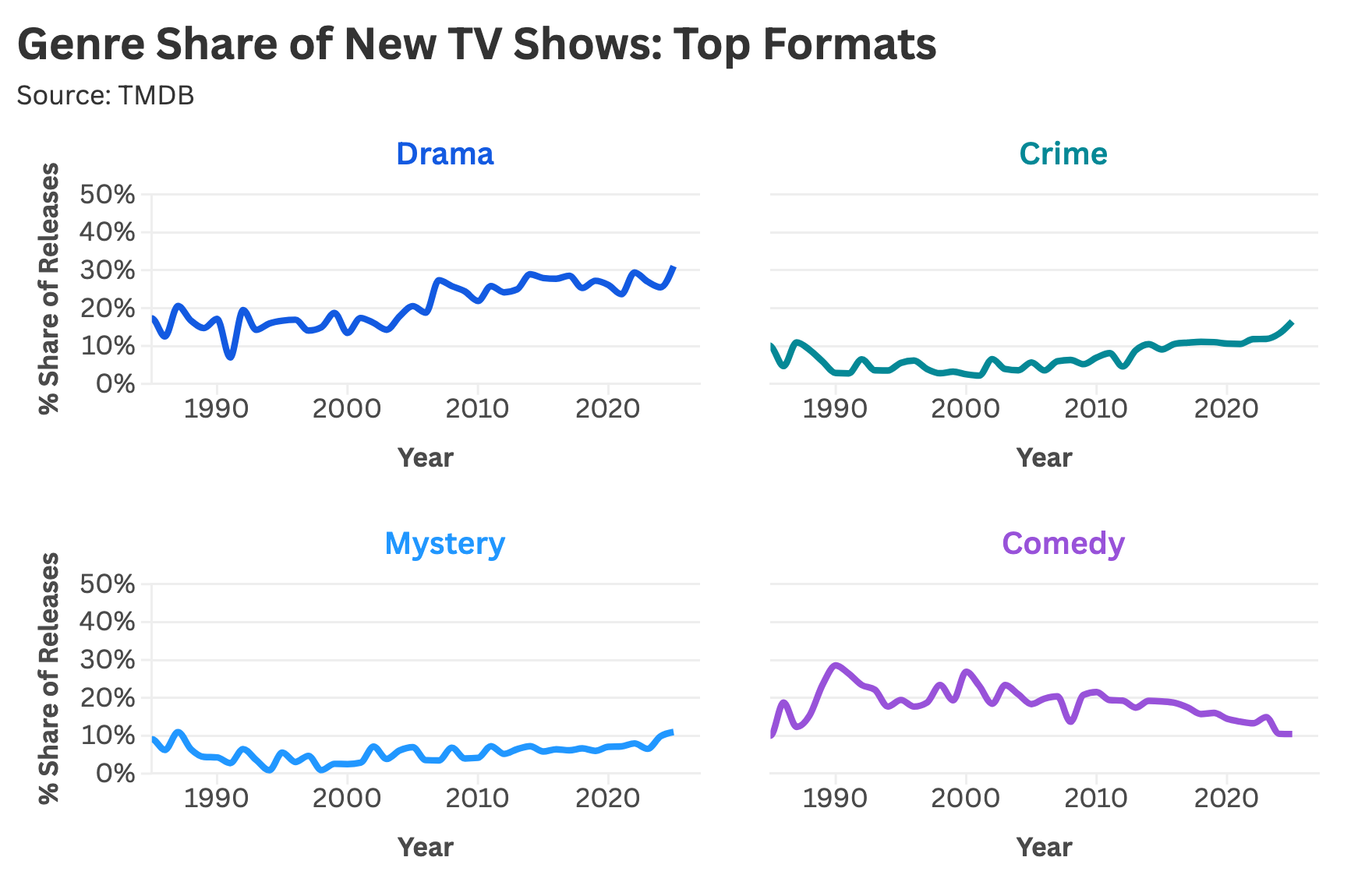
Think of the most acclaimed dramatic series from the past five years—Adolescence, Beef, Mare of Easttown, Task. With a few tweaks, each could just as easily be a feature-length film. The increasingly blurry line between TV and film often comes down to a concept no one can quite define: theatricality.
A “theatrical” story is one that justifies leaving home for an overpriced ticket and tub of popcorn. Small-scale dramas rarely clear that bar anymore, and streamers like Netflix have capitalized on the gap. In the process, the genre’s perceived commercial viability has collapsed.
Enjoying the article thus far and want more data-centric pop culture content?
Final Thoughts: Little Sads
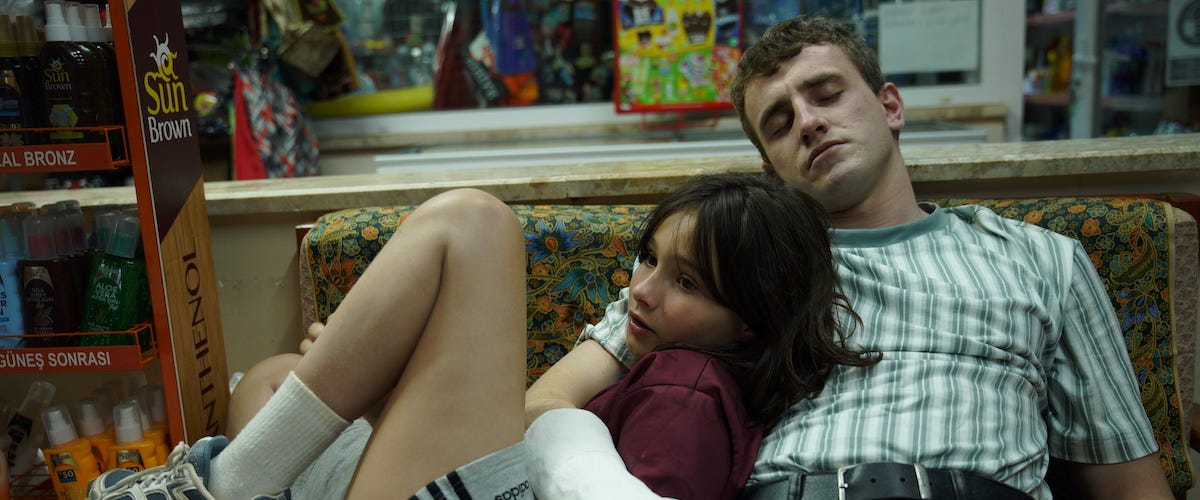
During this year’s Oscars ceremony, host Conan O’Brien did an extended bit about “Little Sads,” his tongue-in-cheek term for short documentary films that tend to leave audiences “a little bit sad.” As a former film student, I found the label pretty accurate, though it applies just as neatly to plenty of feature-length dramas. Hamnet, Sentimental Value, Train Dreams, Nickel Boys, Past Lives, CODA, The Banshees of Inisherin—all of these films did, in fact, make me a little sad.
For the first 80 years of feature filmmaking, these “Little Sads” had a reliable theatrical audience. If you had asked me two decades ago, I would have assumed demand for the genre was evergreen. Then I went to the epicenter of Little Sadness: the Sundance Film Festival.
Once a hub of American movie culture, Sundance struck me as a film festival on its last legs. Most of the movies headlining the program had not been acquired for distribution, and the general moviegoing atmosphere was oddly subdued.
Then there were the movies themselves. Screening after screening, my dad and I sat through one Little Sad after another, each smaller and more melancholic than the last. By the final day, I couldn’t stomach another story about a fractured family or a middle-aged man processing his emotions. So we skipped our last Little Sad and saw a horror movie instead.
One of my biggest pet peeves is when people invoke the word objective in matters of taste. And yet—objectively—the experience of seeing that horror film in a packed theater was 800 times more enjoyable than our other screenings. Objectively!
Halfway through the movie, a jump scare caused someone in the audience to scream at the top of their lungs, prompting a burst of communal laughter from the rest of the theater.
If you asked which of these films I’d pay $17 to see in theaters, plus another $4 for Cookie Dough Bites, I’d pick the lone horror movie and nothing else. The rest I’d skip—or perhaps invoke one of the most dreaded phrases in modern entertainment: “I’ll wait for streaming.”
Am I drawing sweeping conclusions from a single film festival experience? Absolutely. But my takeaway seems to align with broader audience behavior. On the other hand, do I want theatrical dramas to go extinct? Not at all.
Some of my best movie-watching experiences involve being a little sad while seeing Lady Bird, Past Lives, Do the Right Thing, Boyhood, and Aftersun, among others. But at some point, audiences—myself included—decided this particular brand of sadness no longer needed to be experienced exclusively in movie theaters. We could be a little sad on the subway, at the gym, or while folding laundry, with this melancholy now spread across six to eight installments and multiple seasons.
Those seeking small doses of sadness can simply peruse the Netflix Top 10—or, on occasion, head to theaters for the next installment of The Social Network franchise.
Enjoyed the analysis? Support Stat Significant, and unlock the data behind the insights.
Become a paying subscriber for interactive dashboards, free datasets, and to support independent journalism.
Paying subscribers get:
The Stat Significant Dataset Hub (Updated Weekly): a collection of free datasets across movies, music, TV, and economics.
Interactive Data Hubs:
Streaming TV: what people are watching on television.
Movies: the films watched in theaters and on TV, plus historical trends.
Music: the songs, artists, and styles dominating Spotify and TikTok.
Social Media: what’s trending on Google, Reddit, TikTok, and YouTube.
Wikipedia: the top pages trending on Wikipedia.
Get access with:
*Note: For best results, open this link in a web browser while logged in to your Substack account.
Want to promote your data tool or media publication to Stat Significant’s 25,200 readers? Email daniel@statsignificant.com
Need help with a data problem? Book a free data consultation
Connect with me on LinkedIn if you want to chat about a data project.
Like movies? Follow me on Letterboxd
This was great! I really love this newsletter. It’s my favorite on substack!
In one of his interviews, Matt Damon also talks about the fading out of DVDs that contribute to this trend. Since previously, they did not need to recover much from the box office since they knew DVDs would follow and they would make a lot of that. But without it, big companies are unwilling to take a bet on dramas.