

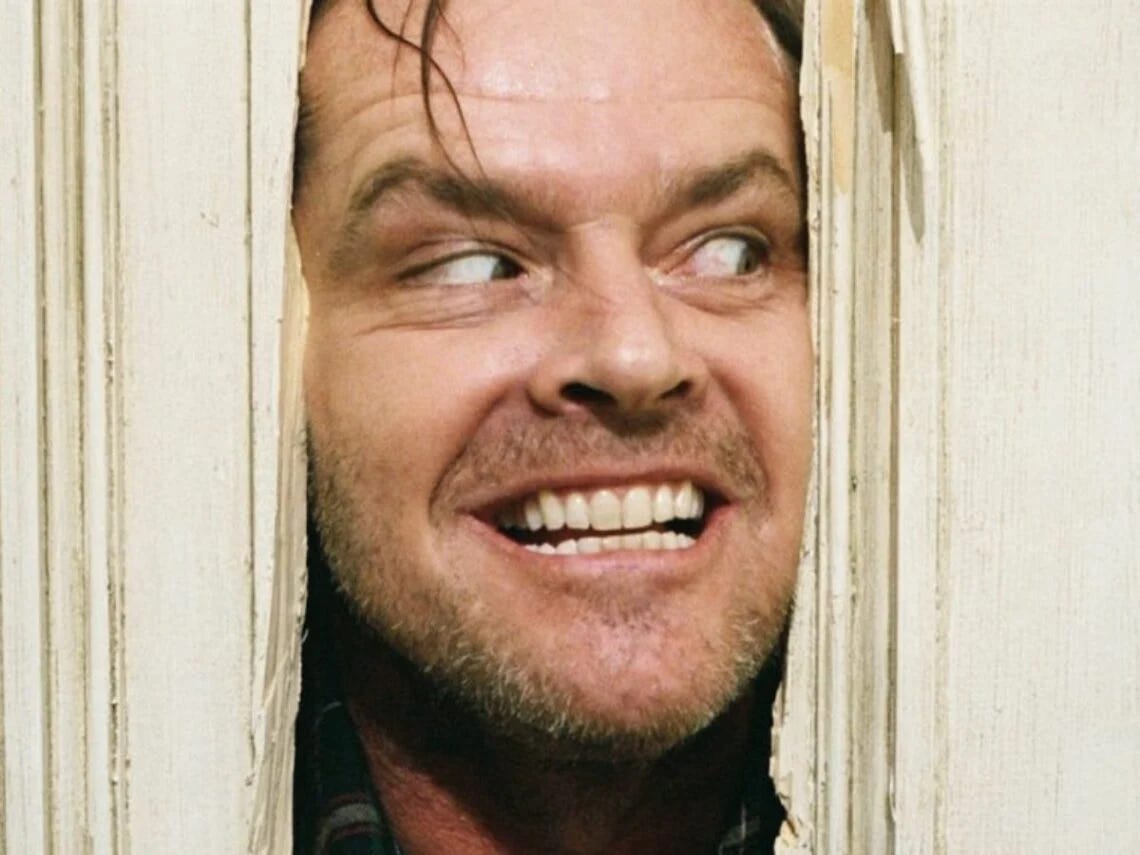
Intro: Spooky Season Begins
For some, October marks the official start of fall. For others, it’s the beginning of “spooky season,” an excuse to watch all 13 movies in the Halloween franchise (especially the bad ones). For me, October is a reminder that, two decades ago, I watched The Ring, did not sleep for a week, and then made my mom sit with me exactly seven days later because I was convinced I might be murdered by the little demon girl from the movie’s cursed videotape. (For the record, her name is Samara.)

Until I die, the month of October will be a reminder that a two-hour movie ruined an entire week of my life.
To this day, if I see The Ring sitting among the digital tiles on a streaming service, I speed right past it. I simply do not enjoy thinking about Samara, or any of the rampant evil in this work of fiction.
Such is the power of an indelible movie villain: something about their construction worms its way into your head—and then they live there rent-free (for the rest of your life).
As spooky season returns once more, I set out to identify these unforgettable antagonists: an all-star team of day-ruining movie characters ingrained in popular imagination.
So today, we’ll quantify cinema’s best horror villains through a mix of movie quality, commercial longevity, and perceived scariness, then chart an emerging canon of up-and-coming antagonists that will be fixtures of spooky seasons to come.
Film Quality: The Best Villains Based on Moviegoer Acclaim
Few things in entertainment are more lucrative than a horror film franchise. All you need is a memorable villain, and then you can coast for decades. You don’t need to pay movie stars, spend money on elaborate sets, or invest in any of the traditional hallmarks of quality. In the case of the Halloween franchise and Friday the 13th, all you need is an iconic mask worn by an anonymous stuntman.
As such, the quality bar for horror movie franchises often slips with each sequel, as the seventh, eighth, or ninth installment is a far cry from what made the first film so memorable.
Yet, that isn’t true of all horror movie villains. In some cases, a franchise’s central antagonist offers filmmakers a blank canvas to explore a wide range of themes and story concepts, allowing the series to evolve over time and, in turn, remain relevant.
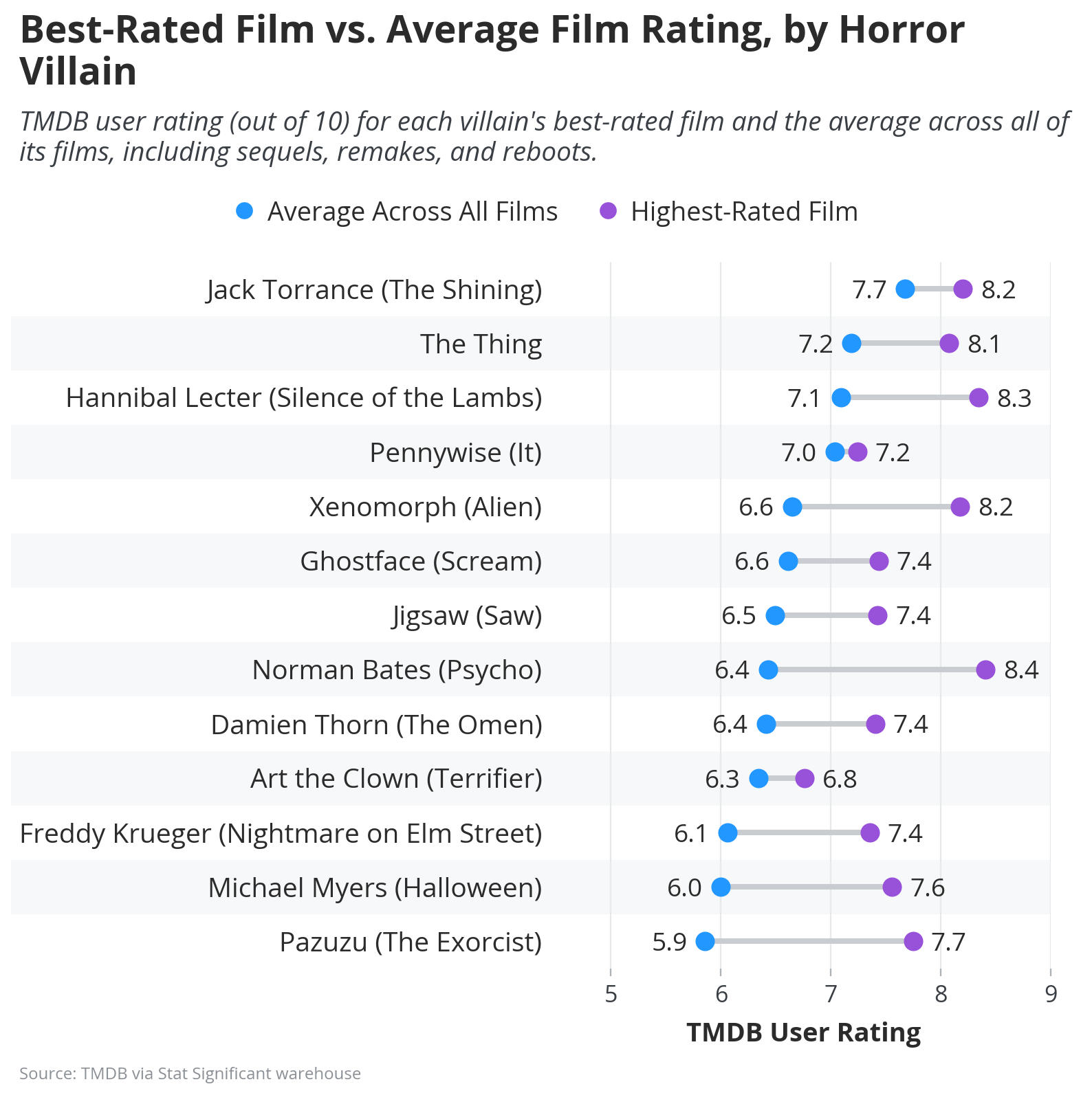
So to begin our villain rankings, we’ll start with moviemaking quality, as measured by online film ratings. We’ll compare the average rating for an entire series with the highest-rated entry in that respective franchise, ultimately stack-ranking our results by the former. By this measure, our canon of beloved baddies is topped by Jack Torrance from The Shining, The Thing, Pennywise the Clown, Hannibal Lecter, and the Xenomorph from Alien.
A Few Observations:
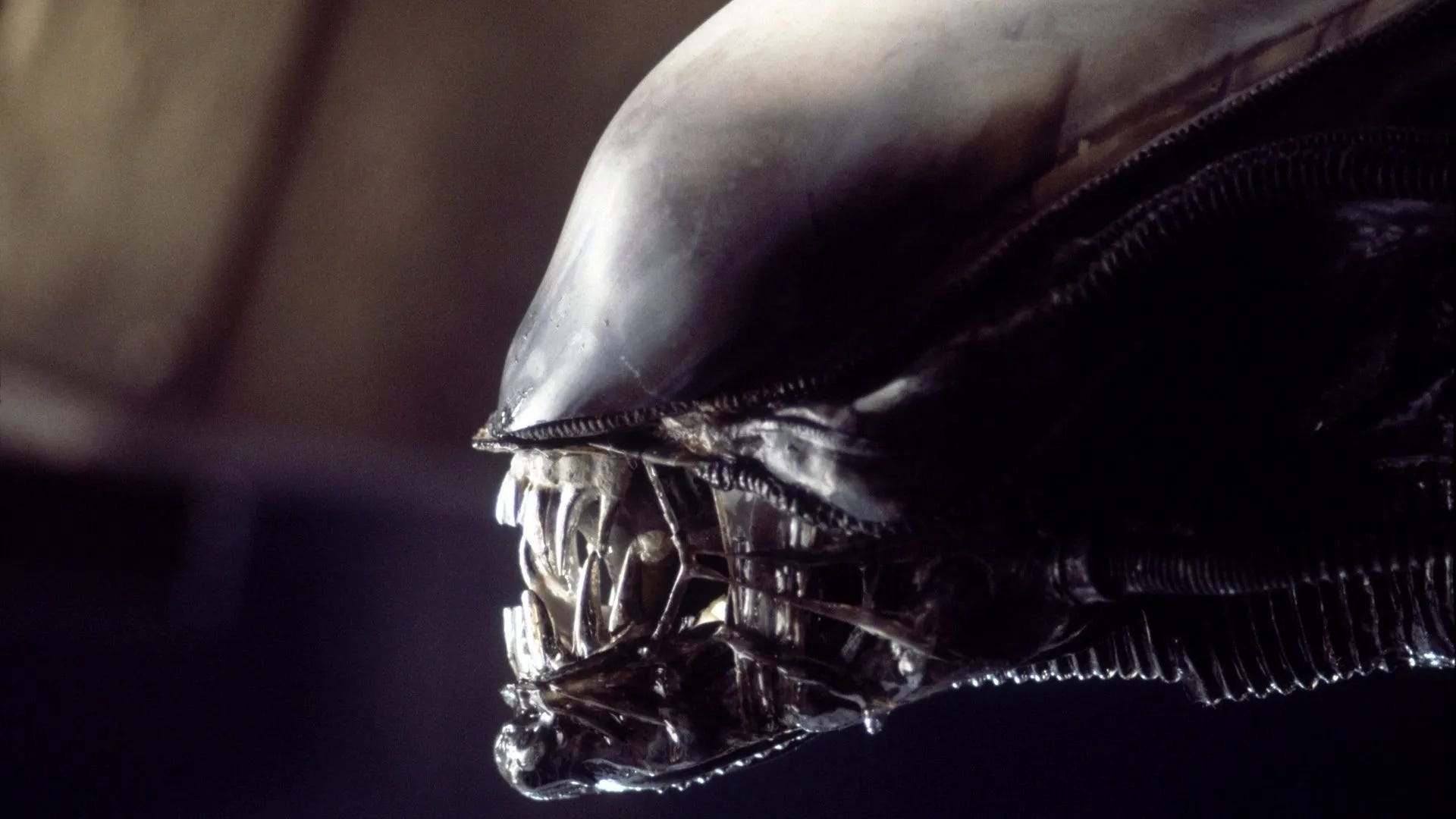
Some long-running horror series have maintained a high quality bar: Hannibal Lecter and the Xenomorph from Alien have proven far more resistant to franchise-wide declines in story quality. In my view, this speaks to the narrative malleability of these characters. Alien’s Xenomorph is perhaps the clearest example, a murderous extraterrestrial capable of fitting into a wide range of storytelling modes. The Xenomorph can serve as the focal point of a haunted-house movie, the centerpiece of a sci-fi parable, a symbol of corporate overreach by the film’s fictional space billionaires, or a straightforward terror in a gross-out creature feature—all packaged in the same monster.
Many franchises fail their source material: Psycho and The Exorcist are two prominent examples of series that struggle to recapture the magic of the franchise’s first entry. The commonality among these movies is that the original was directed by an auteur filmmaker like Alfred Hitchcock and William Friedkin, respectively, neither of whom was involved in any sequel.
Scariness: The Most Terrifying Horror Villains
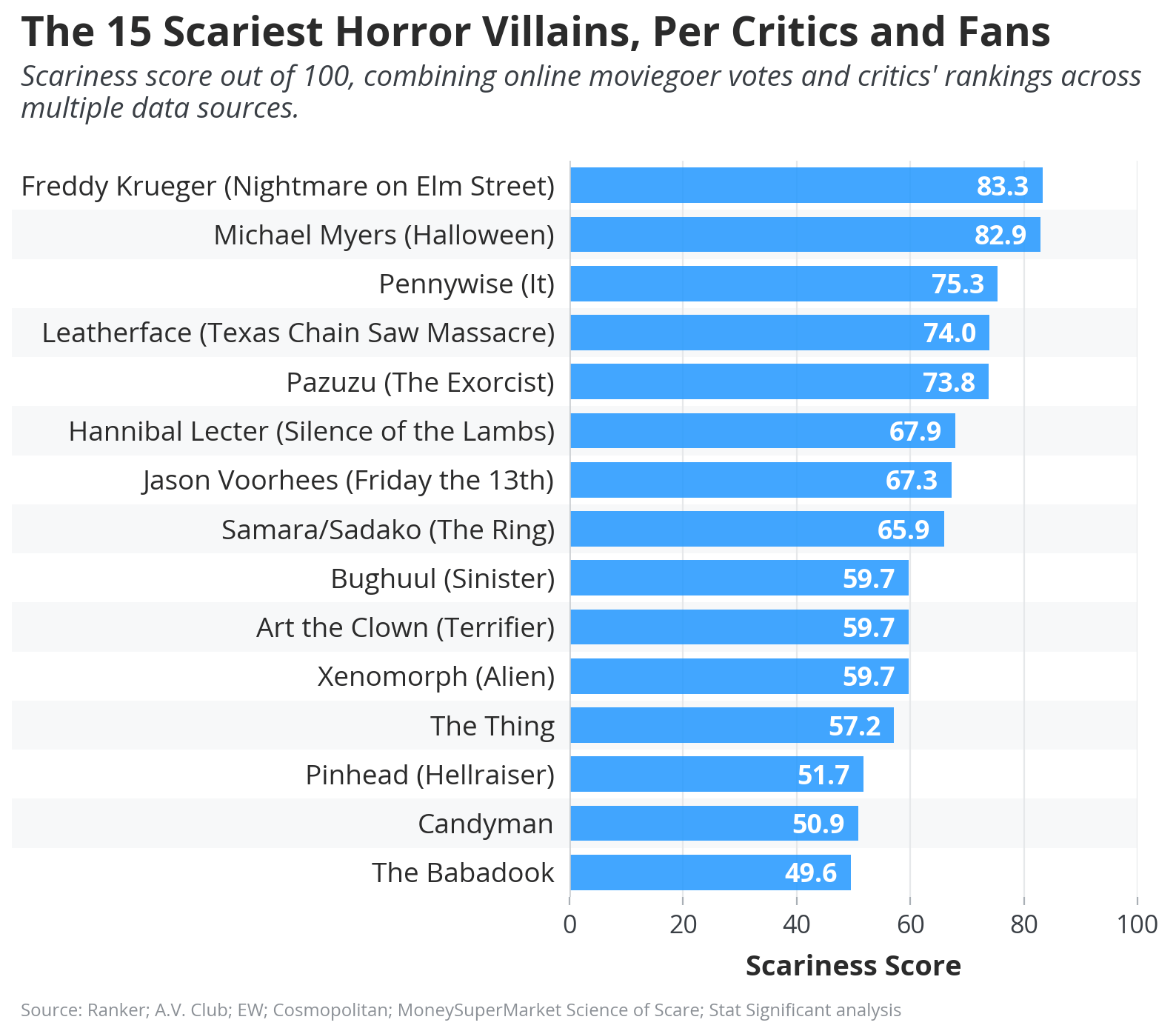
Next, we have villain scariness, a somewhat intangible quality we’ll measure by aggregating numerous online rankings of cinema’s “scariest movie villains.” Said differently, these are the characters audiences simply can’t shake, as voted on by the wisdom of digital crowds.
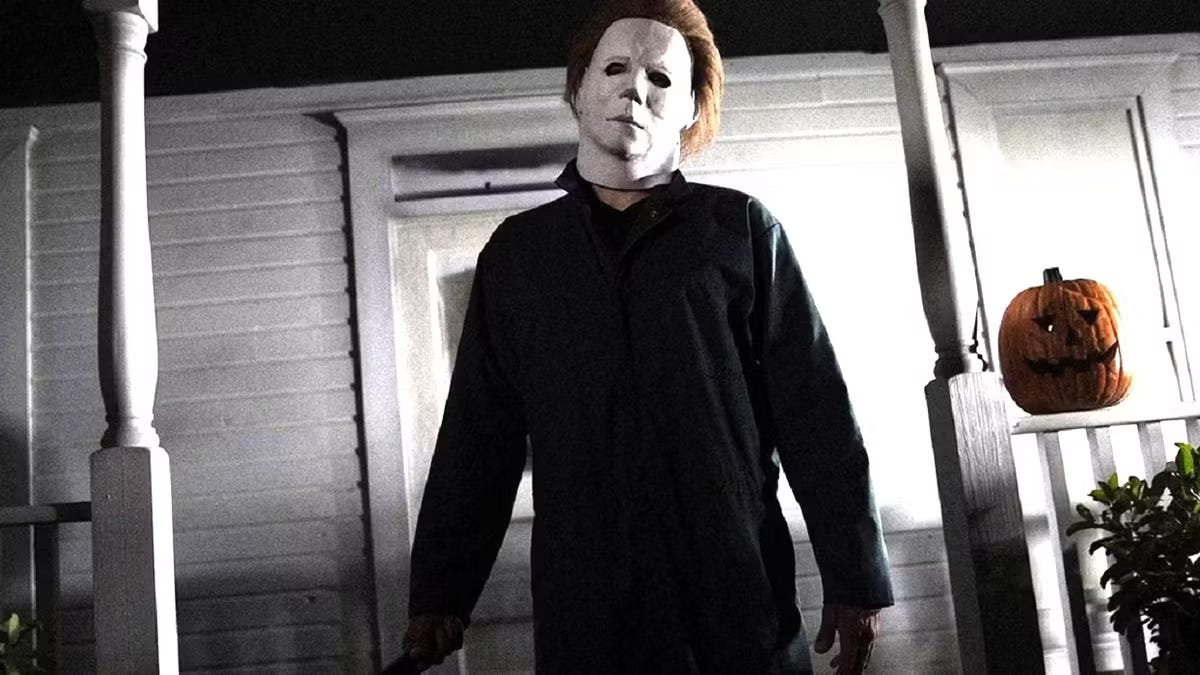
Our resulting list is led by 1980s slashers like Freddy Krueger and Michael Myers, two unkillable villains who have collectively appeared in 21 films in which they murder promiscuous teenagers with varying degrees of creativity.
Using our findings, we can now examine a central tension within every horror franchise: the trade-off between “scariness” and filmmaking quality. Most horror sequels settle into a familiar formula: a succession of kills involving largely anonymous actors, followed by a third-act showdown in which the “final girl” confronts the franchise’s mythic antagonist.
That predictability caters to series diehards who simply want more of the same. For critics and the broader moviegoing public, however, the appeal is far more limited. And because horror films are relatively cheap to produce, studios can keep churning out poorly reviewed sequels, allowing quality to deteriorate until the franchise becomes unwatchable.
So which series have avoided this decline, and which have failed to win over mainstream audiences?
To identify the villains that best balance cinematic prestige and dread, we can plot the two factors against one another and divide the results into four quadrants.
In the upper-right quadrant (very scary and high quality), we find the Xenomorph, Hannibal Lecter, and Pennywise the Clown from IT—characters who have sustained decades of cinematic relevance while sufficiently scaring audiences.
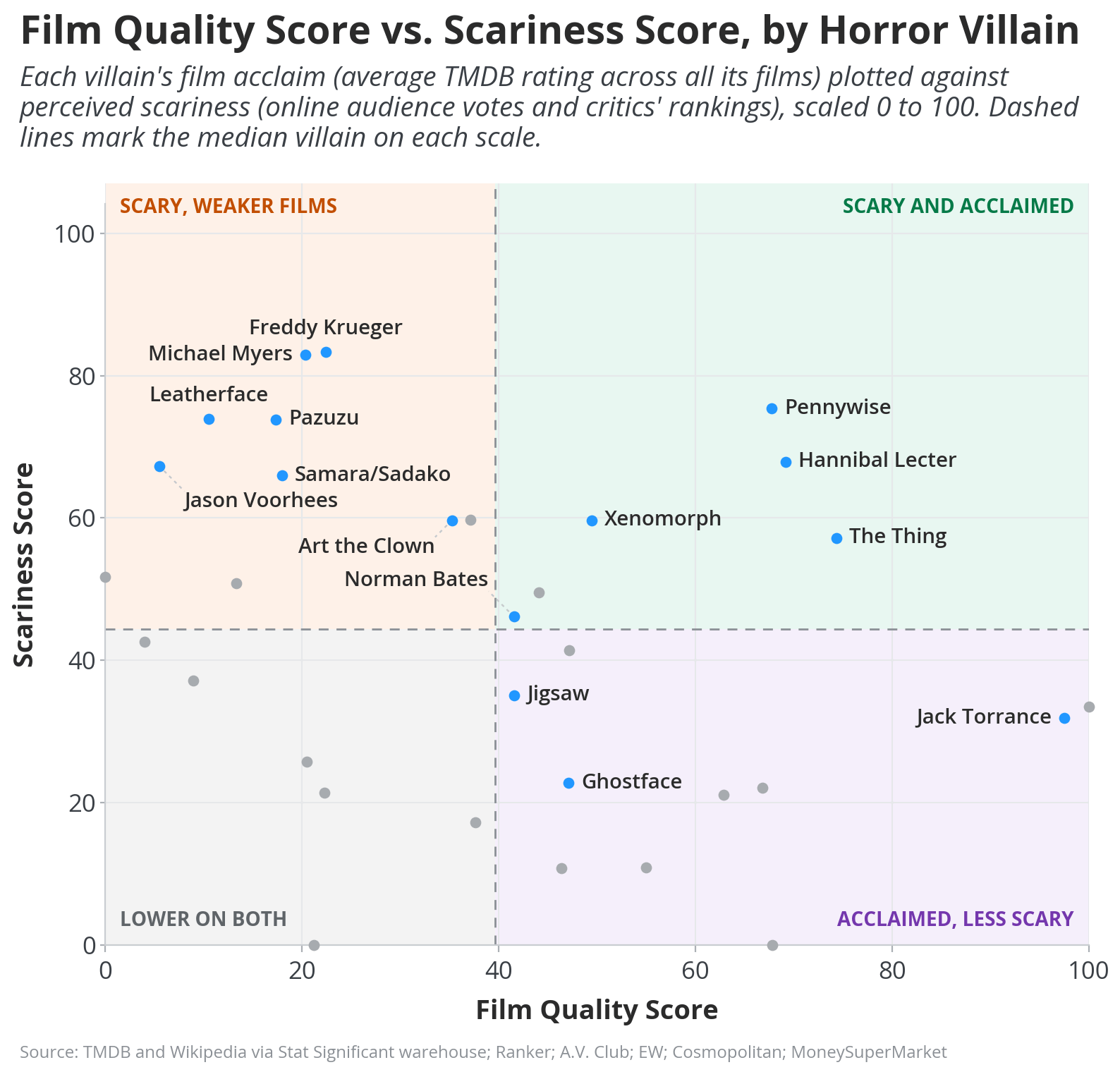
In the highly scary but critically derided bucket, we find beloved slashers like Freddy Krueger, Michael Myers, and Jason Voorhees, along with Pazuzu from The Exorcist—a franchise that has spent decades trying, and largely failing, to recapture the power of its 1973 original.
Longevity: The Horror Villains That Endure Within Popular Imagination
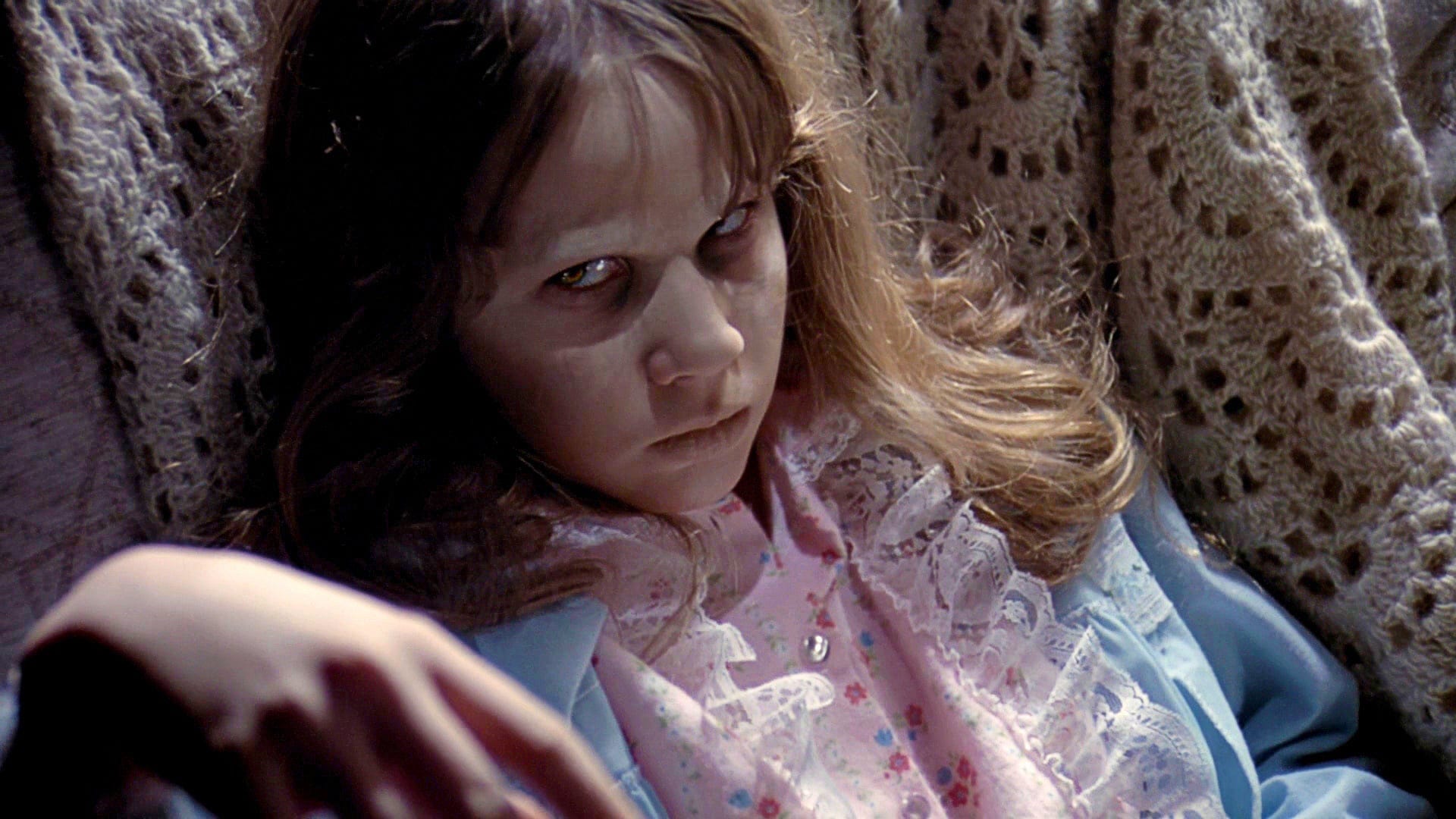
I’ve been interested in movies for as long as I can remember. When I first started getting into film, one of my favorite rituals was asking my parents about their most memorable moviegoing experiences. My dad would tell me about seeing Field of Dreams for the first time; my mom would talk about The Graduate. Once, I asked my mom about her least favorite moviegoing experience. Without missing a beat, she said, “The Exorcist.”
The Exorcist is arguably Hollywood’s first modern horror film, blending storytelling realism with supernatural terror—a stark departure from the campy Universal monster movies of the 1940s and 1950s. To this day, I refuse to watch any movie from the Exorcist franchise because I am simply too scared. Perhaps I will pass the same animus to my children when it comes to The Ring.
Alas, Pazuzu—the demon who haunted my mother in the original Exorcist—still haunts audiences today, ranking among the most enduring antagonists of all time, according to our composite longevity score. This metric combines franchise lifespan, number of films, and sustained online attention to measure each villain’s cinematic staying power.
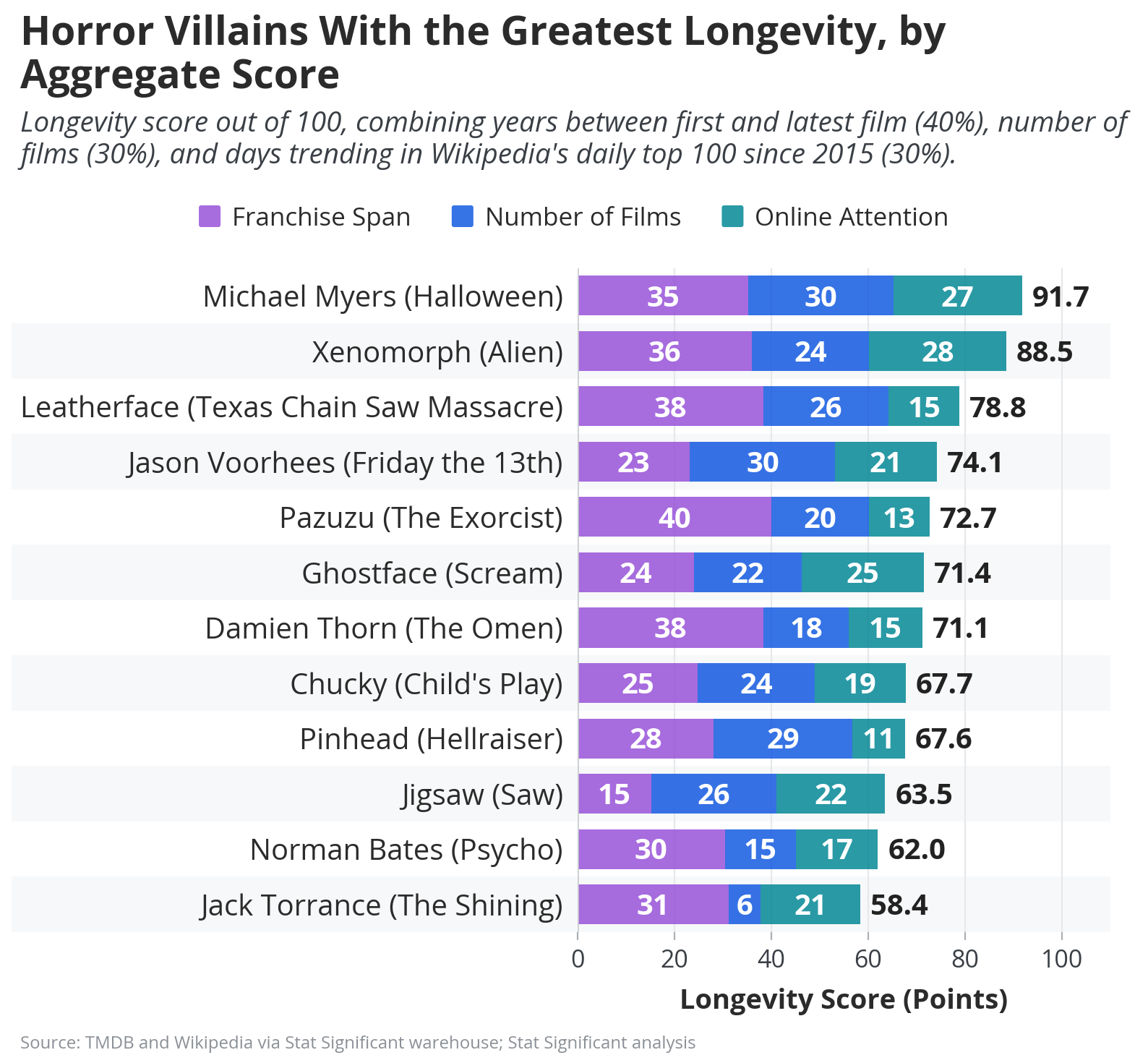
Once again, quality serves as an important counterweight to longevity—some of these long-running franchises appear to be sleepwalking with every lega-sequel and reboot. The most recent Pazuzu release was a shell of its Oscar-winning originator.
Our Final Ranking: Combining Our Results
When we combine our three criteria into a single aggregate rating, the Xenomorph from Alien tops our final list, which, in my opinion, is a pretty solid choice for the greatest horror movie villain of all time.
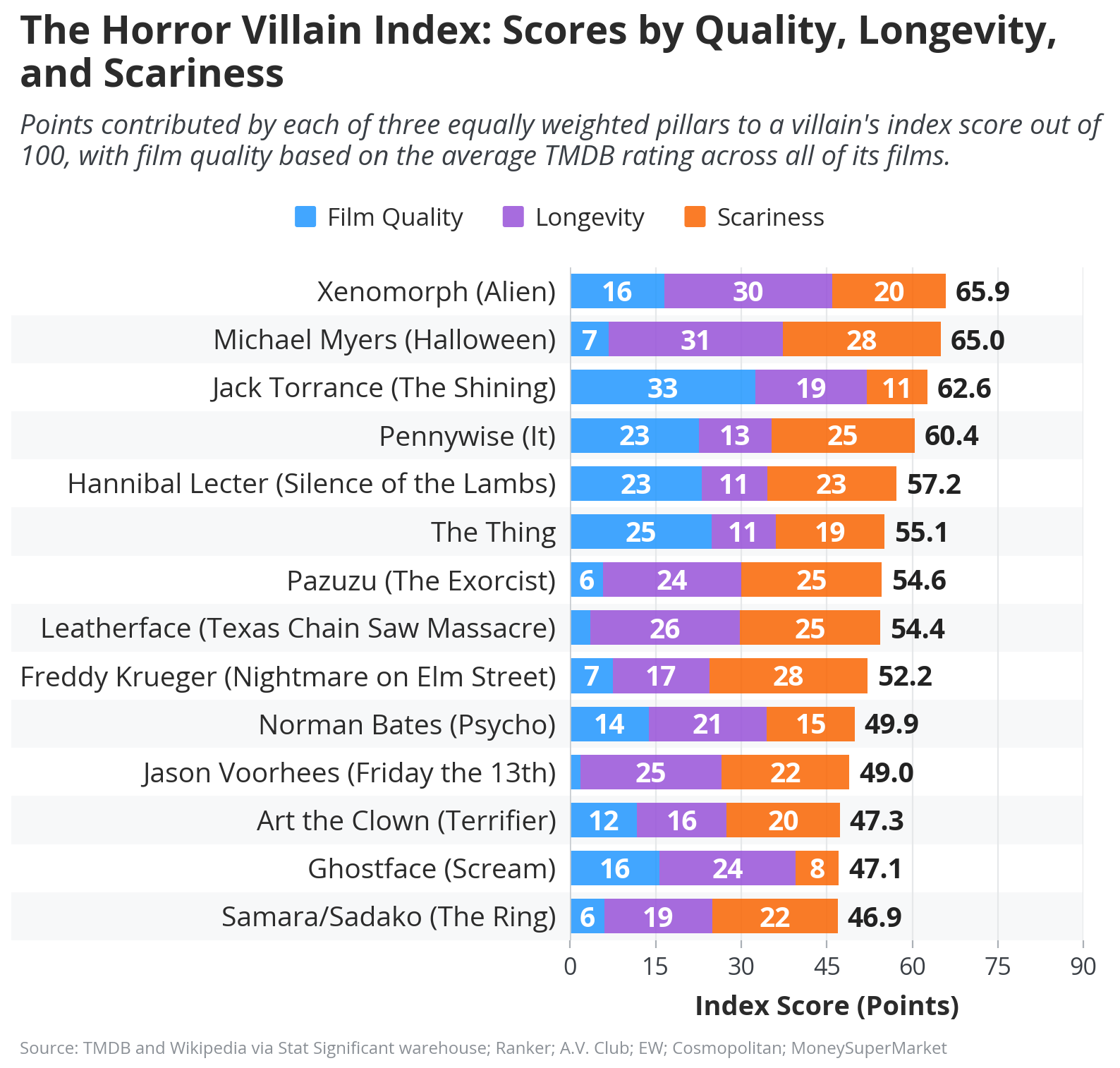
The Alien franchise has endured for nearly five decades and attracted some of the most acclaimed directors in film history, including Ridley Scott, James Cameron, and David Fincher. Like its rapidly transforming monster, the franchise continuously evolves. The original Alien is a haunted-house movie in space, while Aliens drops this intergalactic lizard into a full-blown action film.
Also near the top of our list are Hannibal Lecter and Michael Myers. One commonality among these characters—and several other upper-echelon entries—is the groundbreaking nature of the films that introduced them. Movies like Halloween and The Exorcist helped establish entire horror subgenres; as such, their villains remain unkillable onscreen and in the minds of IP-hungry studio executives.
The Best Horror Villains Post-2010: The New Horror Canon
Our aforementioned list heavily rewards longevity, which means newer characters had no chance of cracking the final list.
To account for this, I created a second ranking that replaces longevity with popularity (as measured by a combination of box office and online rating volume) and asked a different question: which iconic horror villains from the last 15 years will make a list like this three decades from now?
Atop this cohort are the antagonists from two of the biggest horror hits of the last five years: Freaky Nikki from Obsession and Aunt Gladys from Weapons.
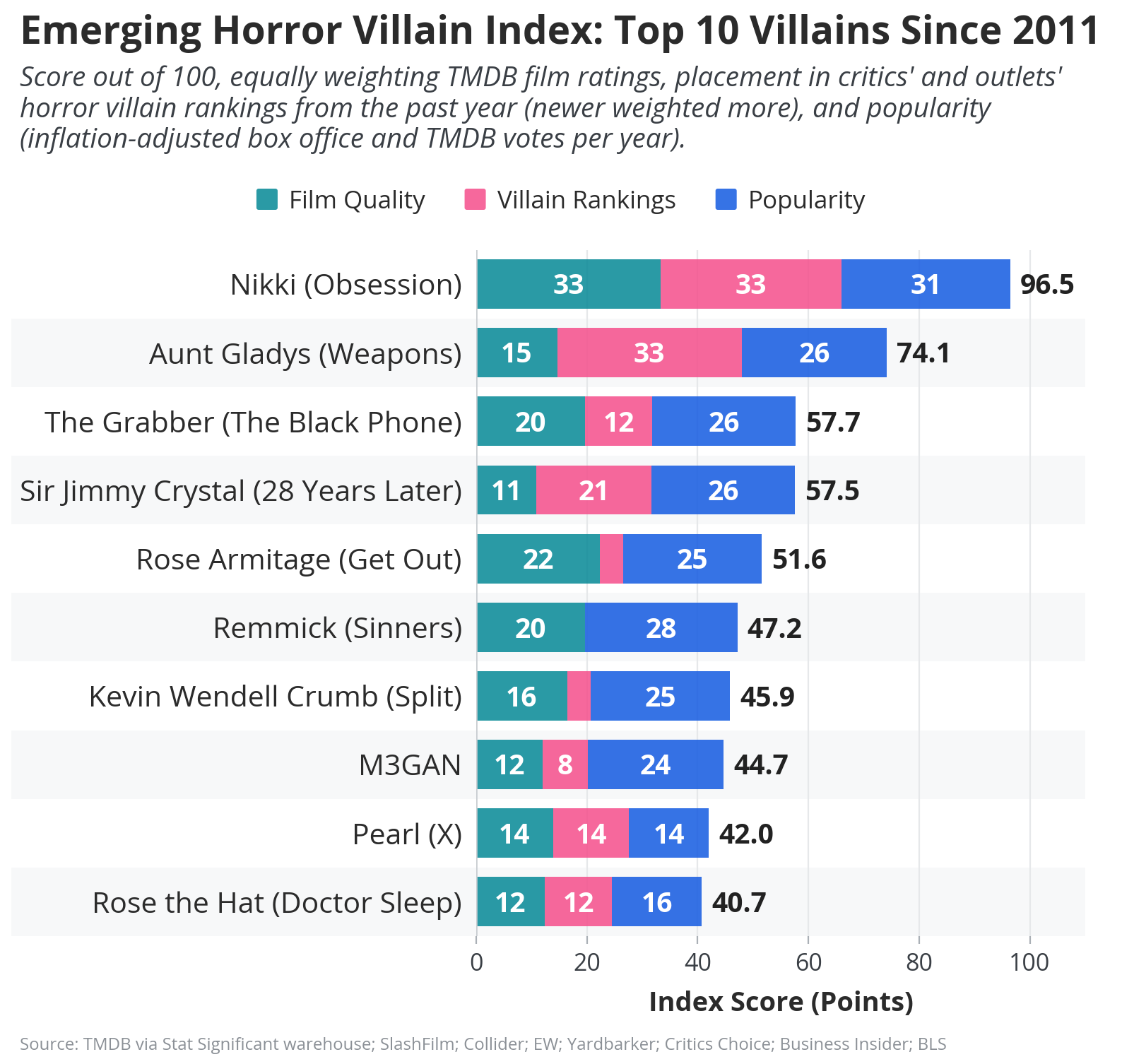
These characters will serve as fodder for Halloween costumes this year and will scare movie watchers for decades to come.
Enjoying the article thus far and want more data-centric pop culture content?
Final Thoughts: A Fatal Flaw
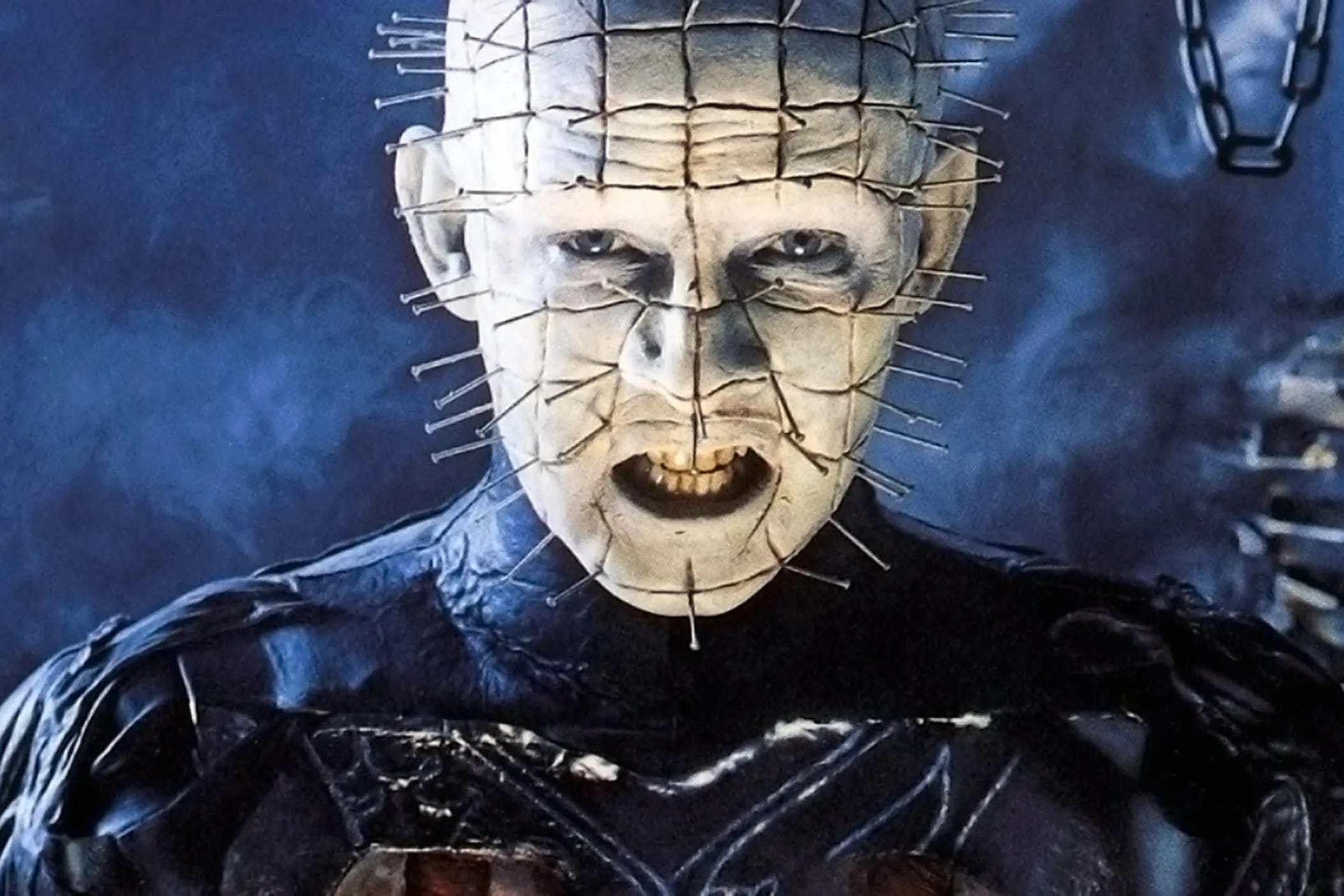
One day, when I was 12, I was wandering around our local Blockbuster and came across the DVD case for Hellraiser. Usually, I have film poster blindness. I don’t put much stock in movie marketing; it takes more than a single image to sell me on a film. But Hellraiser was different.
The cover featured the franchise’s iconic Pinhead character, which I immediately deemed “the scariest thing I’d ever seen.” I subsequently vowed never to watch this movie.
Flash forward to spooky season 2026. I’m aimlessly scrolling through streaming libraries, looking for a horror movie to kick off the festivities, when I stumble upon Hellraiser (and Pinhead). It was at this moment that I—a 33-year-old man with a job and a child—decided I would no longer be scared of an image displayed on a digital streaming tile. Or at the very least, an attempt would be made.
And guess what? This movie was super boring.
After about 30 minutes, I started fast-forwarding just to get to the scenes featuring Pinhead. And those scenes were indeed quite captivating, briefly interrupting standard-issue horror plotting populated by anonymous actors I did not care about.
My Hellraiser experience captures the agony and ecstasy of the iconic horror villain and the franchises built around these figures. The antagonist is always the main draw, appearing every 20 minutes to kill someone, while everything in between is mostly pointless. You’re asked to care about a bunch of random characters, 80% of whom will die by the end credits.
As I researched this article, it became clear that quality and longevity are fundamentally at odds in horror moviemaking. The genre benefits from absence: the prospect of normality being disrupted by the macabre, which means the film’s central figure can be present for only 50% of the story (at most). The downside is that the movie’s main attraction occupies a small fraction of its runtime. This structural flaw is what makes a franchise’s ninth installment so much worse than its debut—it’s the paradox of the popular horror villain.
What these franchises do accomplish is keeping their antagonists alive in popular imagination, ensuring that Pazuzu, Pinhead, Aunt Gladys, and Samara are passed down across generations. These characters burrow into our brains, ruining a week—or more—of our lives, even if attempts to recreate that effect mostly fall flat.
Enjoyed the analysis? Support Stat Significant and unlock the data behind the insights.
Become a paying subscriber to get bonus graphics, interactive dashboards, downloadable datasets, and to support independent journalism.
Paying subscribers get:
Bonus Data Stories: Full access to the Monday Roundup, a weekly bonus edition with extra culture data stories, curated datasets, and recommended reads.
The Public Dataset Directory (Updated Weekly): A curated directory of public datasets from around the web.
Interactive Data Hubs: Interactive dashboards across Streaming TV, Movies, Music, Search Trends, Wikipedia, and more.
*Note: For best results, open this link in a web browser while logged in to your Substack account.
Want to promote your data tool or media publication to Stat Significant’s 26,200 readers? Email daniel@statsignificant.com
Need help with a data problem? Book a free data consultation
Connect with me on LinkedIn if you want to chat about a data project.
Like movies? Follow me on Letterboxd
This was a lot of fun to read. Though The Exorcist will always be the film that scared me the most as a kid!
Am I the only person baffled by how this list does not have a single member of Congress on it?
<checks notes>
Oh, fictional… Well, terrifying and scary doesn’t respect genres.