

Intro: From One Option to Many Subscriptions
In the beginning, television was limited, composed of local stations broadcasting over the airwaves, typically affiliates of national services like ABC, CBS, and the BBC. Your access to the wonderful world of television depended on your location and antenna strength. And if you didn’t like the programming on these channels, well then too bad—you could always read a book or play hopscotch, or whatever else people did for fun in the 1950s.
Then along came cable television; suddenly the consumer had options. By the 1990s, millions of Americans paid monthly fees for bundles of specialized channels, such as HBO, MTV, ESPN, and CNN. While many voiced frustration over cable bundling—mainly the fact that customers were paying for channels they didn’t use—year-to-year cancellations remained low, because it was the only way to access an entire class of programming.
In 2007, Netflix launched its standalone streaming service, and the rest is history. People cut the cord and lost the ability to get all their content through a single subscription. Today, television consumers are subject to subscription fatigue, and platforms struggle to keep pace with this new direct-to-consumer model.
So today, we’ll chart a recent history of the streaming subscription, the economic ramifications of this new commercial contract, and how streamers are pivoting to a more sustainable (and familiar) version of this model.
How Streaming Regressed Into Cable TV
2007 marked the final year of the “before times.” Cable and satellite television reigned supreme, Netflix was laying the groundwork for the launch of its streaming service, and I didn’t have to pay for 8 distinct TV subscriptions in order to watch NFL games. And while cable and satellite providers spent billions of dollars promoting their unique value propositions, all these services did pretty much the same thing: you’d pay an annual fee and receive hundreds of channels in return. ‘Twas a simpler time.
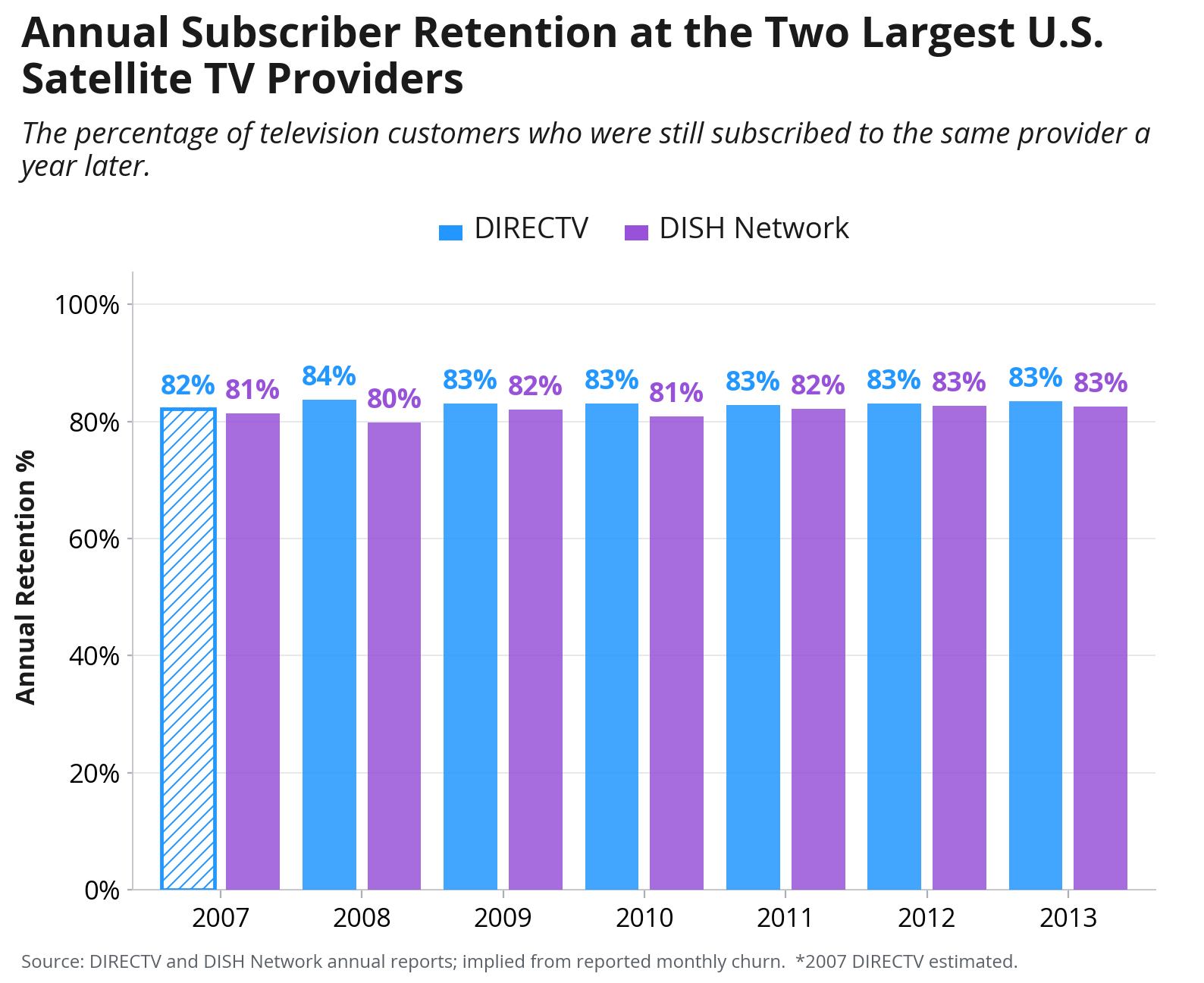
People had their gripes with the cable bundle, yet cancellation rates remained relatively low because no viable alternative existed outside this arrangement. Prior to the widespread adoption of streamers like Netflix and Hulu, monthly retention rates for providers like Dish and DirecTV were both 1) high (relative to their predecessors) and 2) stable.
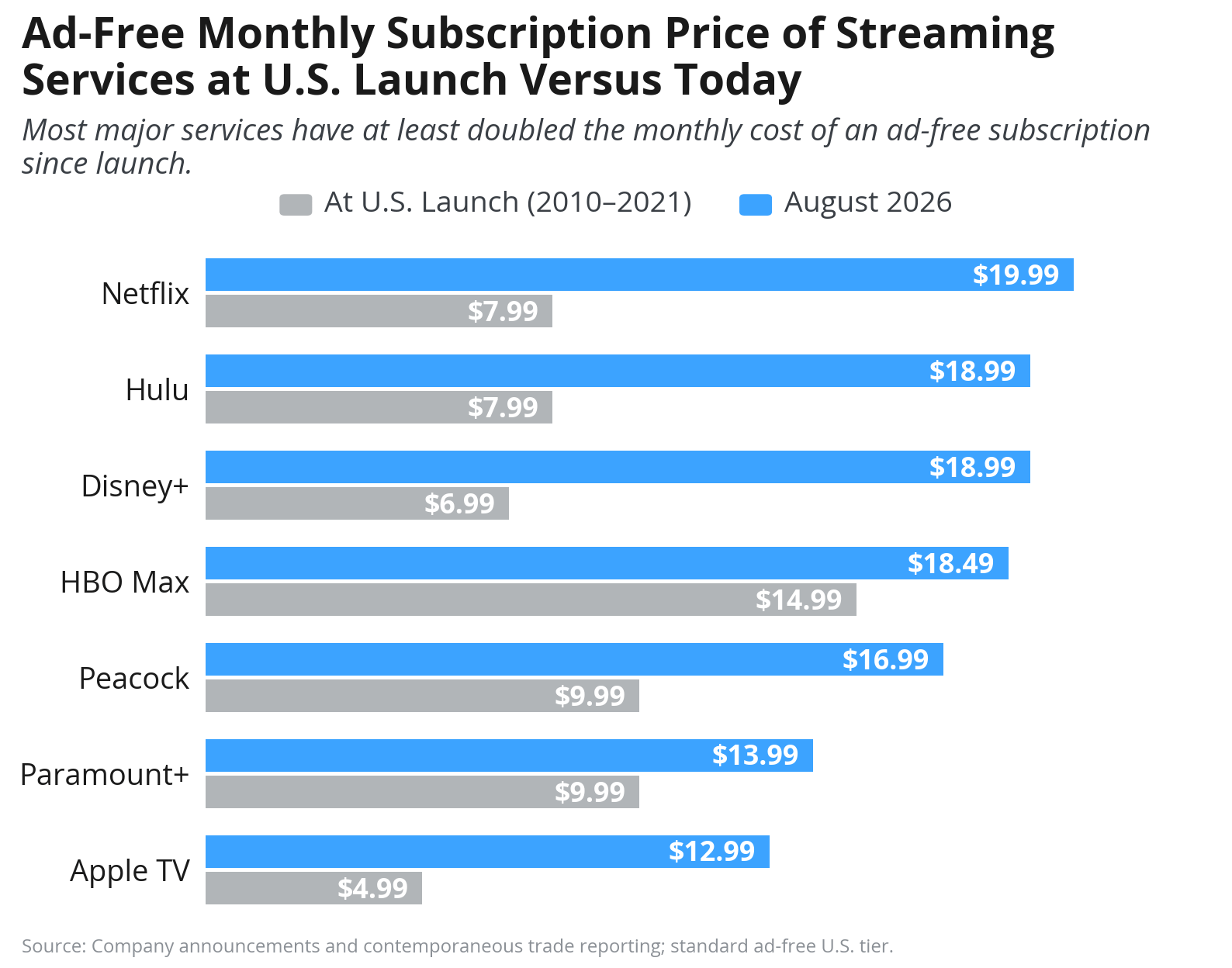
Netflix thoroughly disrupted this model by offering on-demand TV access unbound by programming schedules, advertisements, or physical media ownership—all for a cheap $7.99 a month.
Over time, Netflix’s ambition grew, and countless competitors entered the streaming wars. These platforms competed on content abundance and quality, and were forced to incrementally raise their prices to keep pace with breakneck spending.
Over the course of a decade, consumers went from paying one price for a bundle of cable channels to juggling several relatively inexpensive streaming subscriptions, only to watch the monthly cost of those same services steadily climb. Since launch, nearly every major streaming platform has—quite depressingly—doubled its initial monthly price (at a minimum).
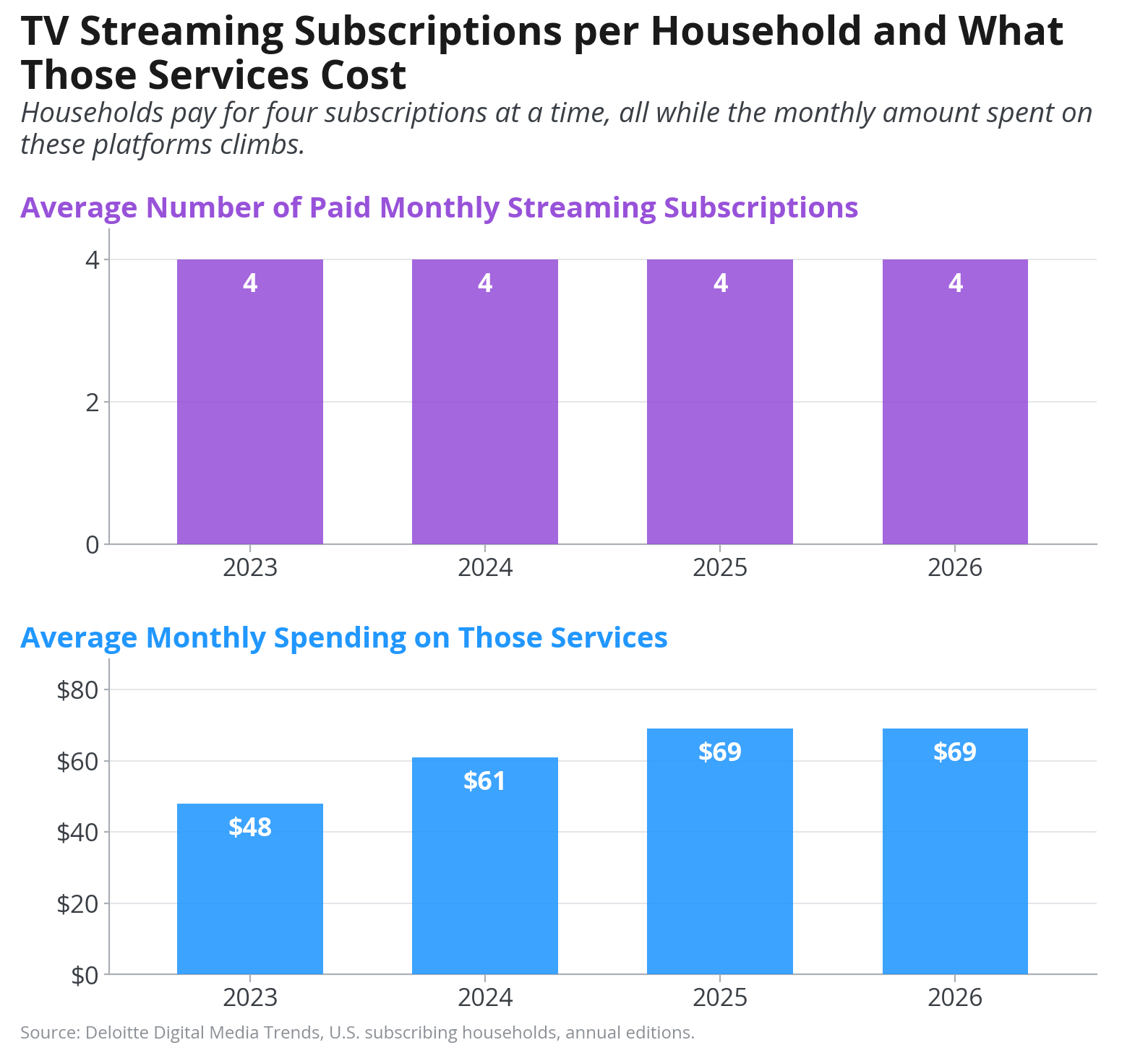
And yet, amid all these price increases, something funny happened: the number of platforms consumers were willing to pay for stayed constant—at four subscriptions a month—which meant the average viewer was paying more in the aggregate.
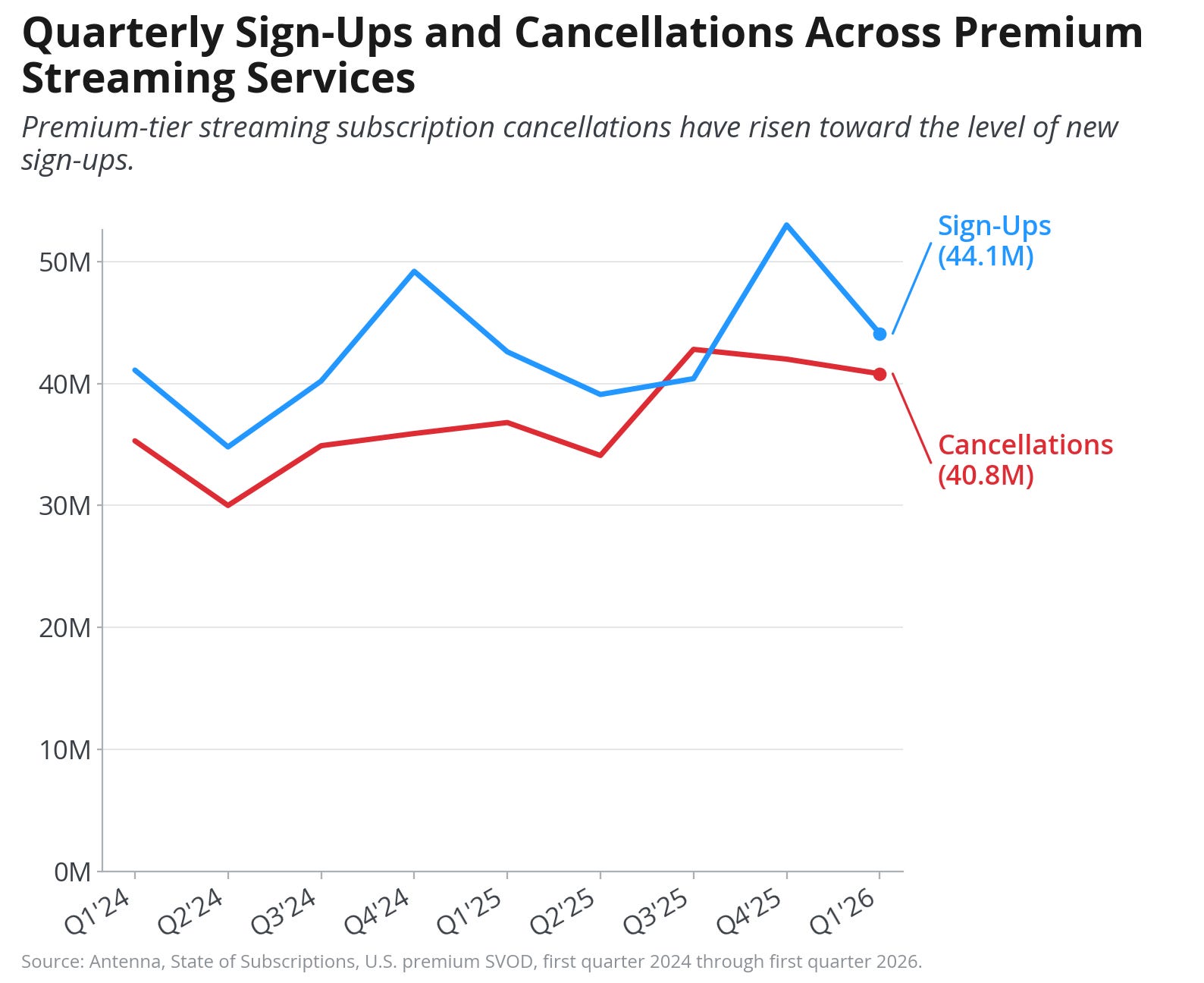
At the same time, just because someone pays for the same number of streaming services does not mean they stick with the same platforms month to month or year to year. The result is a game of subscription musical chairs. Each quarter, streamers see a flurry of new sign-ups and cancellations, with cancellations increasingly close to overtaking new subscription volume.
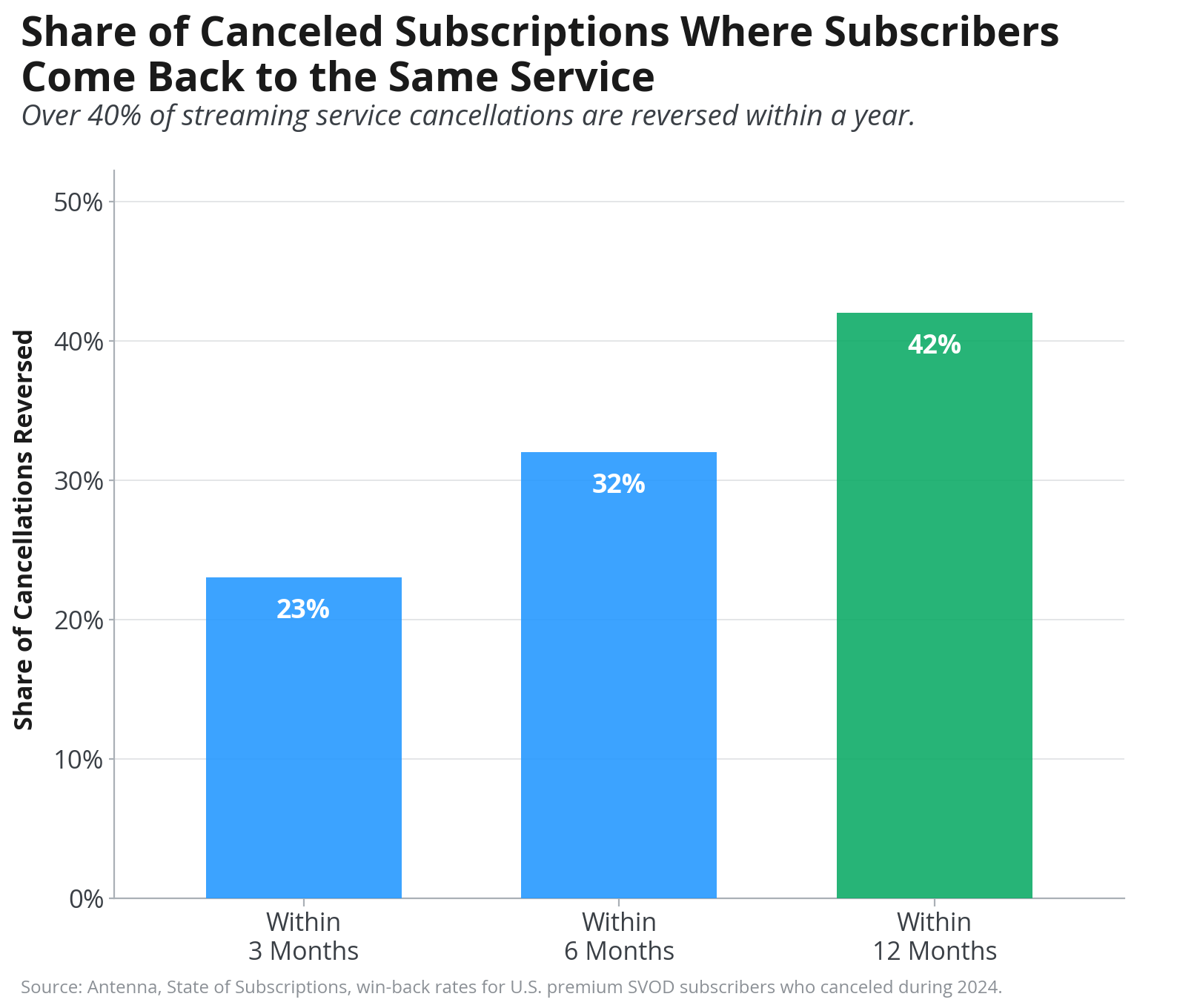
A recent study from Antenna Research found that 42% of consumers who cancel a subscription will eventually return to that service within the next 12 months, meaning streamers are spending precious marketing dollars to acquire and reactivate the exact same customer—who may be returning to watch a single NFL playoff game before promptly canceling their subscription a second (or third) time.
At first glance, this may seem like an acceptable equilibrium for the TV customer lifecycle—until you consider that services like Netflix and Paramount+ spend somewhere between $40 and $80 per customer signup.
Fifteen years into the streaming wars, platforms are paying to acquire and reacquire the worst customers: those with little allegiance to any one service.
With subpar retention and a complete lack of customer loyalty, the economics of perpetual growth can go off the rails pretty quickly. So if you’re a streaming service, what do you do?
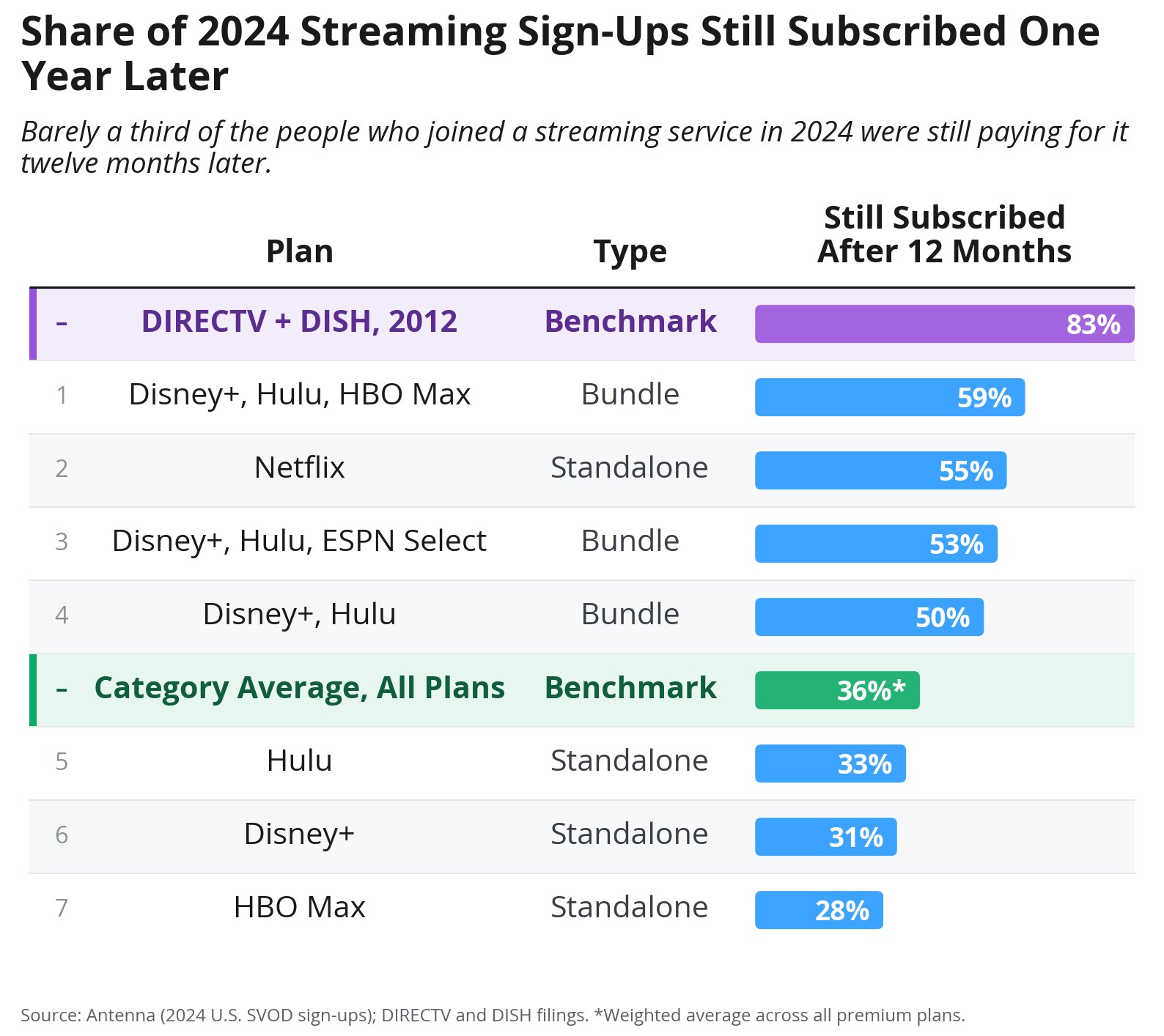
Hilariously, you look to the past and see what worked for previous iterations of television that you once set out to destroy. One practice that has come back into vogue is bundling, as streamers have started uniting forces so customers can pay one subscription price for access to multiple services, such as Hulu, Disney+, and HBO Max. This nascent cohort of bundles has seen significantly higher retention than standalone subscription signups—though nothing compares to the retention benchmarks we previously saw for DirecTV and Dish, which bundled hundreds of options together.
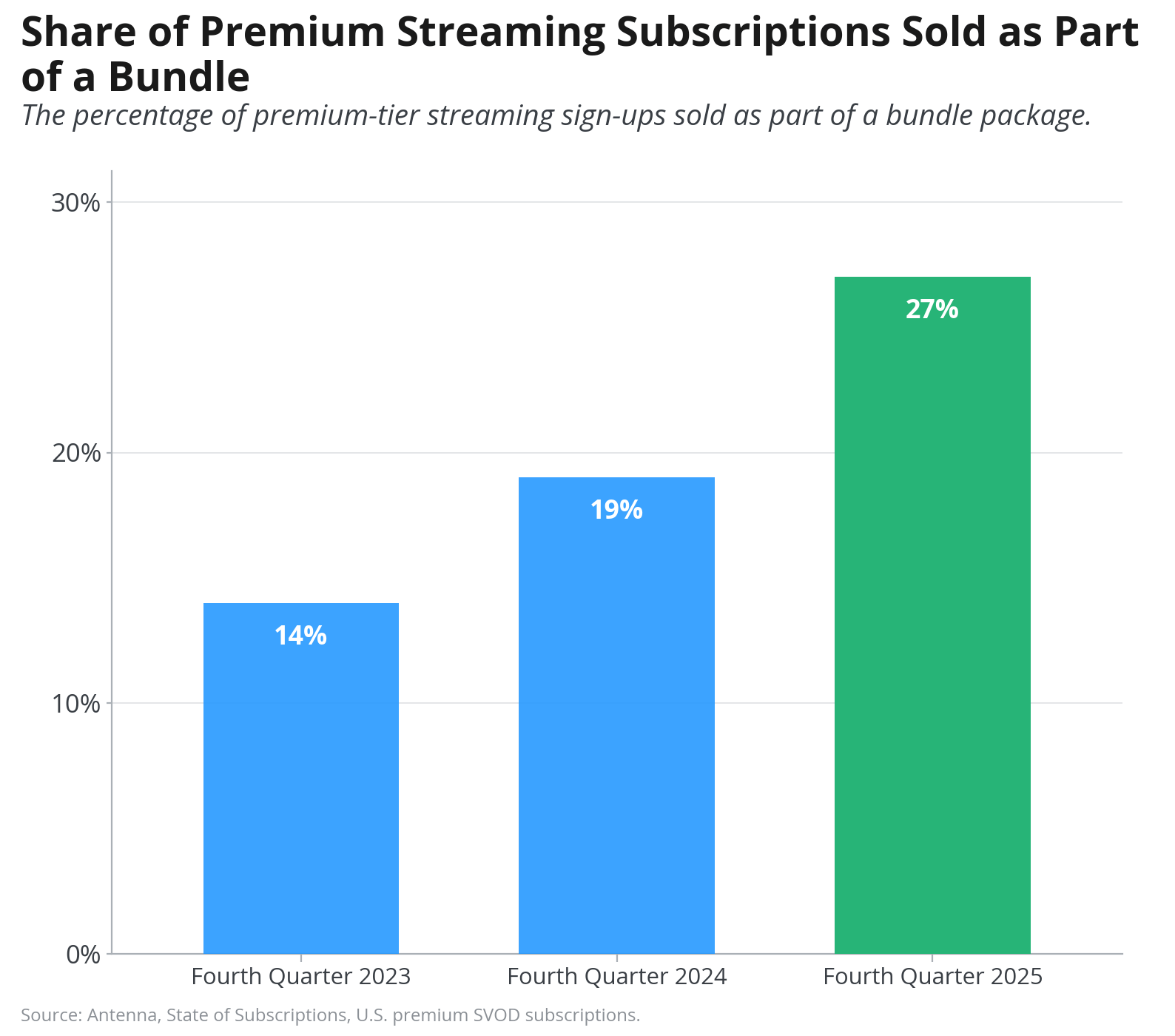
Consumers have responded by signing up for the very thing they once rejected as antiquated, and thus the share of new streaming signups coming via bundles has rapidly increased since the practice was reintroduced.
Most likely, this bundling will continue until the market effectively becomes a duopoly between Netflix and everything else, with “everything else” cobbled together through a hodgepodge of licensing deals, partnerships, and acquisitions (Paramount acquiring Warner Bros., for example, is essentially a bundle by another name).
The bundle addresses the burning issue of fickle customer retention, but it still leaves platforms with another major challenge: how to win over streaming holdouts. Each wave of subscribers is harder to acquire than the last, often requiring platforms to make product changes that bolster their appeal to holdouts. Industry consensus has long pointed to price as a major barrier to cord-cutting, which creates a seemingly impossible business conundrum for streamers: how do you attract price-sensitive customers while simultaneously raising prices?
The answer: advertising! Remember advertising? One of the things streaming services promised they would never do, but now it’s the single biggest driver of growth for these companies? Yes, exactly that thing!
And guess what? Consumers love it. In 2022, 60% of streaming activity went through ad-free plans and platforms; today, that figure has fallen to 25%, with subscription-free services like YouTube, Tubi, and Roku slowly gobbling up market share.
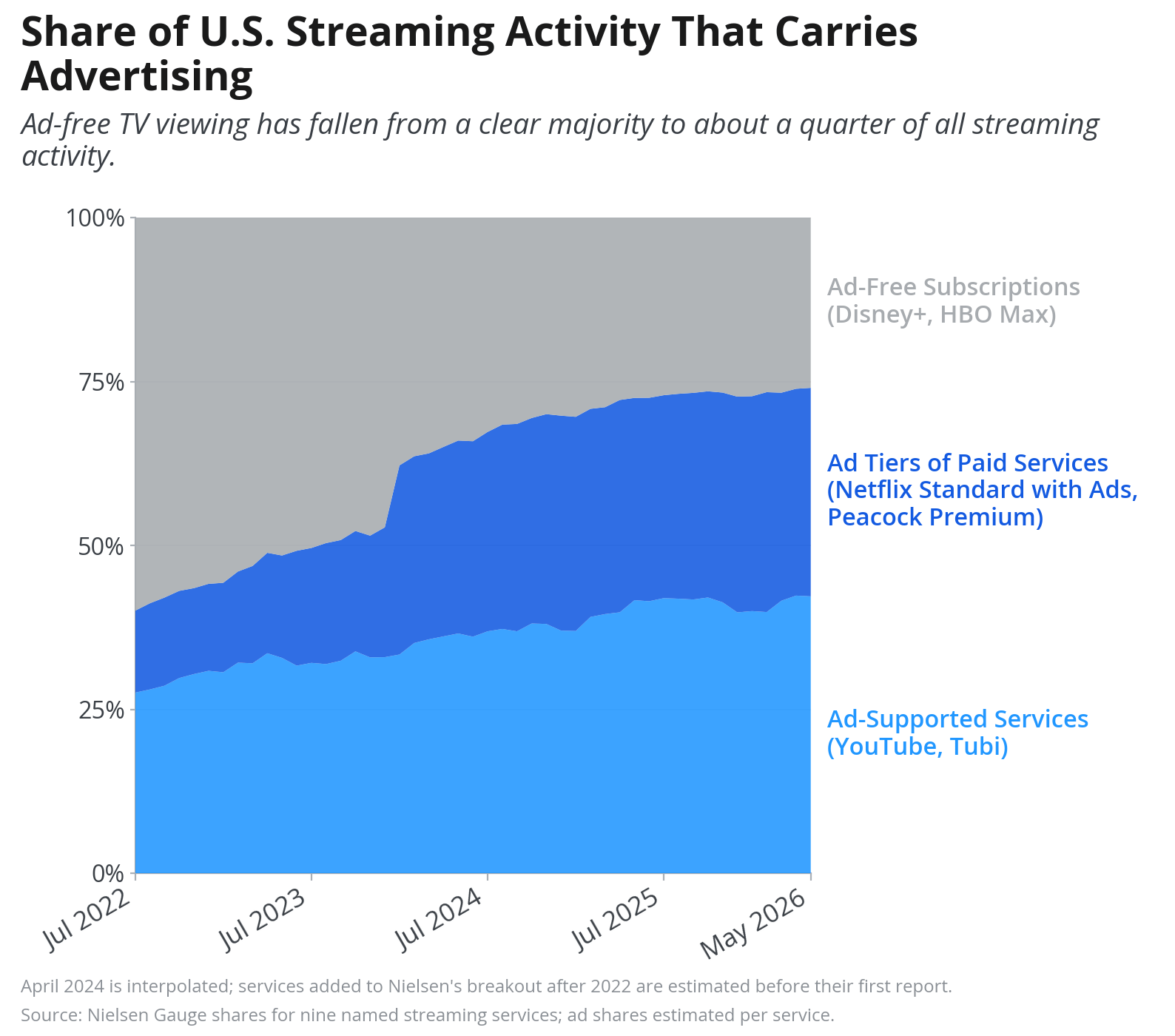
There is truly nothing new under the sun, as cable television has seemingly Frankenstein-ed itself back together, all whilst the entertainment industry has effectively shrunk in the process.
Enjoying the article thus far and want more data-centric pop culture content?
Final Thoughts: What’s the Upside?
I am not a Luddite, nor am I a technological NIMBY, nor am I any other stereotype of a person who resists change. I accept that culture evolves, even when that evolution renders something I love obsolete (like physical media). The world may have been “most awesome” when I was between the ages of 18 and 28, but that doesn’t mean it should remain frozen there forever. My tolerance for Silicon Valley disruption ultimately comes down to a fairly simple exchange of value: if something is going to die, then whatever replaces it should offer enough utility to justify that loss.
Google Maps cleared this bar because printing directions from MapQuest was a terrible system that still somehow ended with you lost in a suburban cul-de-sac. Spotify clears this bar as well: despite my insistence on collecting vinyl records, these albums take up space and force me to “own” dozens of songs I do not care about. TikTok, for better or worse, solves the bottomless human desire to never be alone with one’s thoughts.
Which brings me to streaming television: what was all of this for?
Many of the things streaming was supposed to liberate us from—advertising, bundles, and ever-inflating monthly bills—have become defining features of the medium in 2026. Consumers now pay more for access to an increasingly fragmented collection of services, while the American entertainment industry producing all that content has contracted. The old system was dismantled. So what, exactly, did we get in return?
You could argue that streaming ushered in an era of better television. But prestige TV predates Netflix’s transformation into an original-content factory: The Sopranos, The Wire, and Mad Men all emerged from an (allegedly) antiquated cable ecosystem. Meanwhile, a large segment of Netflix’s present-day output resembles the programming we’ve come to expect from cable mainstays like Bravo, TLC, or the History Channel: true-crime docuseries, reality competitions, and game shows. There is great television on streaming, but that doesn’t mean streaming was necessary for us to produce great television.
Which brings us to an uncomfortable counterfactual: In a universe where Netflix never disrupted Hollywood, would TV shows look similar to the ones we have today? If the answer is “yes,” then the streaming wars were never about reinventing television (in a sustainable manner). They were about rearranging who owns television.
A Silicon Valley company entered an established industry, subsidized an extraordinarily attractive product, seized market share, and forced incumbents into an expensive arms race. Other tech giants like Amazon, Apple, and Google followed suit, entering the streaming wars. Hollywood studios responded through imitation and consolidation, but lacked the scale required to compete. The most consequential change was not that television became available on demand, but that tech companies and erratic billionaires absorbed another swath of popular culture.
Seen through this prism, the inexpensive and convenient streaming subscription of the 2010s was simply a weapon of disruption. Consumers were offered an artificially attractive version of television long enough to abandon the old model. Then television regressed to its long-term equilibrium: a product marked by subscription increases, advertisements, and bundles.
In the end, we never actually got rid of the cable bundle. We spent a decade being convinced that it was obsolete, only for it to be resurrected under new ownership.
Enjoyed the analysis? Support Stat Significant and unlock the data behind the insights.
Become a paying subscriber to get bonus graphics, interactive dashboards, downloadable datasets, and to support independent journalism.
Paying subscribers get:
Bonus Data Stories: Full access to the Monday Roundup, a weekly bonus edition with extra culture data stories, curated datasets, and recommended reads.
The Public Dataset Directory (Updated Weekly): A curated directory of public datasets from around the web.
Interactive Data Hubs: Interactive dashboards across Streaming TV, Movies, Music, Search Trends, Wikipedia, and more.
*Note: For best results, open this link in a web browser while logged in to your Substack account.
Want to promote your data tool or media publication to Stat Significant’s 26,200 readers? Email daniel@statsignificant.com
Need help with a data problem? Book a free data consultation
Connect with me on LinkedIn if you want to chat about a data project.
Like movies? Follow me on Letterboxd
Agreed. And furthermore, the new landscape still has major advantages that the old system lacked. We can now pay for an ad-free tier; that wasn't an option before. And we can choose to subscribe to one service (i.e., "channel") if we want.
Also being able to download shows and take them on a flight is pretty big upgrade