

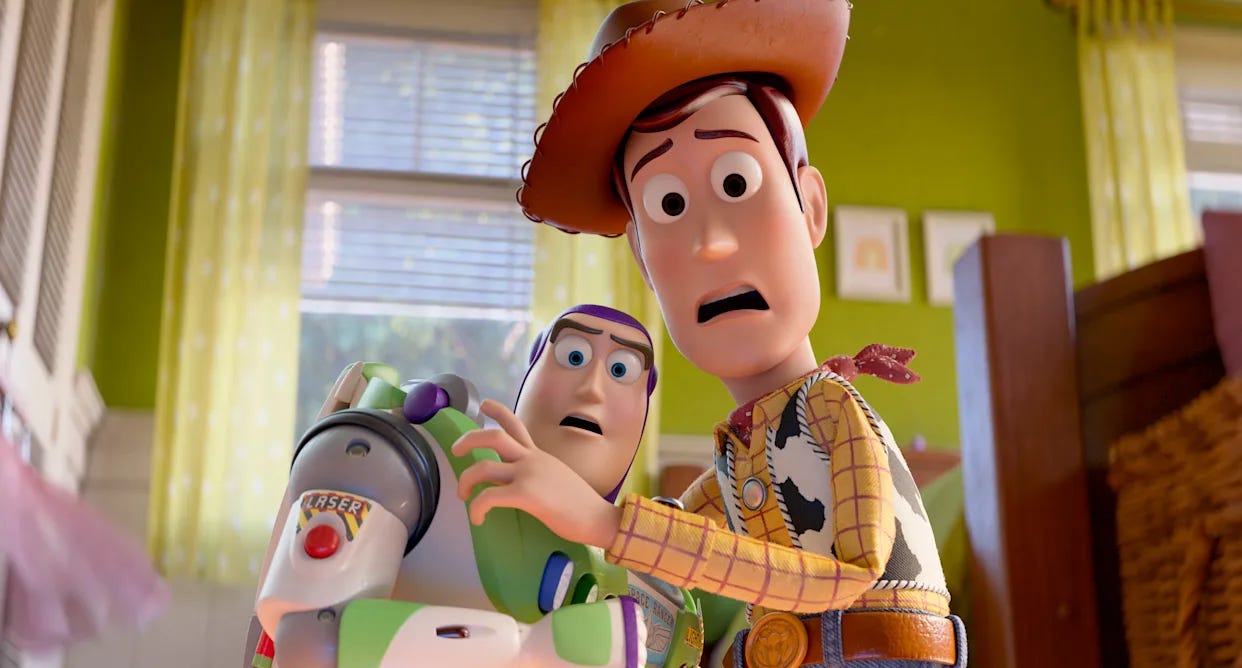
Intro: The Near-Demise of Disney
In the late 1980s, Disney was on the precipice of bankruptcy. After the deaths of Walt Disney and his brother Roy O. Disney, the company had drifted creatively, culminating in the disastrous 1985 release of The Black Cauldron. The ambitious sword-and-sorcery epic was the most expensive film in the studio’s history—and, subsequently, a high-profile flop, losing roughly $70 million in today’s dollars.
Following The Black Cauldron’s failure, many predicted that the long-suffering conglomerate was nearing its end, as Wall Street raiders began launching takeover bids to gut the company.
Underlying the turmoil was a growing belief within Hollywood that feature animation—the medium Disney had brought to the mainstream with Snow White—was no longer commercially viable. To many, the idea that a major studio could build its future around animated films or family entertainment felt increasingly untenable.
Obviously, that consensus did not age well. In 2024, Disney-Pixar’s Inside Out 2 was the year’s highest-grossing film, while Zootopia 2 carried the company to yet another box office win in 2025. In fact, entertainment aimed at younger audiences has become one of the last bastions of box office stability, justifying continued investment in an uncertain post-pandemic movie landscape.
So today, we’ll explore the commercial resurgence of children’s entertainment, the volatile economics underpinning the genre, and the format’s uncertain future.
Today’s newsletter is sponsored by The Stat Significant Dataset Hub
Access 225+ Curated Datasets to Elevate Your Analysis

Want the data behind the deep dives? The Stat Significant Data Hub gives you access to 225+ curated datasets across movies, music, TV, economics, and more.
New datasets are added weekly, with full archive access for Stat Significant paid subscribers. Since last week’s post, we’ve added 15 new datasets—spanning prediction markets, color names, popular GitHub repos, and energy markets.
How Kids’ Movies Became Hollywood’s Most Reliable Bet
For the purposes of this analysis, we’ll combine the “family” and “animation” genres into a single category of children’s entertainment, using both terms interchangeably. Got it? Great!
The first thing you’ll want to know about this family film category is that it’s among Hollywood’s most profitable theatrical formats, generating a return on investment comparable to that of the horror genre.
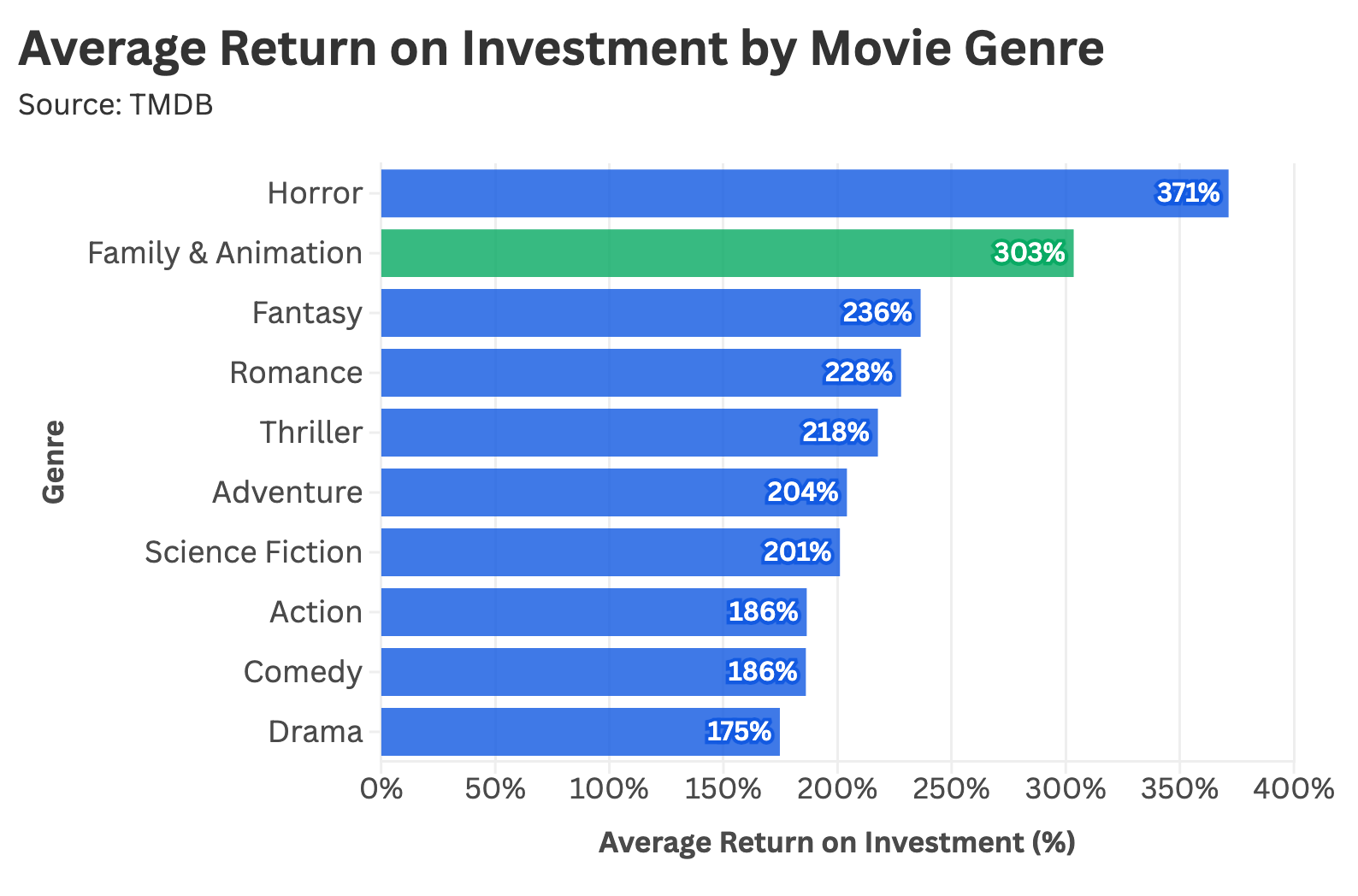
What’s especially notable here is that horror movies generate a 3x return on a ~$10M budget, while an animated film is tripling a budget five to ten times that amount. Amid post-pandemic volatility, this asymmetric upside has helped family films remain a core pillar of studio slates.
Yet the family film wasn’t always a box office juggernaut. The genre’s enduring dominance was shaped through two commercial renaissances:
Disney’s Revival in the 1990s: After a string of flops in the 1980s, Disney reversed its fortunes with the release of The Little Mermaid. The film became a massive commercial success, launching a new era for the studio and popularizing the name Ariel for decades. The company built on this momentum with a run of generational classics—like Beauty and the Beast, The Lion King, Pocahontas, and Mulan—that reestablished animation as a dominant box office force.
The Rise of Pixar: In 1995, Pixar’s Toy Story stunned audiences with its groundbreaking computer animation, ushering in a new era for the medium. The film laid the foundation for an extraordinary run of Pixar hits, including WALL·E, Ratatouille, and Up!.
Each paradigm shift further cemented children’s entertainment as a cornerstone of the modern box office. By the end of Pixar’s late-2000s hot streak, family films routinely accounted for 30 to 40 percent of the year’s 25 highest-grossing releases.
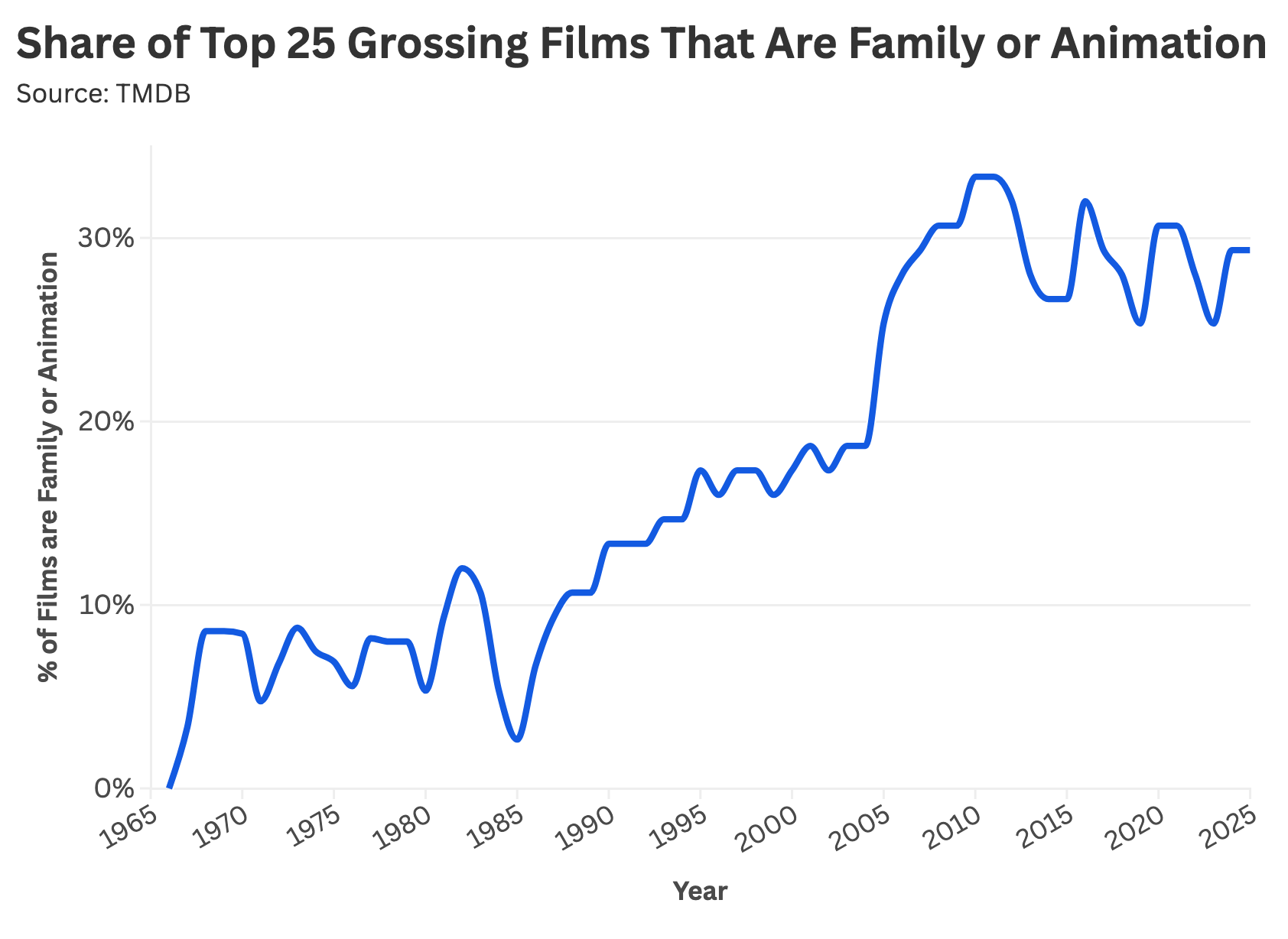
Financially, the genre has a high floor and an almost unlimited ceiling. While creative execution matters, the format’s durability is underpinned by two behavioral forces outside Hollywood’s control:
Parents of young children want to leave the house when given the chance, because toddlers aren’t exactly wired for Netflix & chill.
Once you leave the house, you want an activity that will hold your child’s attention for an hour or two, ideally offering a brief reprieve from constant supervision.
If this explanation reads as reductive, it’s because the logic really is that simple.
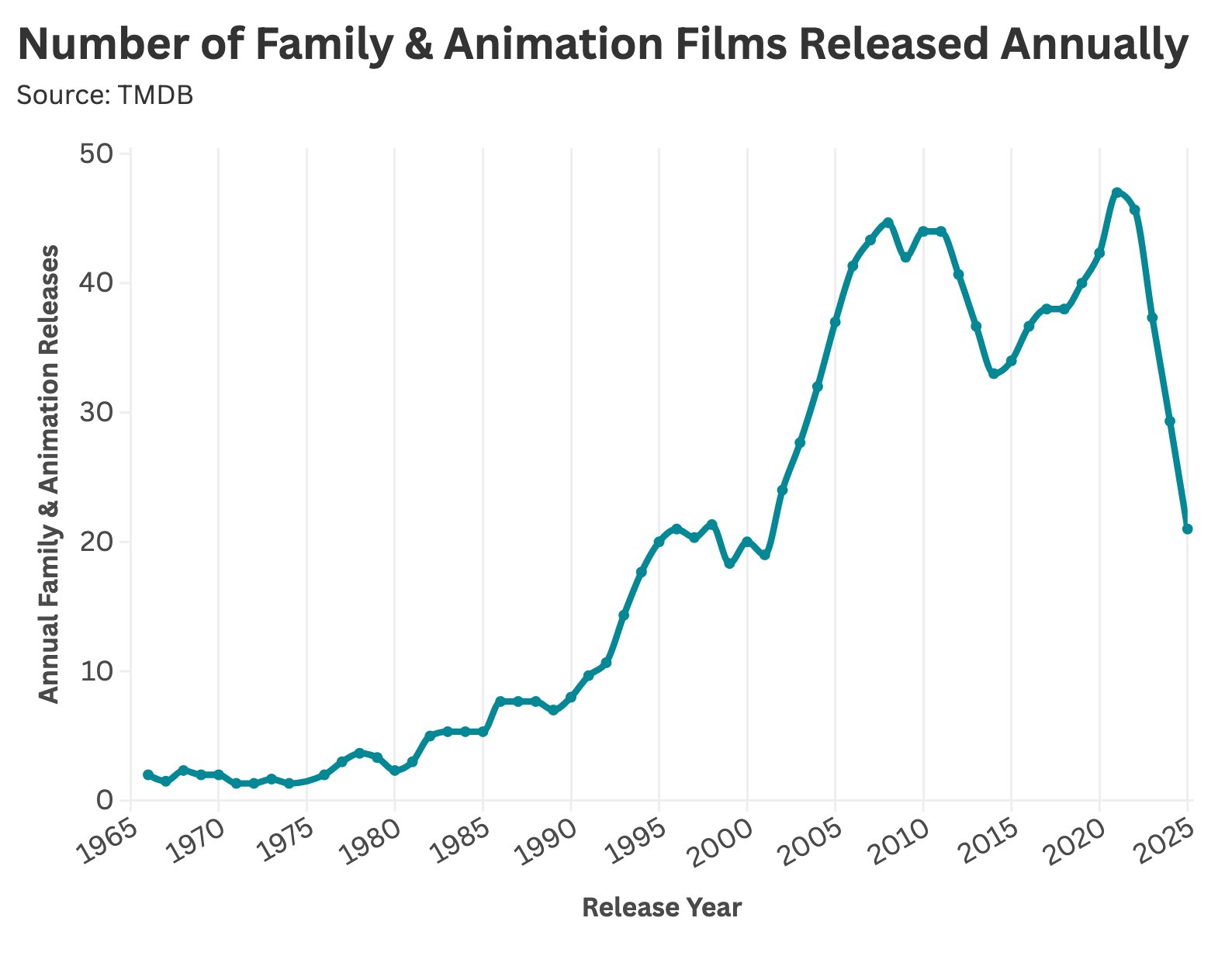
Given considerable built-in demand, you’d expect the genre to expand indefinitely, churning out a growing slate of family blockbusters. And yet it hasn’t.
Around 2010, the genre’s release volume plateaued, and in recent years, the number of family films has plummeted (Note: these figures include streaming movies).
The clearest explanation for the genre’s stagnation is cost. These films are expensive to produce, with inflation-adjusted budgets that place family releases in the same high-cost tier as sci-fi and fantasy.
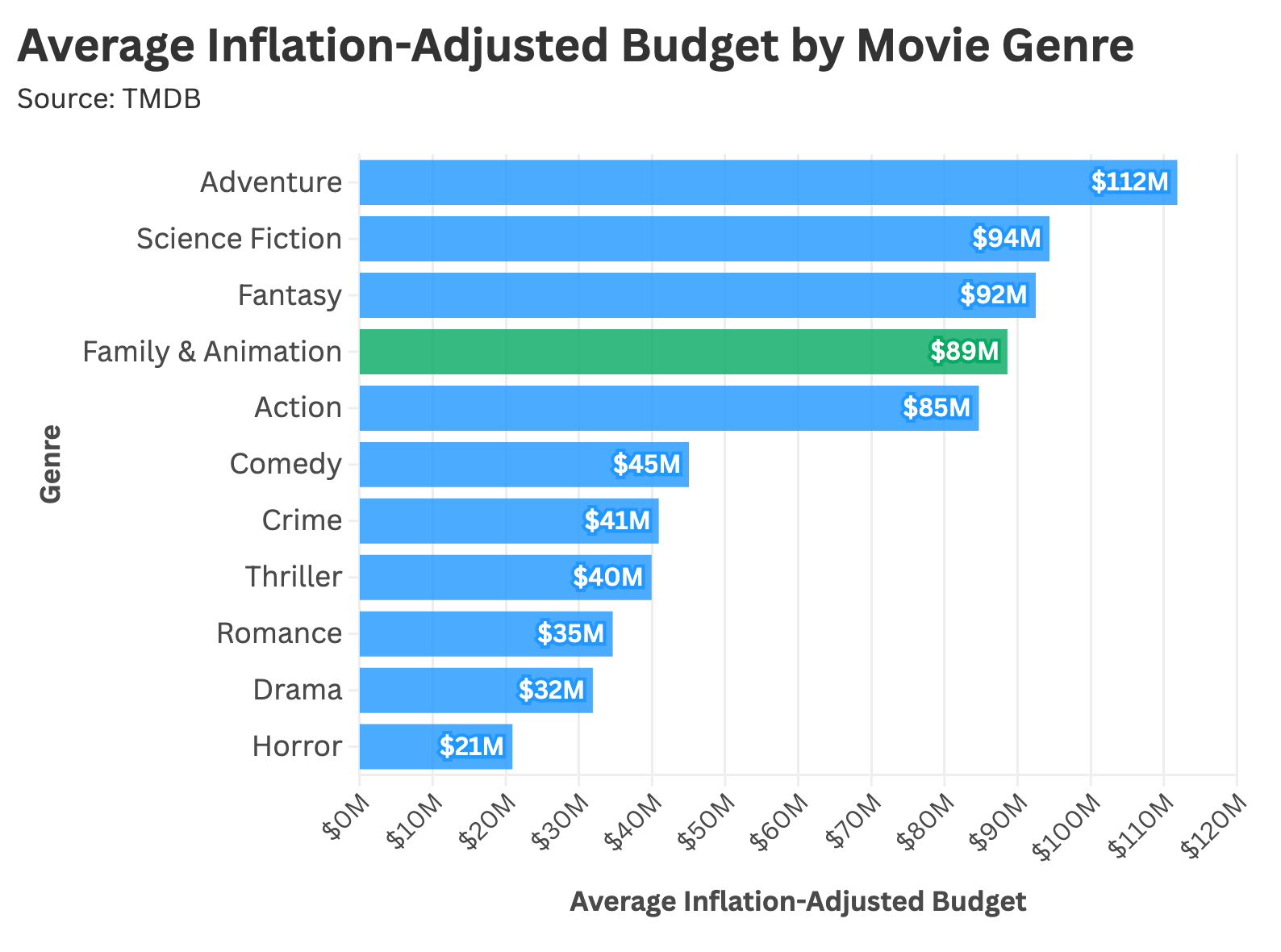
In an increasingly risk-averse Hollywood landscape, children’s entertainment has become an all-or-nothing proposition. The average family film now ranks among the industry’s most expensive bets, with a growing share of projects carrying inflation-adjusted budgets above $75 million. These films must then generate correspondingly large box office returns to justify the investment.
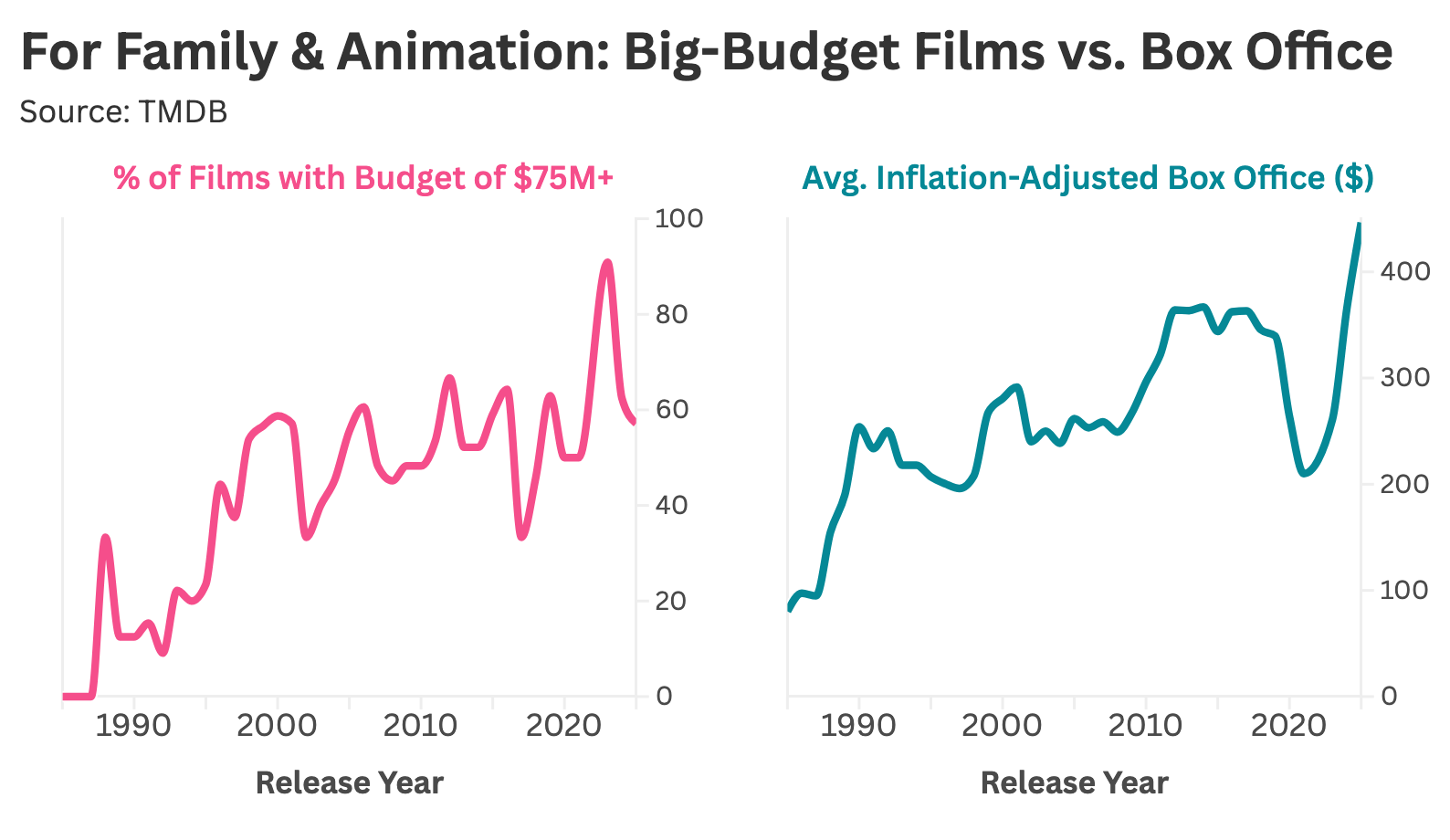
There is ample demand for children’s entertainment, yet the genre has been squeezed into a narrow economic mold, mirroring Hollywood’s broader reliance on franchises and reboots. Disney now leans heavily on animated sequels like Inside Out 2, Zootopia 2, and Moana 2, alongside live-action remakes that everyone hates but still manage to make $1B (Mulan, The Lion King, and also Moana).
So where does the genre go from here? The most likely outcome is a meaningful uptick in children’s films, driven by their outsized box office returns and, more recently, their strong performance on streaming platforms.
Each week, the analytics firm Nielsen publishes a ranking of the most-watched shows and movies on streaming platforms. Among the top films on streaming since 2024, a clear pattern emerges: every movie is aimed at children.
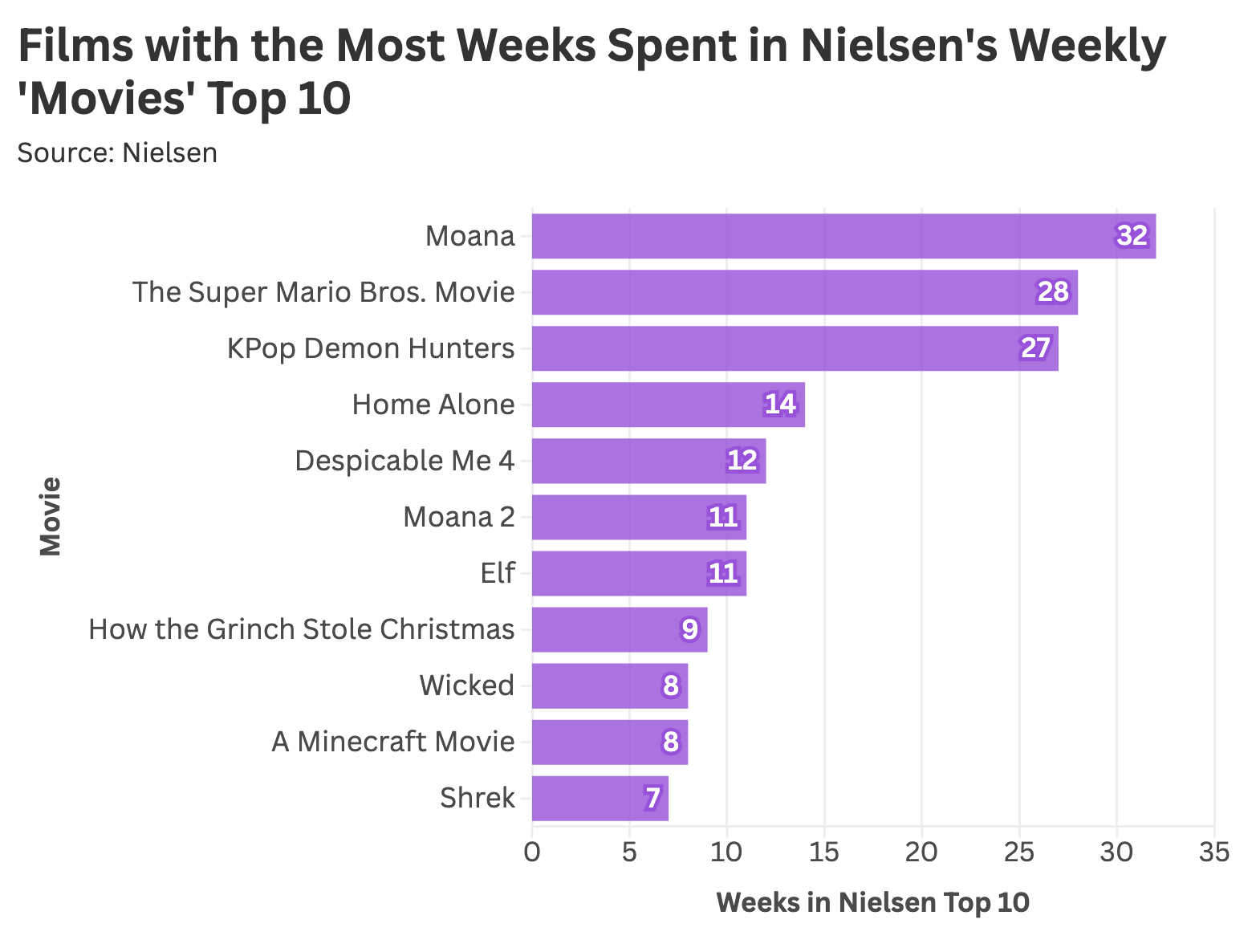
If your kid wants to watch Moana or the Minions for yet another week, that is yet another week that you will remain subscribed to Disney+ or Peacock. Congratulations.
Meanwhile, Netflix finally made a successful kids’ film (Kpop Demon Hunters) while Disney is running out of IP to tarnish. Together, these shifts could open the door to a new wave of children’s entertainment built on original stories and modest budgets. Or so I hope.
Enjoying the article thus far and want more data-centric pop culture content?
Final Thoughts: Nostalgia for Deceptive Garbage
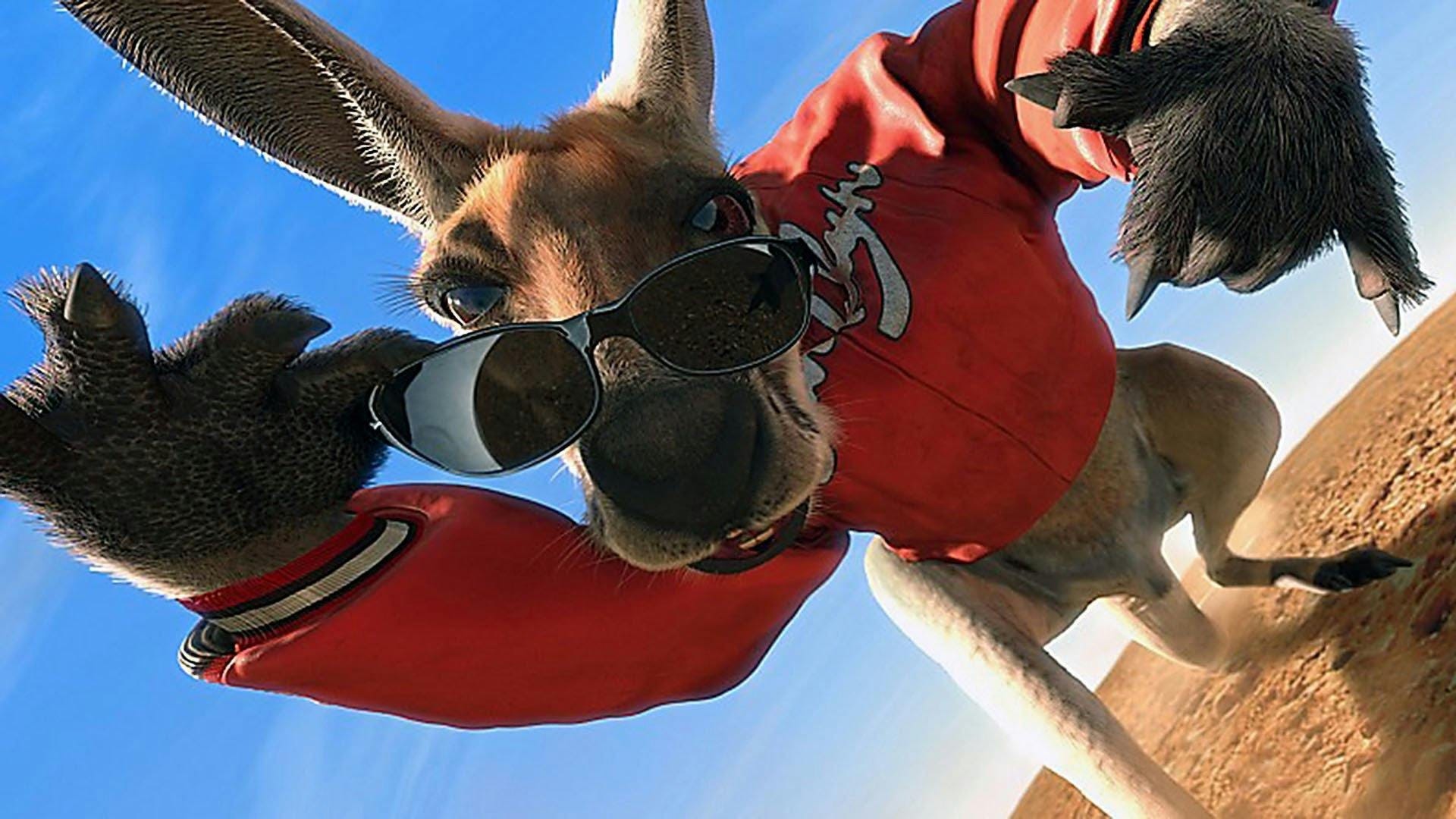
When I was a kid, I saw a movie trailer that featured a rapping CGI kangaroo. Being young and animal-obsessed, I was enamored. It was at this moment that I vowed to see Kangaroo Jack, and spent several days lobbying my mom to take me to this marsupial-centric crime comedy. When I finally saw the film, I was shocked to discover that the rapping kangaroo only appeared in a 30-second dream sequence, and that the movie was really about two human thieves whose stolen money gets swiped by a thoroughly non-musical kangaroo.
As the film reached its conclusion, I realized I’d been duped. And, as it turns out, I wasn’t alone. Internet lore tells of a group of aggrieved Kangaroo Jack viewers who banded together to sue the distributor for false advertising. Turns out the movie was originally shot as an R-rated mob comedy called Down and Under, before disastrous test screenings led producers to rework it into a PG family film, retrofitted around a hastily-inserted CGI kangaroo (which became central to its marketing). Yikes!
In writing this article, I found myself thinking about Kangaroo Jack often, and, somewhat unexpectedly, feeling nostalgic for this deceptive piece of garbage. Though in actuality, I’m nostalgic for what this deceptive piece of garbage represents.
Family films used to benefit from a perceived unimportance. Hollywood wasn’t relying on the genre to carry the box office, so a half-baked project like Kangaroo Jack could be tossed into theaters without much consequence because these movies didn’t require $2 billion in revenue to justify their existence. This period saw fewer sequels, more risk-taking, and, inevitably, more misses. Kangaroo Jack isn’t redeeming on its own merits—because, well, it’s terrible—it’s simply the opposite of everything family filmmaking has become.
Hollywood runs on cycles of imitation and exhaustion. A format or concept proves itself, the industry attempts to templatize that success, and abundant mechanization eventually strips that storytelling concept of its original appeal. Contrary to the Disney naysayers of the 1980s, children’s entertainment is alive and well. Whether the format survives its own success is another question.
Enjoyed the analysis? Support Stat Significant, and unlock the data behind the insights.
Become a paying subscriber for interactive dashboards, free datasets, and to support independent journalism.
Paying subscribers get:
The Stat Significant Dataset Hub (Updated Weekly): a collection of free datasets across movies, music, TV, cultural trends, and economics.
Interactive Data Hubs:
Streaming TV: what people are watching on television.
Spotify & TikTok: the songs, artists, and styles dominating Spotify and TikTok.
Pop Music History: a deep dive into music history, Billboard chart performance, genre trends, and song composition.
Social Media & Search: what’s trending on Google, Reddit, TikTok, and YouTube.
Wikipedia Traffic: the topics capturing global attention, as told by Wikipedia.
Get access with:
*Note: For best results, open this link in a web browser while logged in to your Substack account.
Want to promote your data tool or media publication to Stat Significant’s 25,200 readers? Email daniel@statsignificant.com
Need help with a data problem? Book a free data consultation
Connect with me on LinkedIn if you want to chat about a data project.
Like movies? Follow me on Letterboxd
"Disney is running out of IP to tarnish." Disney's great success in the last quarter century can largely be attributed to their innovations in finding new ways to reheat their old IP (and breathe new life into acquired IP). I actually just wrote about it yesterday. I wouldn't count them out just yet, and I wouldn't be surprised if they think of another creative (and lucrative) way to tell an already told story.
Man, I remember that KANGAROO JACK bait-and-switch too! My friends and I were piiiiiiissed.