

Intro: The Tale of Two Super Mario Movies
Adaptations of the beloved Super Mario Bros. franchise have twice served as major test cases for the commercial viability of video game movies. One was terrible; the other, paradigm-shifting.
We’ll start with the 1993 Super Mario Bros. movie, which was a troubled production from the outset (to say the least). For some reason, filmmakers initially envisioned a darker, dystopian rendition of Nintendo’s signature property. But shortly before production began, studio executives grew concerned that the movie would alienate younger audiences and ordered substantial rewrites. The result was a cinematic Frankenstein: part grimy cyberpunk fantasy, part children’s comedy, punctuated with out-of-place dialogue catering to die-hard fans.
Critics panned the film, audiences rejected the slapdash adaptation, and it earned a disastrous $21 million against a $48 million budget. For years, Super Mario Bros. was the foremost cautionary tale against Hollywood video game adaptations.
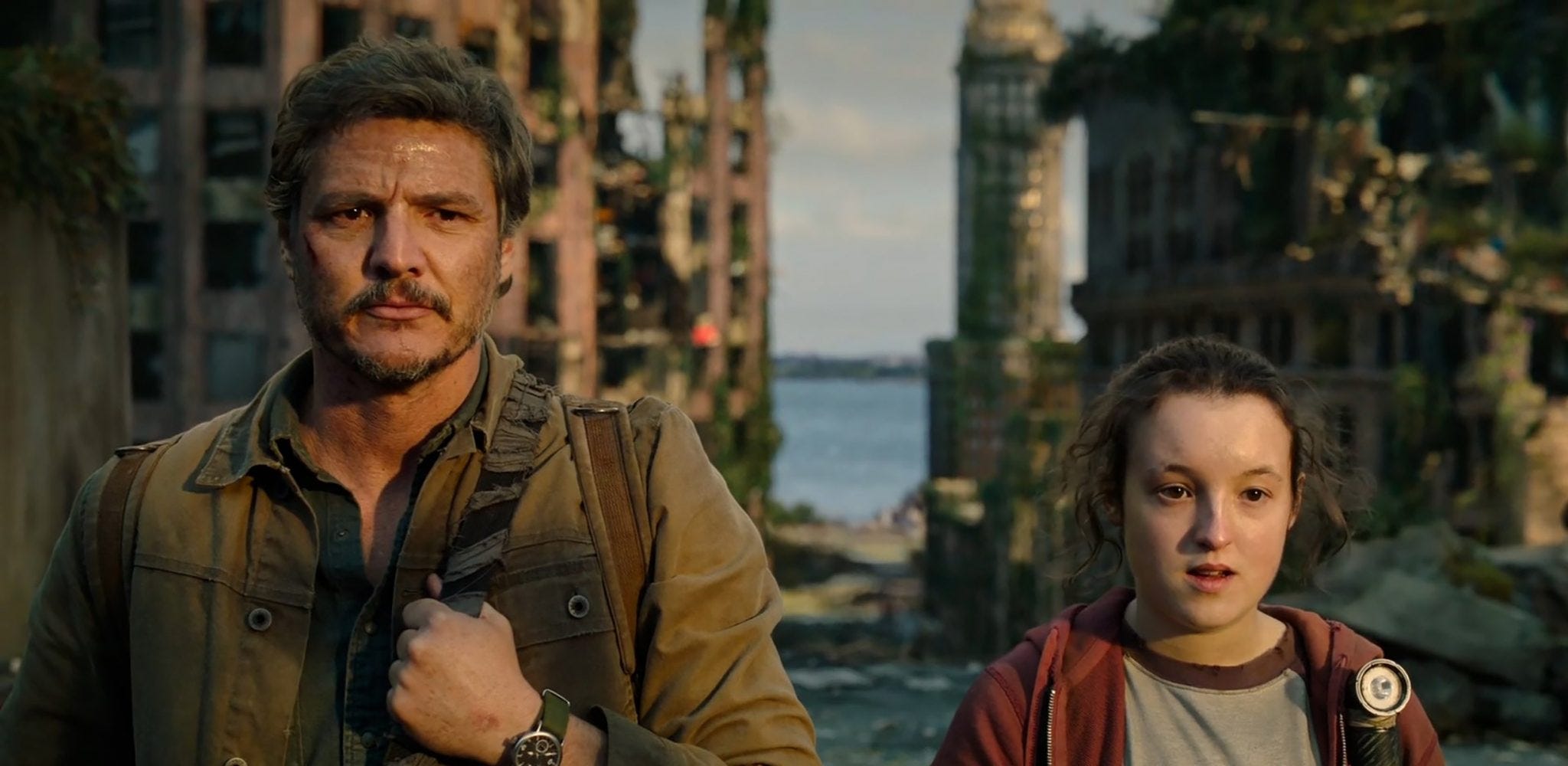
In 2023, Illumination, the studio behind the ever-present Minions plague, released a faithful animated adaptation of the Super Mario Bros. universe that grossed over $1.3 billion. Its success arrived amid a broader wave of well-received video game adaptations across film and television, with projects like The Last of Us and Fallout demonstrating how gaming franchises could please fans and normies alike.
Over the past five years, superhero stories and comic-book properties have been cycling out of studio slates and streaming catalogs, replaced by a growing wave of video game–based projects. As someone who wants big-budget movies to be good—and has become exhausted with the artistic inconsistency of superhero films—my main question is whether video games will prove any better as source material. Should we expect higher-quality storytelling than the Marvel Cinematic Universe (MCU) has delivered in recent years? And, if so, what makes video games different?
So today, we’ll explore the rise of video game adaptations, investigate the massive pent-up demand for this format, and examine the unique demographic makeup driving the commercial (and artistic) potential of these projects.
Hollywood’s Video Game Era Is Here. Will It Be Any Good?
Over the last three decades, Hollywood has moved away from original screenplays and literary adaptations in favor of fictional universes with built-in fandoms—first through comic books and, increasingly, through video games. Amid a tumultuous post-pandemic box office, adaptations of superhero stories and gaming universes account for nearly half of the highest-grossing films of the 2020s (thus far).
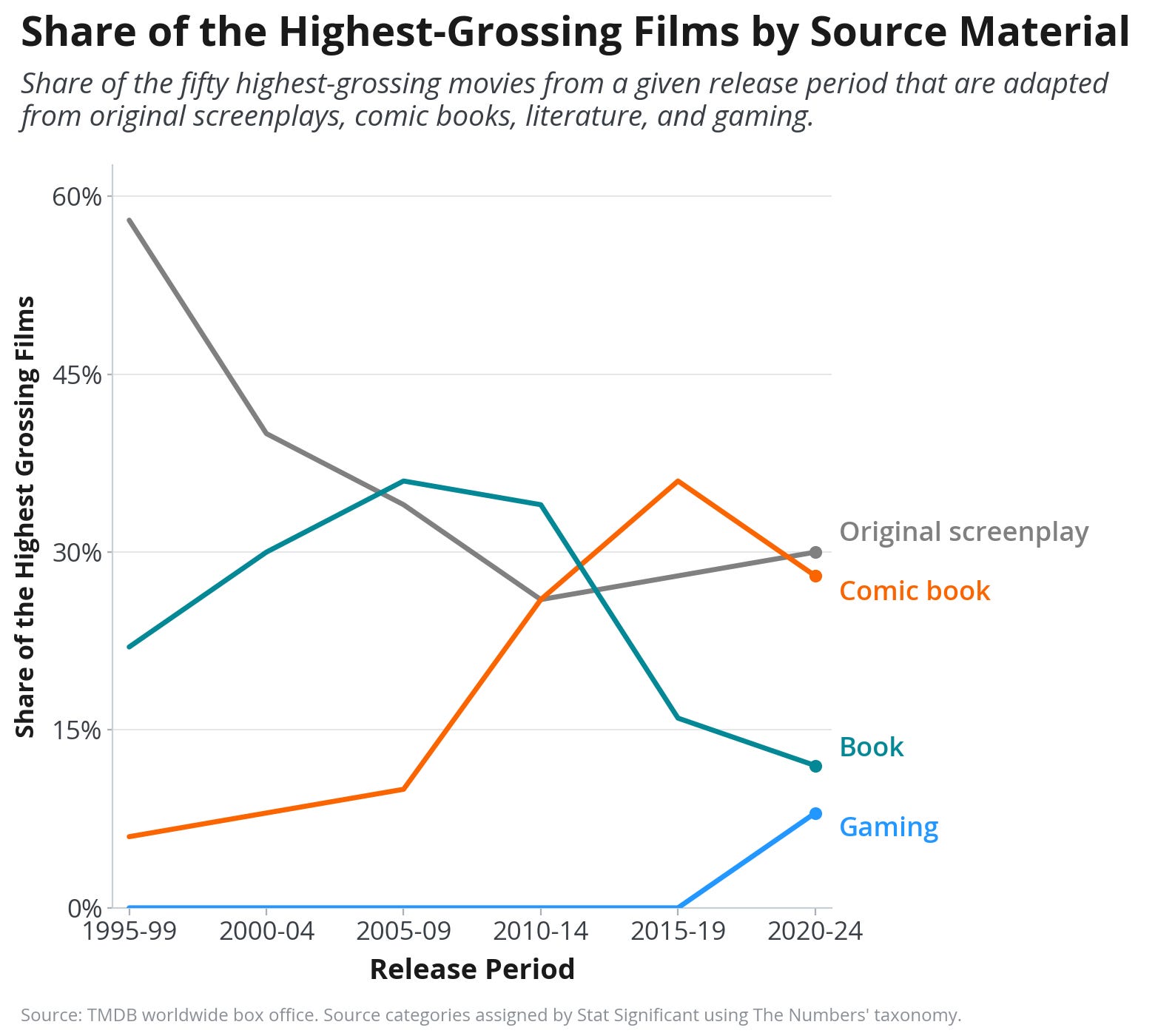
Video game movies are poised to grow their share of box office in the coming years, with some of Hollywood’s most exciting filmmakers now attached to major gaming properties: Zach Cregger of Weapons fame is adapting Resident Evil, Ex Machina’s Alex Garland is bringing Elden Ring to the big screen, Mission: Impossible’s Christopher McQuarrie is making a Battlefield film, and Yellowstone’s Taylor Sheridan is attached to a Call of Duty movie. The shift recalls the early days of the MCU, when rising filmmakers like Ryan Coogler and Taika Waititi were handed major franchises like Black Panther and Thor.
Projects centered around intellectual property (IP) are usually resource-intensive, laden with visual effects and lengthy post-production cycles. So whenever a promising filmmaker gets tied up adapting someone else’s fictional universe, my mind drifts to the same question: Will this actually be worth it?
With video games, the answer may be an enthusiastic “yes.” Consider the sheer size of the underlying fandom: Americans spend roughly $60 billion a year on video games, compared with just $2 billion on physical comic books.
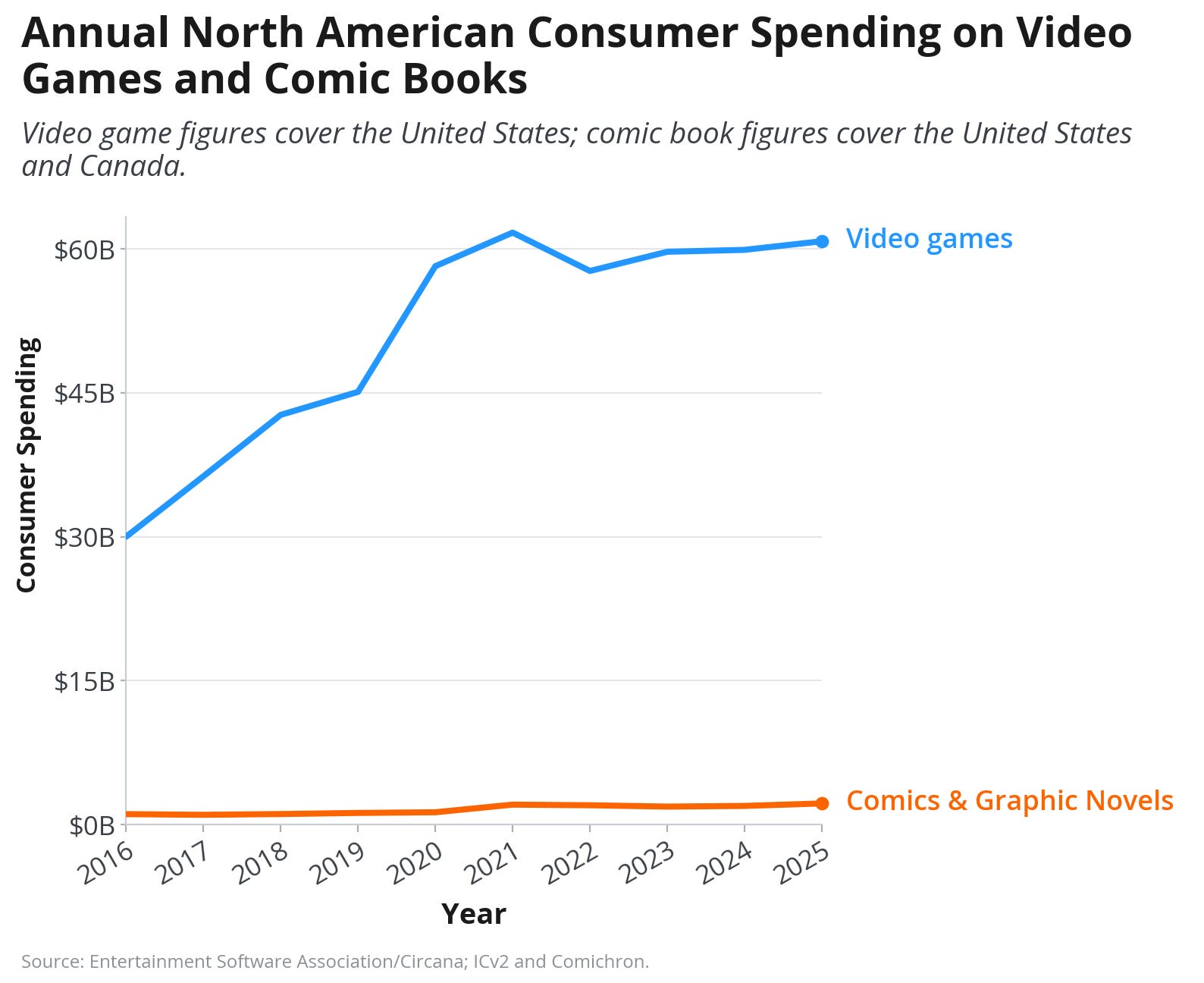
This $60 billion of spending spans hundreds of games, making breadth a unique facet of the gaming space. It’s a robust market rife with distinct niches and storytelling styles.
Earlier this year, a YouTuber named Markiplier adapted an indie game called Iron Lung into a feature film, released it without a major studio, and the movie ultimately grossed $51 million. The underlying IP was nowhere near the scale of Fallout or Minecraft, but its fan base was devoted enough to turn a relatively obscure game into a significant box-office win.
Markiplier’s success is uniquely instructive, highlighting the growing convergence of gaming, social media, and theatrical exhibition.
For better or worse, social media now sits at the center of modern moviegoing: a 2024 Fandango survey found digital buzz to be the biggest single driver of theatrical attendance.
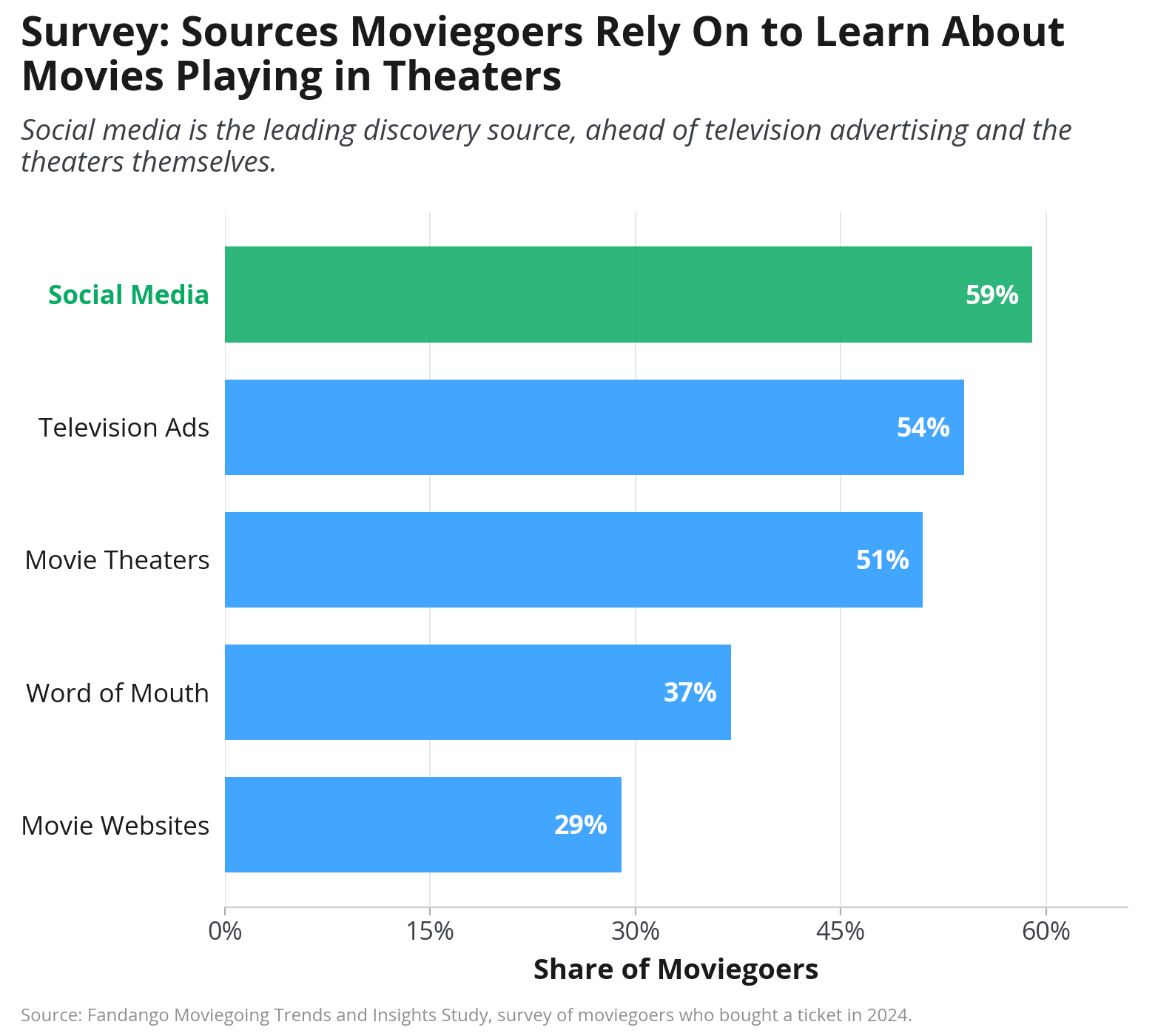
And when respondents were asked which platforms were most likely to get them into theaters, YouTube ranked first for film discovery. If the dueling 2026 successes of Backrooms and Obsession have taught us anything, it’s that YouTube can indeed put butts in movie-theater seats. And guess what category dominates YouTube’s trending videos more than any other? Yup, you guessed it: video games. By a large margin, in fact.
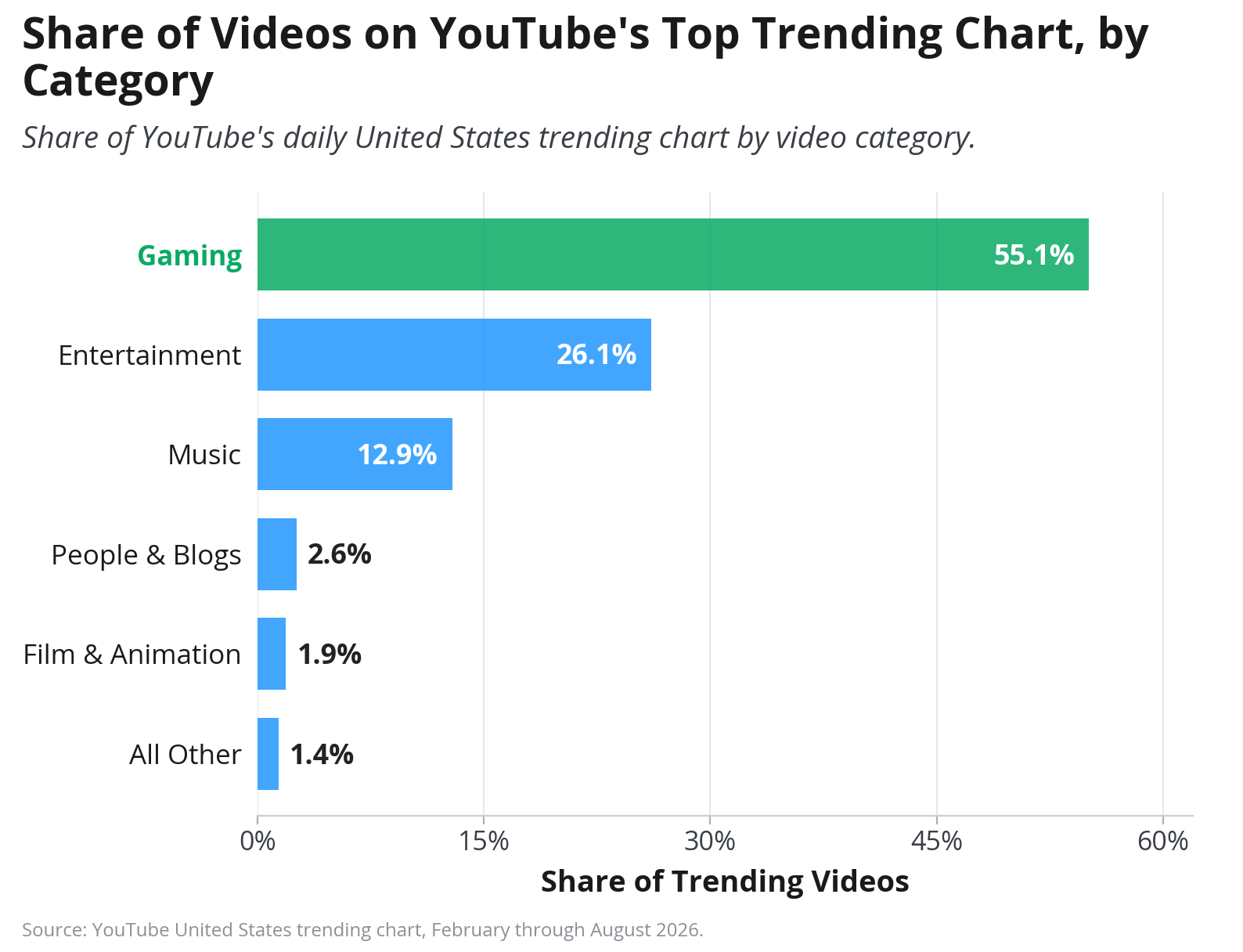
That makes YouTube’s enormous gaming audience a natural target for theatrical adaptations, especially when movie trailers are primarily consumed on the same platform. Someone who regularly watches Resident Evil gaming content, for example, is already primed to watch (and rewatch) a trailer for its upcoming big-screen adaptation.
For many, the widening cultural influence of video games is probably a no-brainer. But for me—a younger millennial who never quite vibed with Call of Duty or Rocket League—statistics like these are genuinely surprising. Has this cultural shift simply been brewing under my nose, hiding in plain sight? Is this further evidence of how disconnected I’ve become from popular culture?
This cultural blind spot initially left me skeptical of both the sheer proliferation of video game adaptations and their above-average quality.
And then I watched both Fallout and The Last of Us and found each series extremely compelling—especially The Last of Us, whose third episode easily qualifies as the best television I’ve watched in the past five years.
I’m hardly alone in my enthusiasm. So far, the video game adaptations of the 2020s have been surprisingly well received by critics, with recent releases surpassing comic-book stories in online acclaim.
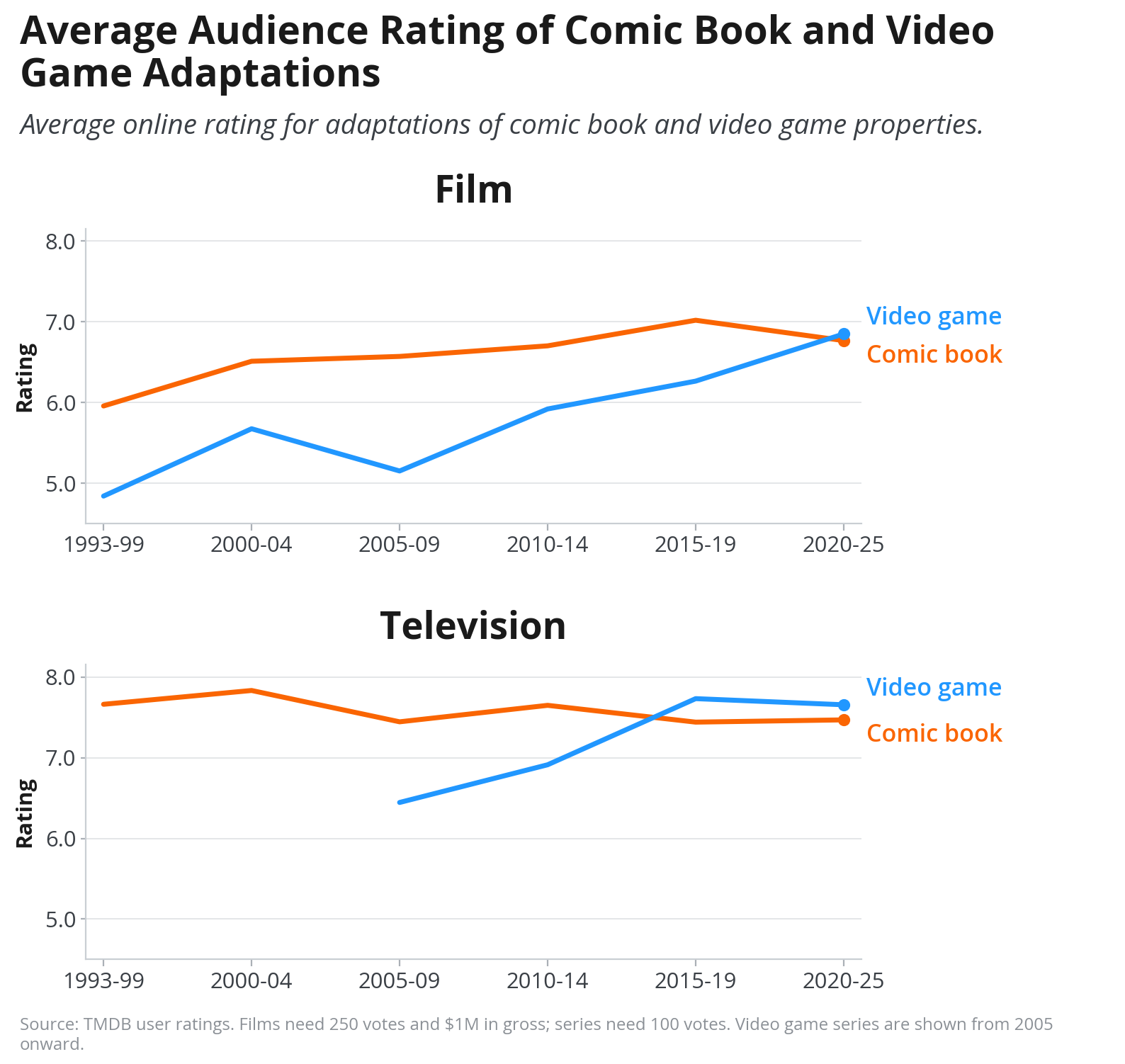
I strongly believe that video games have a higher ceiling for storytelling quality. There are several reasons underlying my newfound evangelism: a larger built-in audience, a more robust market with hundreds of games appealing to many different types of fans, and, most importantly, demographic variability.
Consider these two surveys taken 80 years apart on the age groups that engage with comic books and gaming. You’ll notice the comic book survey did not target respondents above age 30, which is informative in and of itself. In contrast, video games see weekly engagement across all age groups, with 32% of respondents in their 80s claiming to play video games at least once a week.
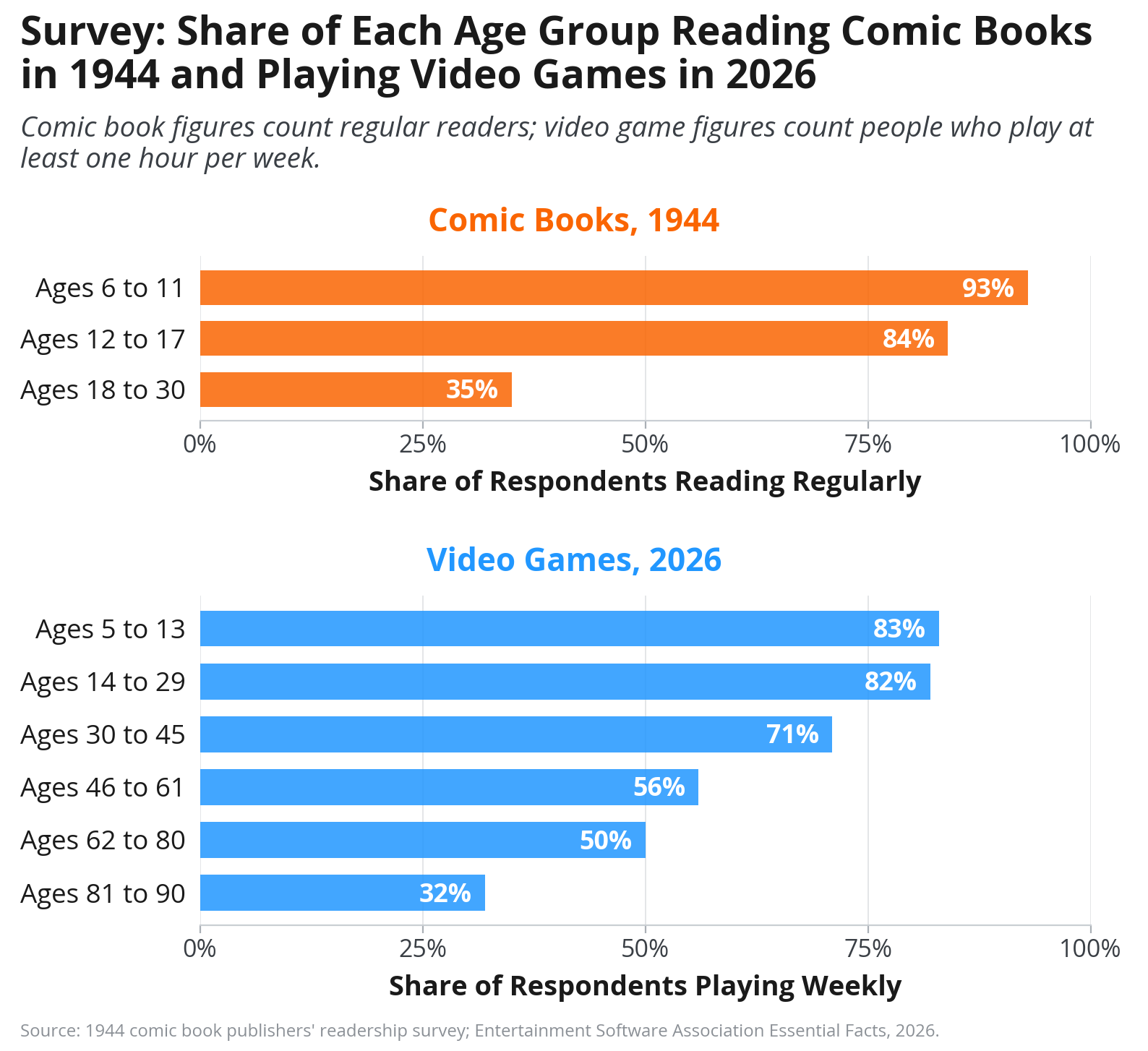
I understand that the demographic makeup of the average comic-book fan has changed in the intervening 80 years, but I think the gist underlying this data point holds: superhero stories traditionally cater to younger audiences. The result is a Marvel Cinematic Universe largely devoid of sex, graphic violence, and adult themes—a franchise engineered for adolescents and tweens.
Video games, by contrast, aren't tied to one specific age group or storytelling mode. The medium has Minecraft and Roblox for younger players, while games like Grand Theft Auto and Resident Evil appeal to teens and adults. That range produces source material with vastly different tones and narrative sophistication, giving filmmakers the space to tell nuanced stories without infantilizing their audience.
Enjoying the article thus far and want more data-centric pop culture content?
Final Thoughts: Jangling Keys
There are certain colloquialisms I’ve long accepted at face value—phrases like “curiosity killed the cat” or “bite the bullet”—whose origins I’ve never thought deeply about. And then occasionally I’ll come face-to-face with the literalization of these phrases, and I’ll realize why the saying caught on in the first place. Case in point: I often use the term “jangling keys” when referring to cheap fan service in movies built around intellectual property—usually comic book adaptations—but I’ve never really understood the phrase’s meaning out of context. I heard someone else say it, thought it sounded cool, and here we are. And then one day my son—an adorable infant—got cranky.
We were out on a walk when he hit his end-of-day tired spell and started giving me a devastating little pout. I went through all of his toys, which he quickly rejected one by one, and so, as a last-ditch effort, I began jangling my keys in front of his face.
It was at this point that my son became thoroughly entranced by the chiming of car keys and that I finally understood the meaning of a phrase I use weekly.
I write about film and television a lot, which means I write and think about intellectual property a lot. Since introducing my kid to the wonders of a key chain, I can’t help but think of his primal delight and our animalistic drive to chase that feeling for the rest of our lives—oftentimes through art.
People crave wonder and awe. And perhaps the easiest shortcut to feeling wonder is invoking a prior experience where we felt this very amazement. Which brings me back to “jangling keys.” Deep down, we all want this. We wanted it when we were six months old, and we want it today.
Everyone has their proclivities—their cultural Achilles’ heel—where if you can find a new way to experience that pastime, you will. For some it’s a superhero movie; for others it’s seeing the game Resident Evil on the big screen (three weeks from now); for my dad it’s a biopic about Bruce Springsteen; and for me it’s anything about the Red Hot Chili Peppers.
But just because we crave that sense of childlike wonder does not mean we need to be infantilized in the process.
And so we arrive, once more, at video games. I know it would make for a better essay if I were really grumpy about Hollywood’s impending video game era, but I’m not. I’m kind of excited.
I’m excited for people to feel the sense of awe only a movie can provide, without being coddled. If the next 15 years of popular culture are going to be built around video games, then maybe it marks an opportunity for everyone to get exactly what they want: movies made for adults, blockbuster box office, above-average investor returns, high-minded art, a thriving entertainment industry, and, most importantly, the ever-wonderful jangling of keys.
Enjoyed the analysis? Support Stat Significant and unlock the data behind the insights.
Become a paying subscriber to get bonus graphics, interactive dashboards, downloadable datasets, and to support independent journalism.
Paying subscribers get:
Bonus Data Stories: Full access to the Monday Roundup, a weekly bonus edition with extra culture data stories, curated datasets, and recommended reads.
The Public Dataset Directory (Updated Weekly): A curated directory of public datasets from around the web.
Interactive Data Hubs: Interactive dashboards across Streaming TV, Movies, Music, Search Trends, Wikipedia, and more.
*Note: For best results, open this link in a web browser while logged in to your Substack account.
Want to promote your data tool or media publication to Stat Significant’s 26,200 readers? Email daniel@statsignificant.com
Need help with a data problem? Book a free data consultation
Connect with me on LinkedIn if you want to chat about a data project.
Like movies? Follow me on Letterboxd
There’s no way 1/3 of randomly sampled 80 year olds play videos games at least once per week, even if you include mobile games. I suspect there must be some response bias in the way the survey was conducted
Seeing how "digital buzz" drives theater attendance reminds me of the power of memes, like with Barbenheimer. I watched both movies because of the meme, and my friend even had a birthday party with that theme.