

Intro: What If We Used to Be Worse?
In her essay “On Keeping a Notebook,” Joan Didion makes the case for journaling as a way of staying in touch with our former selves: “I think we are well advised to keep on nodding terms with the people we used to be, whether we find them attractive company or not.” This sounds charming in the abstract. But what if the person you used to be was significantly worse? What if willful ignorance is the wiser choice?
What if—God forbid—you once had terrible taste in movies? And what if a document existed chronicling these regrettable selections? Unfortunately for me, such a document exists. A few years ago, I found my middle-school yearbook, which was cute until it wasn’t. Every entry asked its subject to list their favorite things, and there, preserved in permanent ink, were my favorite movies: Scary Movie 3, Not Another Teen Movie, and Shrek 2. Yikes! No Citizen Kane. No Hungarian slow cinema. No Hitchcock. Not even The Godfather, Part I or II. Just spoofs and sequels.
In previous articles, I’ve explored how musical taste forms, finding that our favorite songs and styles take shape during adolescence and remain remarkably stable after our twenties. My middle-school movie favorites, by contrast, bear little resemblance to my viewing habits today. Perhaps our taste in film evolves differently than our taste in music. Maybe the radical reinvention of movie-watching preference is a universal phenomenon.
So today, we’ll explore how movie taste shifts with age and how nostalgia distorts our sense of filmmaking quality.
How Does Our Taste in Movies Change With Age?
MovieLens is an online community that collects movie ratings and uses them to recommend films to its users. In 2004, the project published an anonymized dataset containing more than 1 million user ratings submitted between 1995 and 2003, along with each reviewer’s age and gender. This archive spans several files and requires substantial assembly and cleaning before it can be analyzed, so I did the legwork of turning it into a usable, single-file dataset that paying subscribers can download here.
Using this extensive record of moviegoing preferences, we can examine how our tastes and viewing habits evolve with age.
As a new parent, my mind immediately went to movie-viewing volume. With a four-month-old, I am not exactly plugged into movie culture—or really any culture unrelated to said four-month-old. So I wanted to know whether this “parent tax” is universal: Do we watch fewer films as our responsibilities grow?
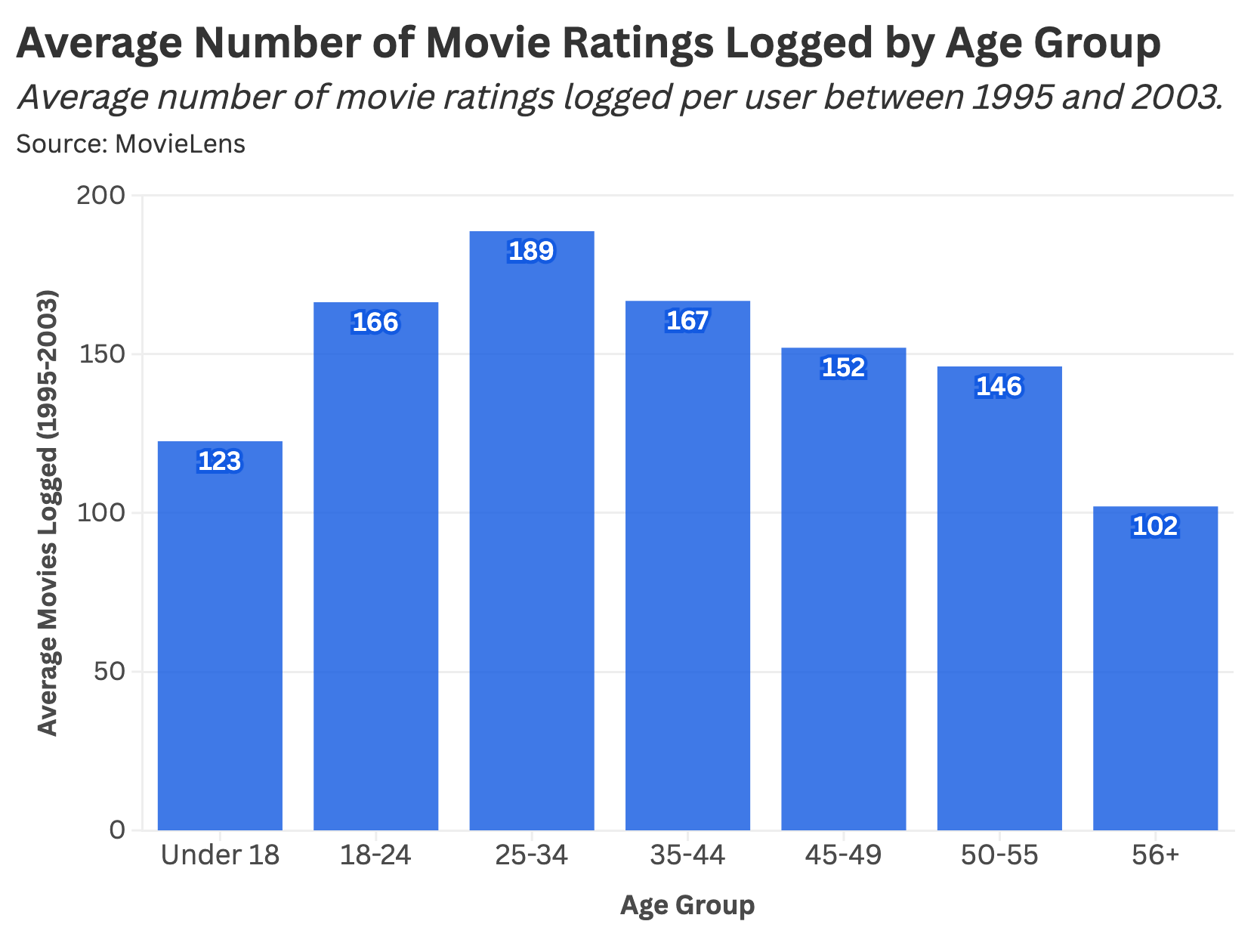
The answer, unsurprisingly, is yes. In the MovieLens dataset, average rating volume peaks among users ages 25 to 34, then declines with each passing decade.
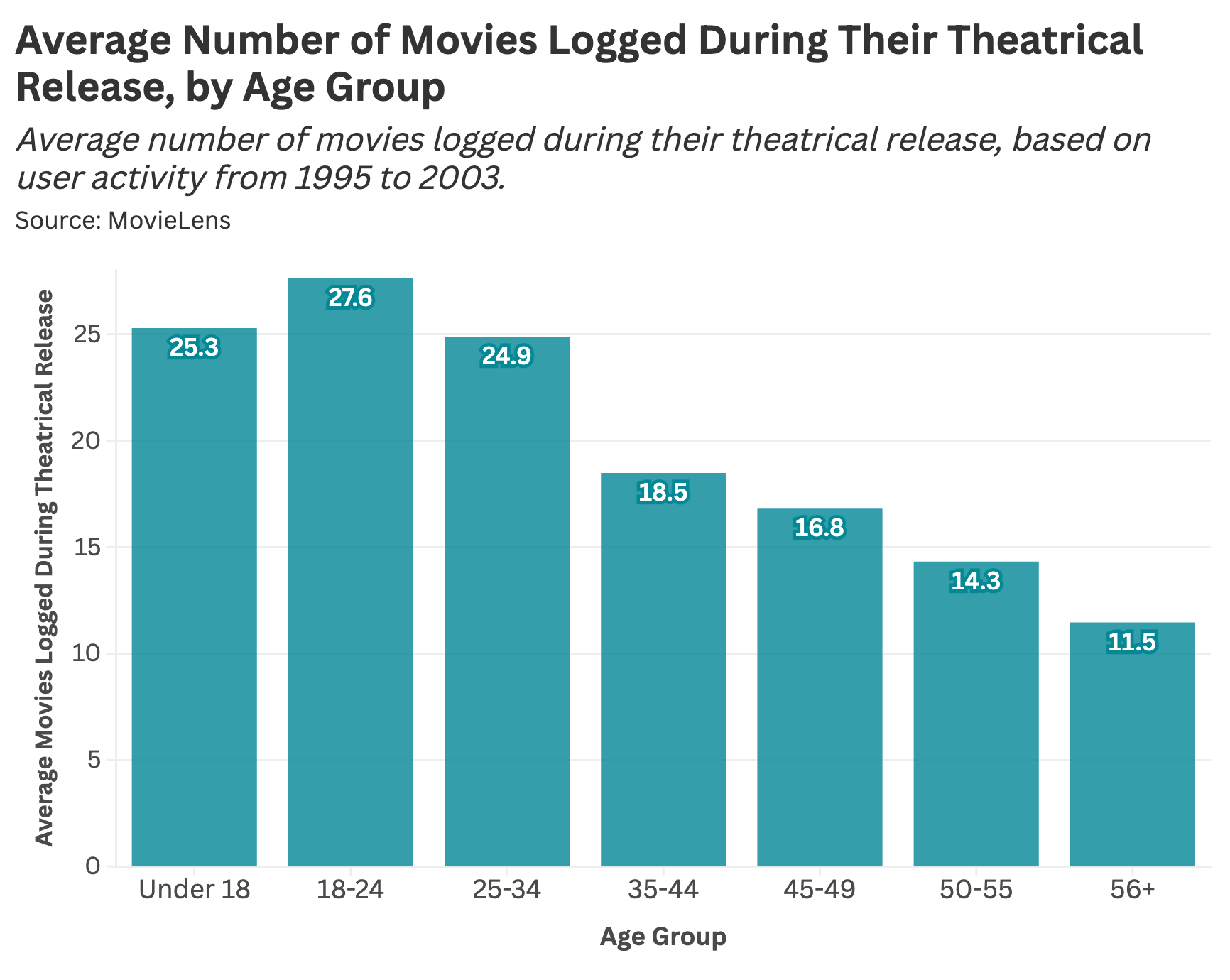
But this metric captures all forms of movie watching: DVDs, cable television, and trips to the theater. When we isolate contemporary releases—films likely to have been seen in theaters—a different pattern emerges. Instead of peaking in early adulthood, theatrical moviegoing is highest in our teenage years and early twenties, then declines steadily thereafter.
A friend recently asked me whether the dueling box office success of Obsession and Backrooms was “bringing younger audiences back to theaters.” This question was likely inspired by some New Yorker trend piece that chronicles a sweeping cultural shift roughly two weeks before that trend is obsolete.
My hot take is that younger viewers have always made up a large share of theatrical audience. Whenever a movie becomes a surprise hit, people scrutinize its turnout, discover that young people were in the theater, and briefly treat their presence as a revelation.
At the same time, Obsession and Backrooms are both horror films, which brings us to the intersection of genre preference and age. You are more likely to find younger audiences at a scary movie inspired by a 4chan internet meme (Backrooms) than at a dad-core drama about a meteorologist trying to predict the weather on D-Day—which is the actual premise of a movie currently in theaters called Pressure. If you’ve seen Band of Brothers multiple times, own several Jack Ryan novels, and think Apple’s weather app is lacking in detail, then this movie’s for you.
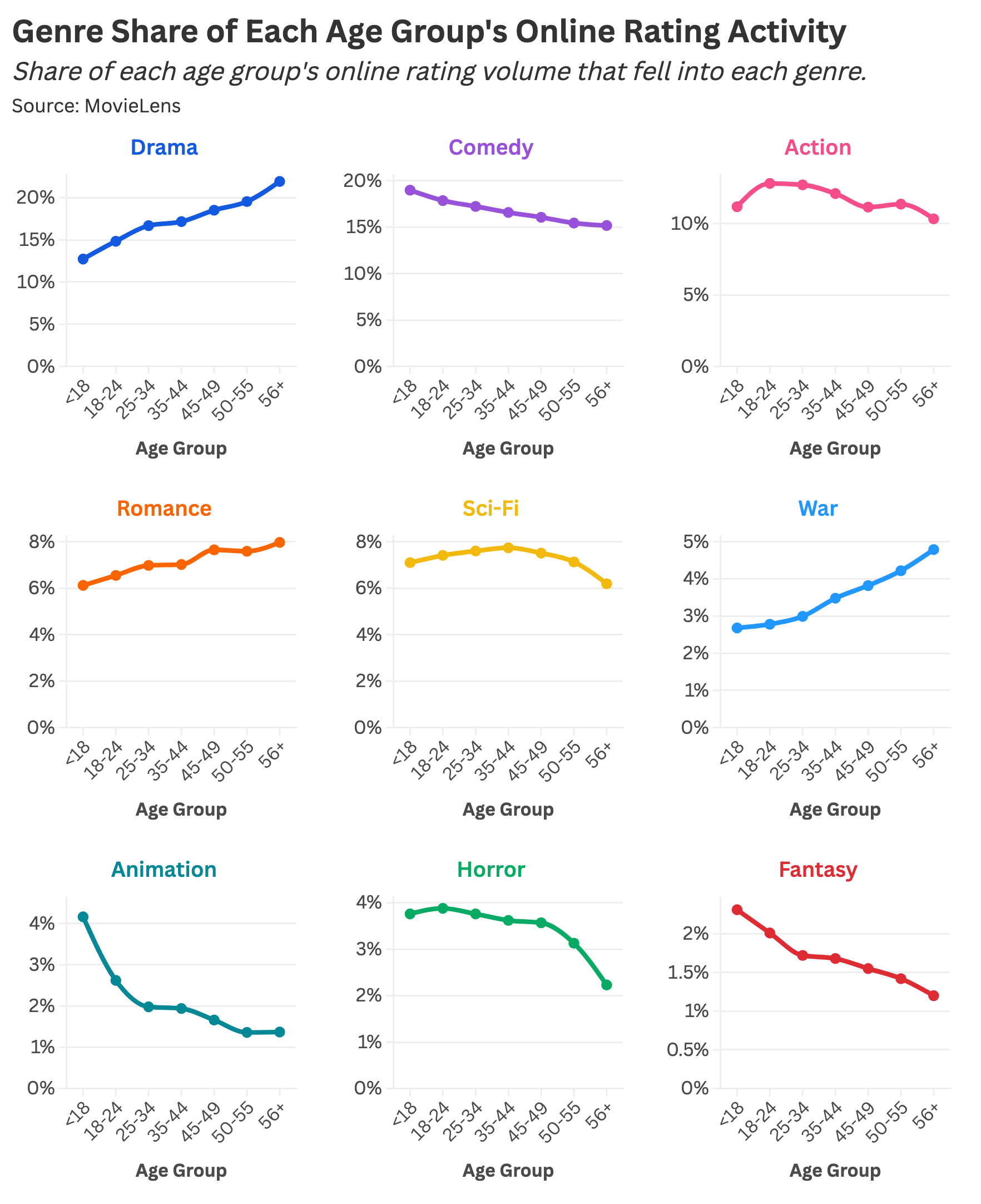
Indeed, our MovieLens data reveals a clear generational divide across several genres: younger audiences tend to favor horror, comedy, animation, and action, while older viewers gravitate toward dramas, war films, and romance.
If genre preference were the only thing shaped by age, that would be a fun find, but not enough to justify an entire study. Fortunately—or perhaps unfortunately—there’s more.
In a strange and philosophically punishing twist, the factor most strongly shaped by age is time. Put less cryptically, age shapes how we relate to movies from the past and present, a phenomenon known as “nostalgia bias”: the tendency to favor older releases while viewing contemporary movies with greater skepticism.
Using the MovieLens dataset, we can compare movie ratings by the number of years between a film’s release and the reviewer’s birth. The results suggest that movies were best before you existed, declined around the time you arrived, and have been getting worse ever since—a sentiment consistent across generations.
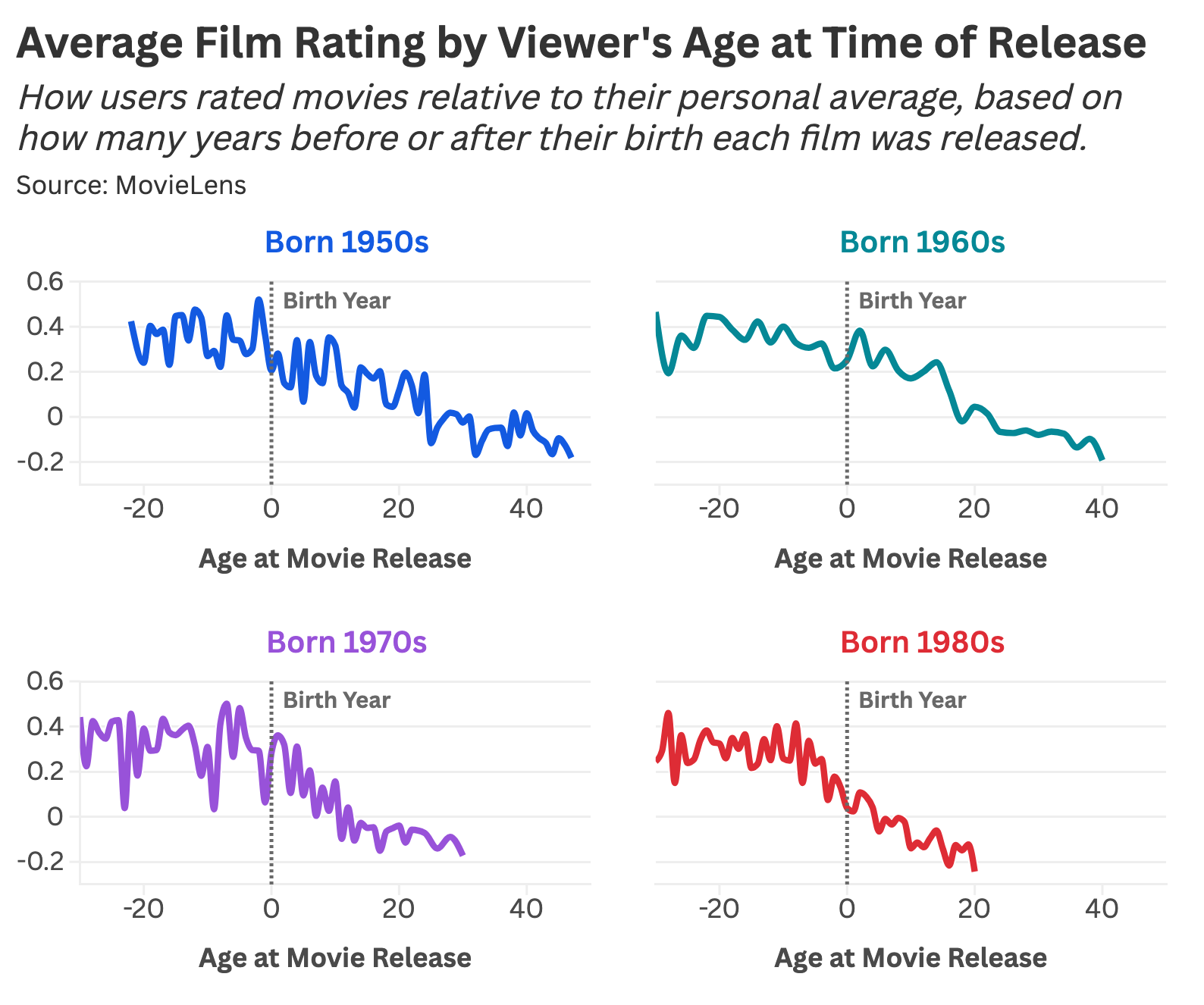
Self-selection likely shapes our view of older “classics,” since the most revisited movies from the 1940s are those that stand the test of time, like Casablanca and Citizen Kane. More surprising is that our bias against newer films persists even after we come of age and begin actively consuming contemporary releases. So when a podcast host waxes nostalgic about the cinematic excellence of the 1990s, remember that, soon, a new generation of podcasters will be extolling the greatness of the 2000s and 2010s because that’s just how time works.
And if you are on the older side and feel somewhat attacked by this piece—because you own several Jack Ryan novels and think Pressure sounds like a pleasant night at the movies—know it’s not all bad.
According to MovieLens data, older cohorts tend to rate movies more favorably.
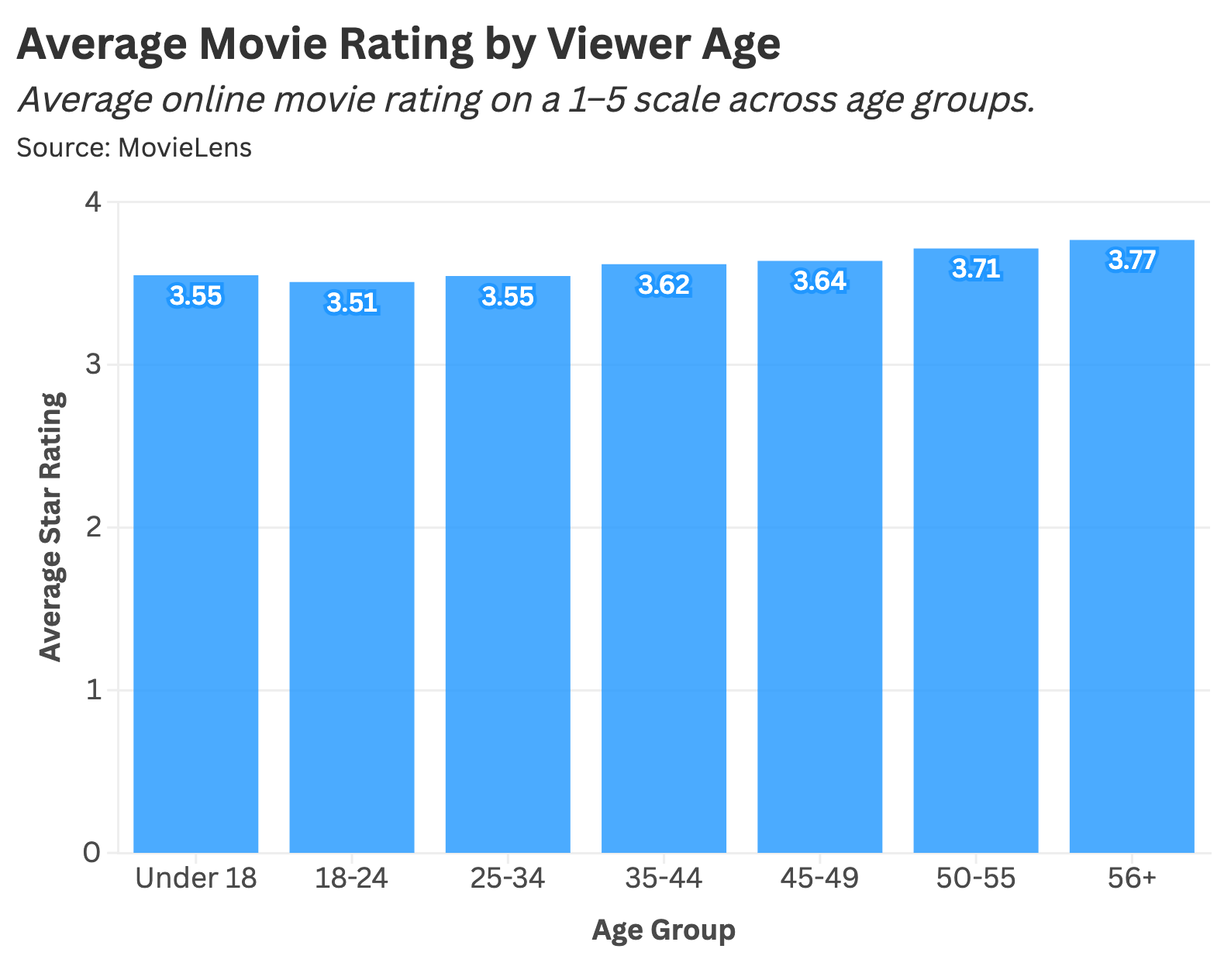
The caveat is that, as we observed earlier, older viewers also watch fewer movies, making them less likely to encounter films outside their core interests. But if we are choosing optimism, perhaps they simply know who they are and what they like—and what they like is movies about D-Day.
Decades from now, I too will sit at the far end of this distribution, enclosed within an igloo of Jack Ryan novels, deriding films based on 8chan memes, and yearning for the cinematic glory days of Shrek 2 and Scary Movie 3.
Enjoying the article thus far and want more data-centric pop culture content?
Final Thoughts: Nodding Terms
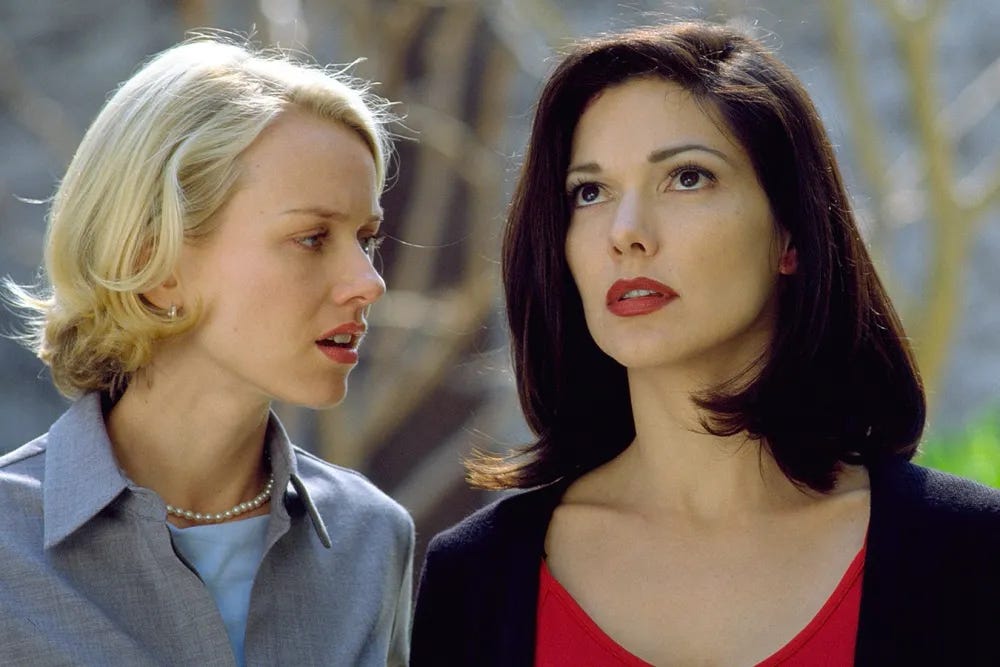
When I first approached this topic, I gravitated toward the negative: the idea that our younger selves are lesser versions of who we are today. But as I worked through the piece, my perspective began to shift—which is just a kinder way of saying I stopped being a sourpuss. In particular, I found myself contemplating my changing relationship with David Lynch’s Mulholland Drive.
I first watched this movie when I was 14, which is far too young to watch Mulholland Drive (for several reasons). For one, I had never encountered surrealist art. By the time the credits rolled, I was furious. What the hell had I just seen? I promptly declared it my least favorite movie of all time.
As I went through film school and entertainment-industry internships, I held on to that disgust. I was the guy who harbored a deeply personal grudge against Mulholland Drive. What a cool identity!
Then David Lynch died. A few days after his passing, I decided to give the film another chance. To my surprise, I came away believing the exact opposite. I was now a guy who loved Mulholland Drive. How silly! I subsequently watched the film three times over the next month and now regularly list it among my favorite movies.
There are many takeaways from this story, including the fact that I was an insufferable teenager. But perhaps the most heartening is that we never lose the ability to surprise ourselves.
Following my Mulholland Drive about-face, I’ve revisited several movies I once proclaimed “awful” or “all-time classics.” My perspective is often entirely different, as someone on the other side of puberty—and, more recently, as a parent. Sure, Not Another Teen Movie may not hold up, but neither do Oscar-winning “masterpieces” like American Beauty or Forrest Gump.
My evolving relationship with these films has become a kind of yardstick, not unlike Joan Didion’s notebooks: a way to catch glimpses of my former self. With each rewatch, I find myself “on nodding terms with the [person I] used to be,” better able to understand who I once was and how time has changed me.
Want to promote your data tool or media publication to Stat Significant’s 25,800 readers? Email daniel@statsignificant.com
Need help with a data problem? Book a free data consultation
Connect with me on LinkedIn if you want to chat about a data project.
Like movies? Follow me on Letterboxd
“the factor most strongly shaped by age is time” oh I know you were giggling (so was I)
My husband and I were both born in the late 1970s and as we approach 50, we still find ourselves enjoying going to the theater to watch movies and finding there are still many great movies out there now (a recent favorite, Project Hail Mary). I definitely find movies made before I was born rather boring, some nostalgic enchantment for the 80’s movies of my childhood and the 90’s movies of my adolescence but definitely don’t think newer movies have declined in quality and still enjoy them.