

Welcome back to the Monday Roundup!
The Monday Roundup is a bonus edition featuring data-driven culture stories, curated datasets, and recommended reading. Given the strong response to this format, I’ll be publishing it weekly for the foreseeable future.
Your regular Wednesday essay stays free for everyone—this is strictly additive.
Today’s edition has six new data stories. Free readers get the first two; paid subscribers get the full thing, plus datasets and recommended reading. Enjoy!
In Today’s Roundup:
Original Data Stories: A James Bond drought, the end of music’s “loudness war,” the importance of opening day box office, the Falklands War revisited, a college for livestreamers, and generational adoption of closed captions.
Recommended Reads: Notable data journalism and pop culture reads from around the web.
Unique Datasets: Ten publicly available datasets, covering everything from Rotten Tomatoes scores to Big Mac prices to Spotify song composition attributes.
Trend 1: A James Bond Drought
James Bond is alive and well, despite the character’s absence from cinemas and the fact that we don’t even know who the next James Bond will be.
The latest installment of the 007 franchise is currently slated for 2028, which would make for a 7-year gap between that project and 2021’s No Time to Die—the longest Bond-related movie drought since the franchise’s introduction in 1963.
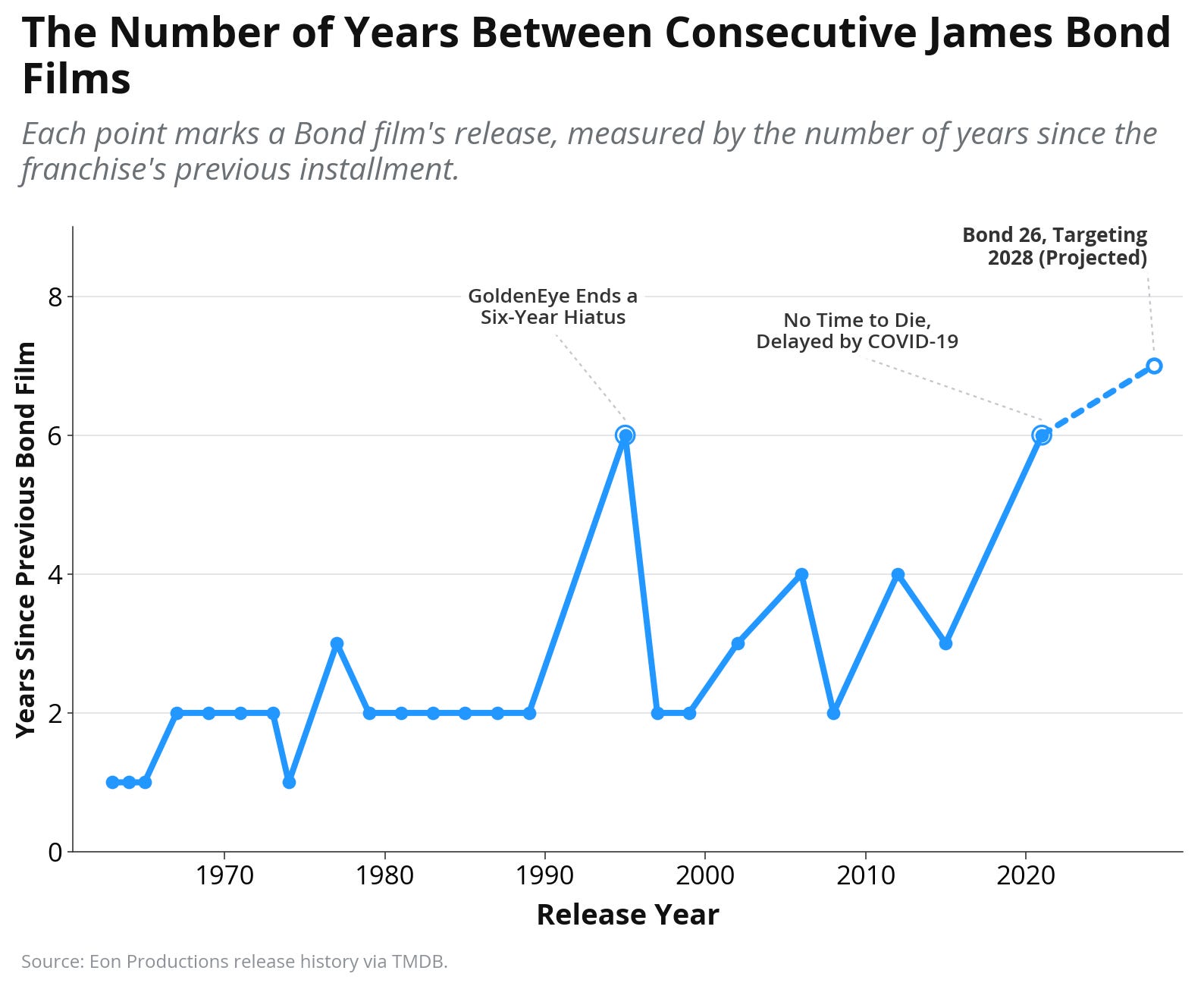
If you’re a bona fide Bond-head, don’t fret. Progress is being made. In June of last year, Denis Villeneuve—the filmmaker behind the Dune films, Sicario, and Arrival—was announced as the franchise’s new director.
Next in line: the world needs a new Bond. Prediction markets currently favor Callum Turner, a talented actor who is perhaps most famous for being married to Dua Lipa.
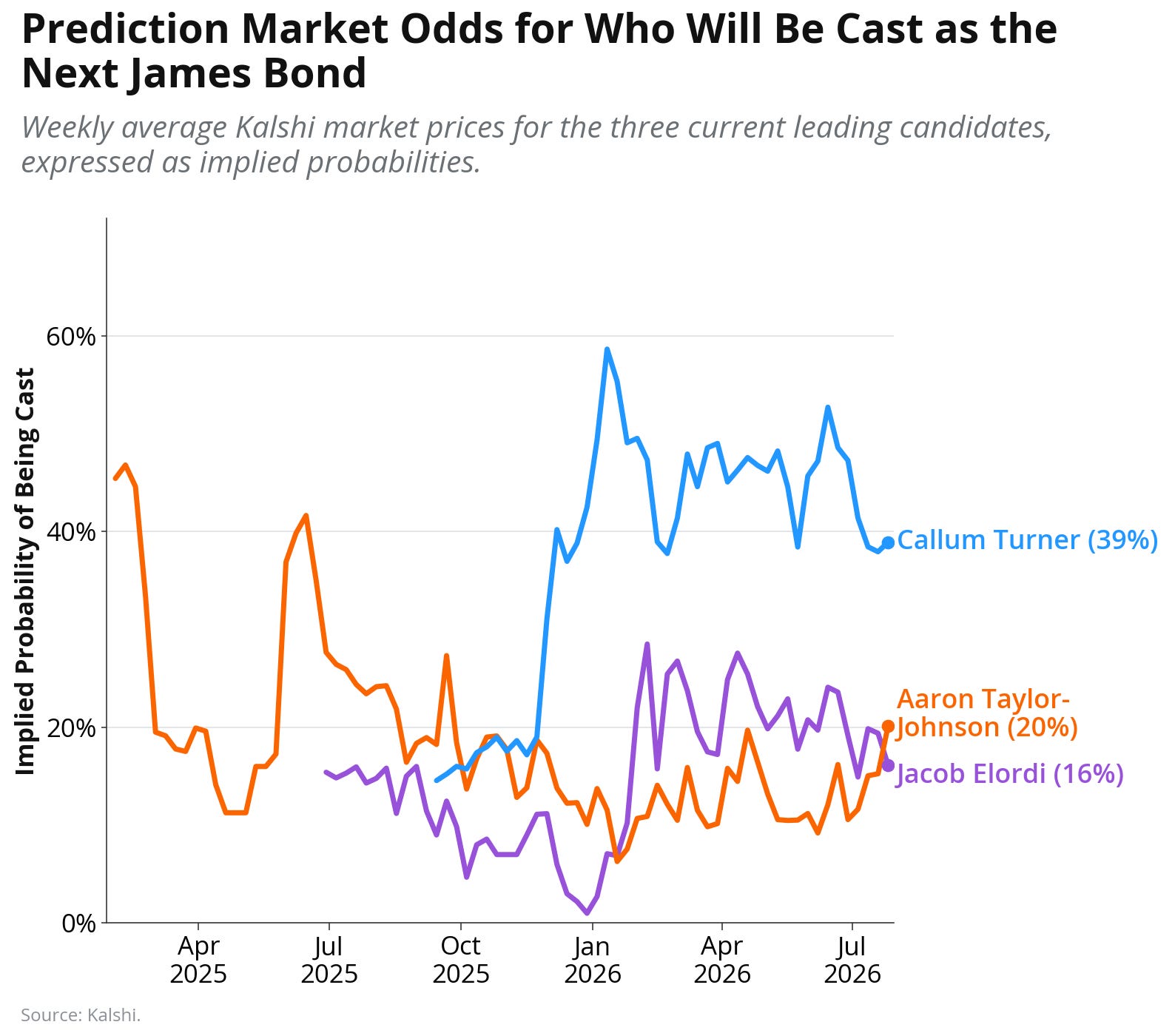
After all this time, it’s shocking that there is no consensus frontrunner for Bond succession, yet my hot take is that this is actually an asset for the franchise.
The past two decades have seen a deluge of films oriented around intellectual property. And perhaps the greatest sin committed by top franchises like Marvel and DC during this period has been an error of abundance. This abundance comes in the form of too many movies, too many toys, and too many streaming shows.
James Bond thrives on scarcity, meaning a 7-year hiatus may be the best thing that’s ever happened to the character.
Trend 2: Is Music Getting Softer?
Spotify has created its fair share of problems throughout the music industry, but it’s also solved a few as well. One such example is the “loudness war” of the early 21st century, a decades-long arms race among record producers to make their songs louder than the competition. This phenomenon reads like something invented by a local news anchor or a coalition of Concerned Parents, but the conflict—and its effect on recorded music—was very real.
If you want to see this decades-long struggle encapsulated in a single graphic, look no further than the average decibel level of Billboard-charting music, which rose from the late 20th century all the way up until the early 2010s.
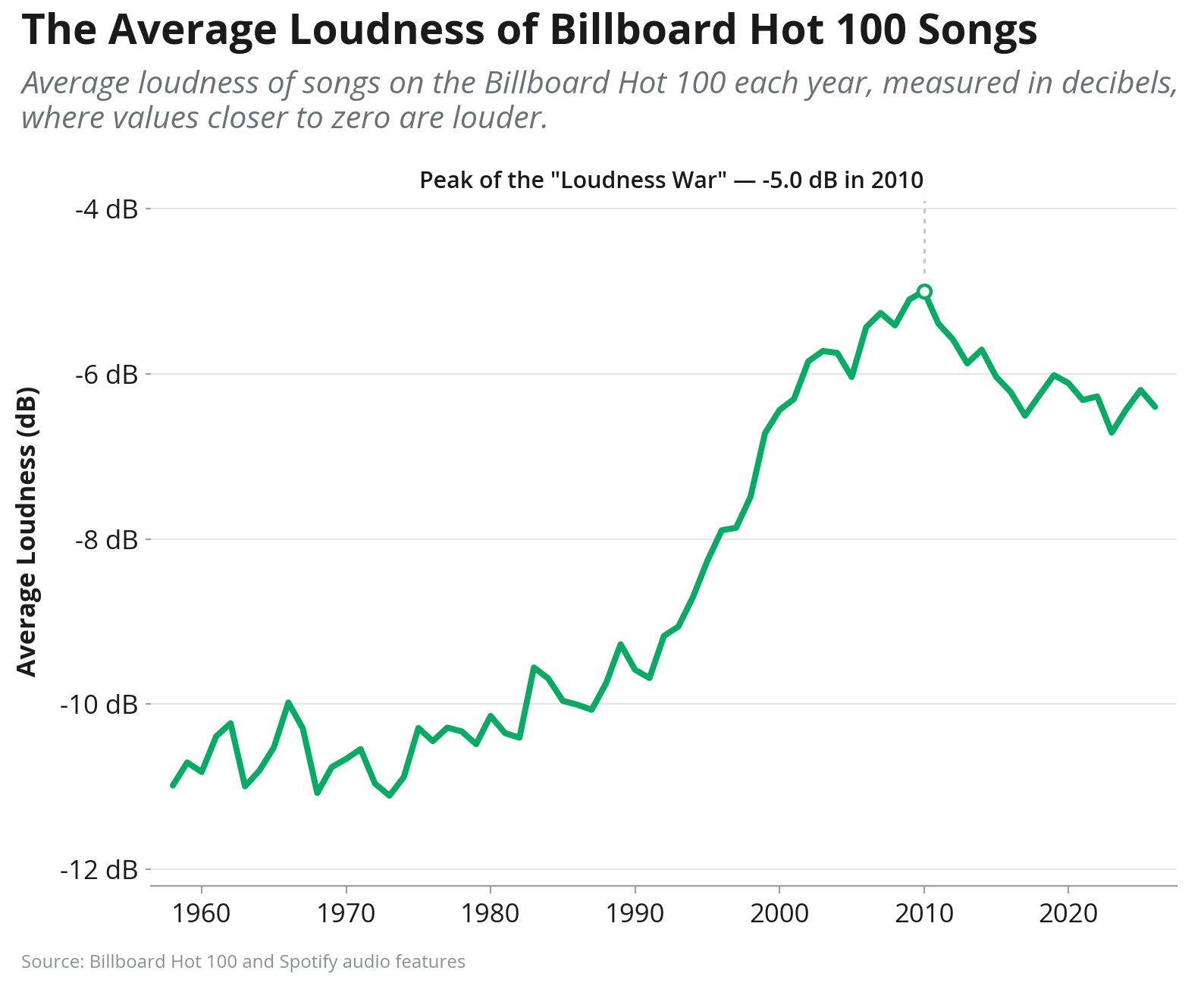
Beginning in the late 1980s, producers increasingly relied on audio compression and limiting to make songs louder than the competition. The push toward music’s upper limit was driven by fourth-grader logic: the louder the track, the more likely it was to stand out on the radio or cut through the cacophony of background noise.
And which artists emerged as the winners of this proverbial war? A collection of musicians who saw commercial success during peak-music-loudness in the late 2000s.
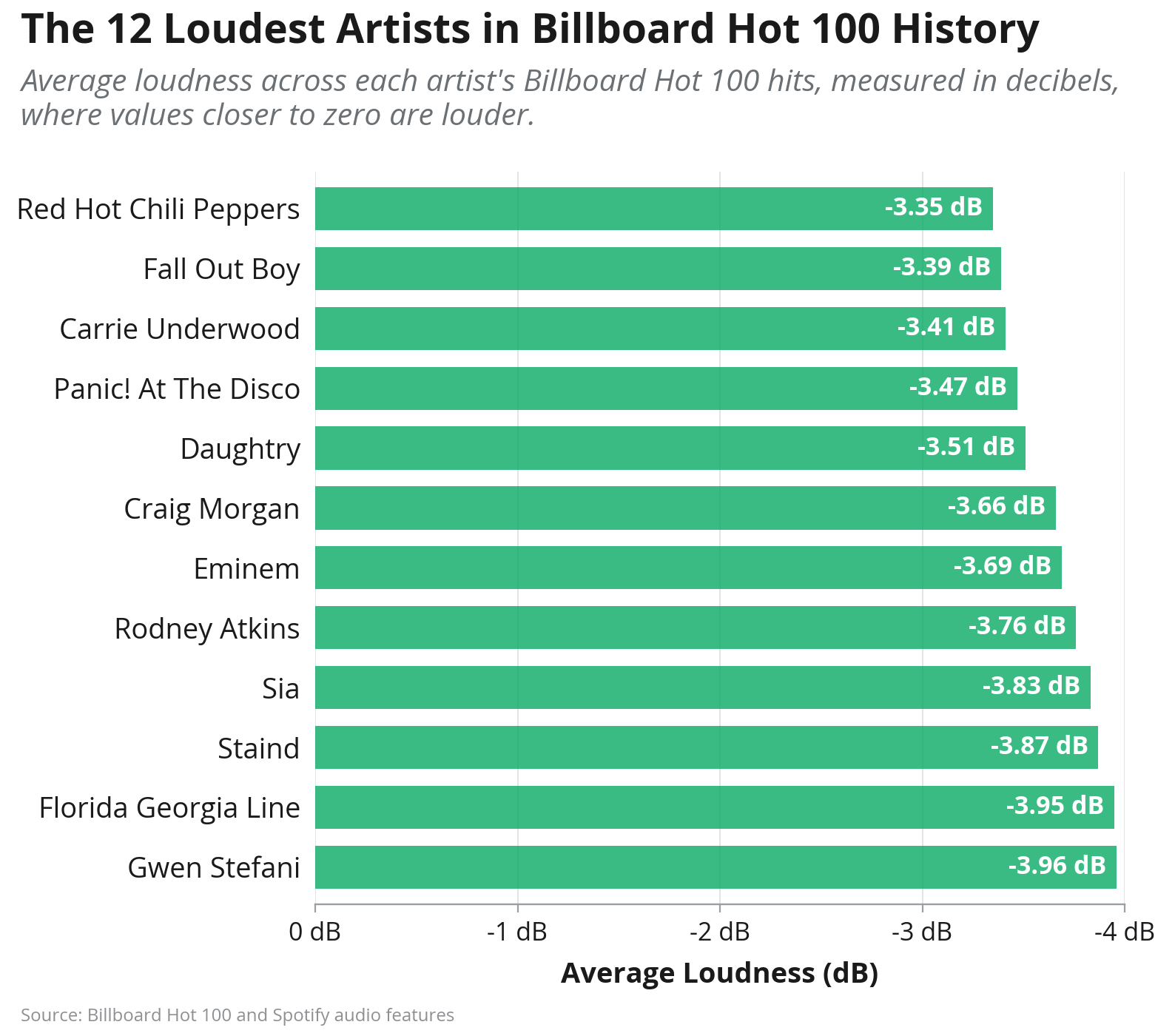
The Red Hot Chili Peppers are my all-time favorite band, though perhaps this was the product of a psyop by Big Loudness.
The march toward maximal noise began reversing in the 2010s, as streaming services like Spotify adopted volume normalization, which brings songs to a consistent playback level and strips excessive compression of its competitive advantage.
Today, “loud music” is simply the result of a listener turning up the volume too high.
Trend 3: Christopher Nolan, and Why Blockbusters Live or Die on Opening Day
Against all odds, Christopher Nolan has turned a book from my 10th-grade summer reading list into a billion-dollar blockbuster. Anticipation for The Odyssey reached such a fever pitch that Universal opened ticket sales a full year before release. The strategy paid off: the film earned roughly $51 million at the U.S. box office on opening day alone—a staggering haul that reflects a broader shift in how modern blockbusters are consumed.
Over the past 25 years, a film’s theatrical life cycle has accelerated dramatically, with audiences consuming new movies faster than ever.