

Welcome back to the Monday Roundup!
The Monday Roundup is a weekly bonus edition featuring data-driven culture stories, curated datasets, and recommended reading.
Your regular Wednesday essay stays free for everyone—this is strictly additive.
Today’s edition has six new data stories. Free readers get the first two; paid subscribers get the full thing, plus datasets and recommended reading. Enjoy!
In Today’s Roundup:
Original Data Stories: The end of The Simpsons, Myspace’s zombie-brand revival, Hollywood’s Chinese box office collapse, Suno’s landmark AI licensing deal, the inflationary economy of concert ticket resale, and the global rise of microdramas.
Recommended Reads: Notable data journalism and pop culture reads from around the web.
Unique Datasets: Ten publicly available datasets, covering everything from wildfires to the Billboard Hot 100 to human lifespan by century.
Trend 1: The End of The Simpsons?
Every fall, I watch grown men play a gladiator sport that may not exist in a few decades—or, as we Americans call it, “football.” And every so often, while watching this not-at-all-problematic sport, an advertisement for a new Simpsons episode will run, at which point football viewers across America—of all cultures and creeds—will voice their surprise at the continued existence of this 36-year-old show. Yet this annual tradition may soon be coming to an end.
In early August, Nancy Cartwright, the longtime voice of Bart Simpson, went on a podcast called Inside of You and speculated that America’s preeminent animated comedy would air its final episode in 2029, following the conclusion of its 40th season. This podcast interview, along with the return of some Simpsons Fortnite characters, sent the show trending across Reddit and YouTube.
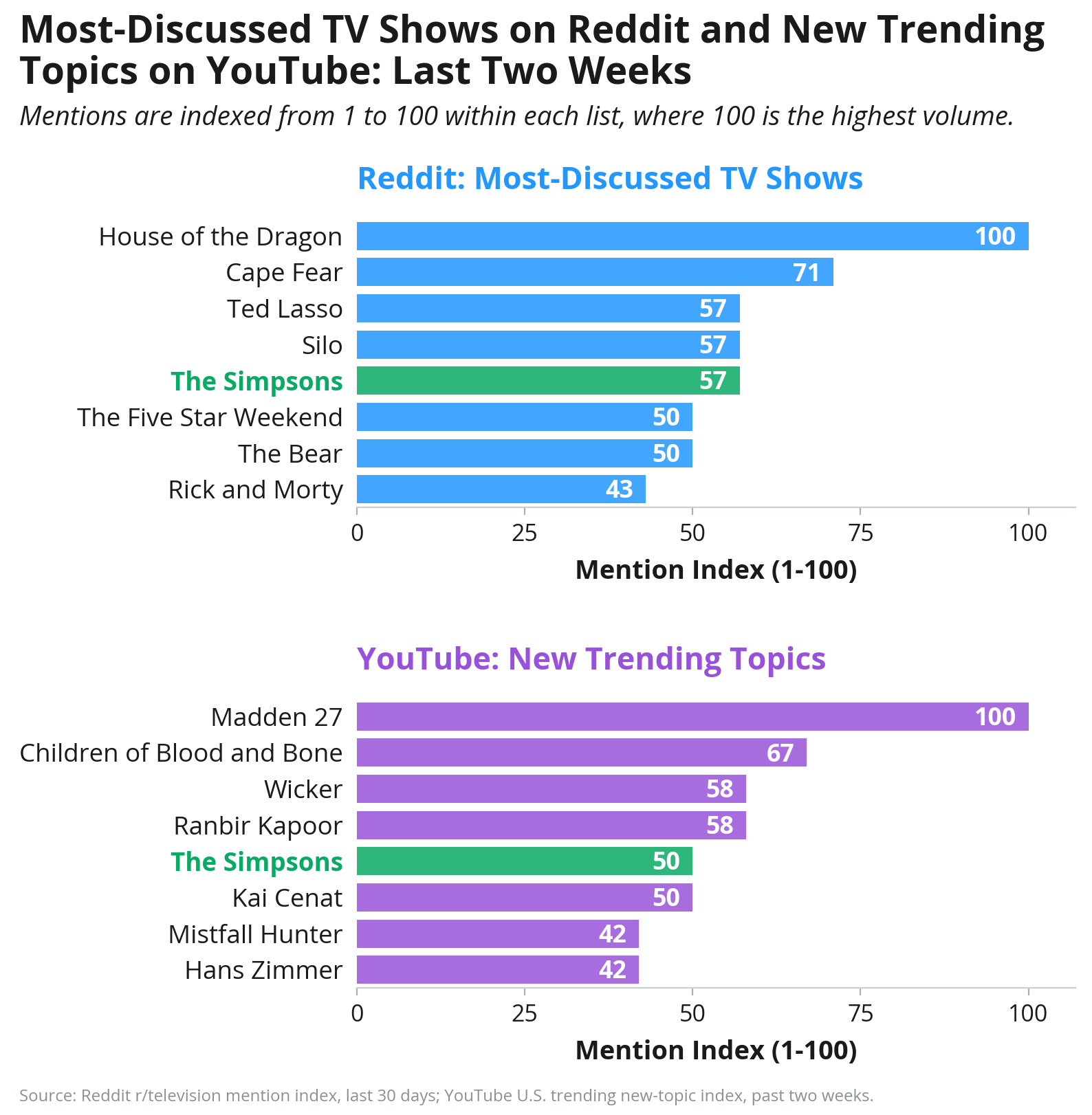
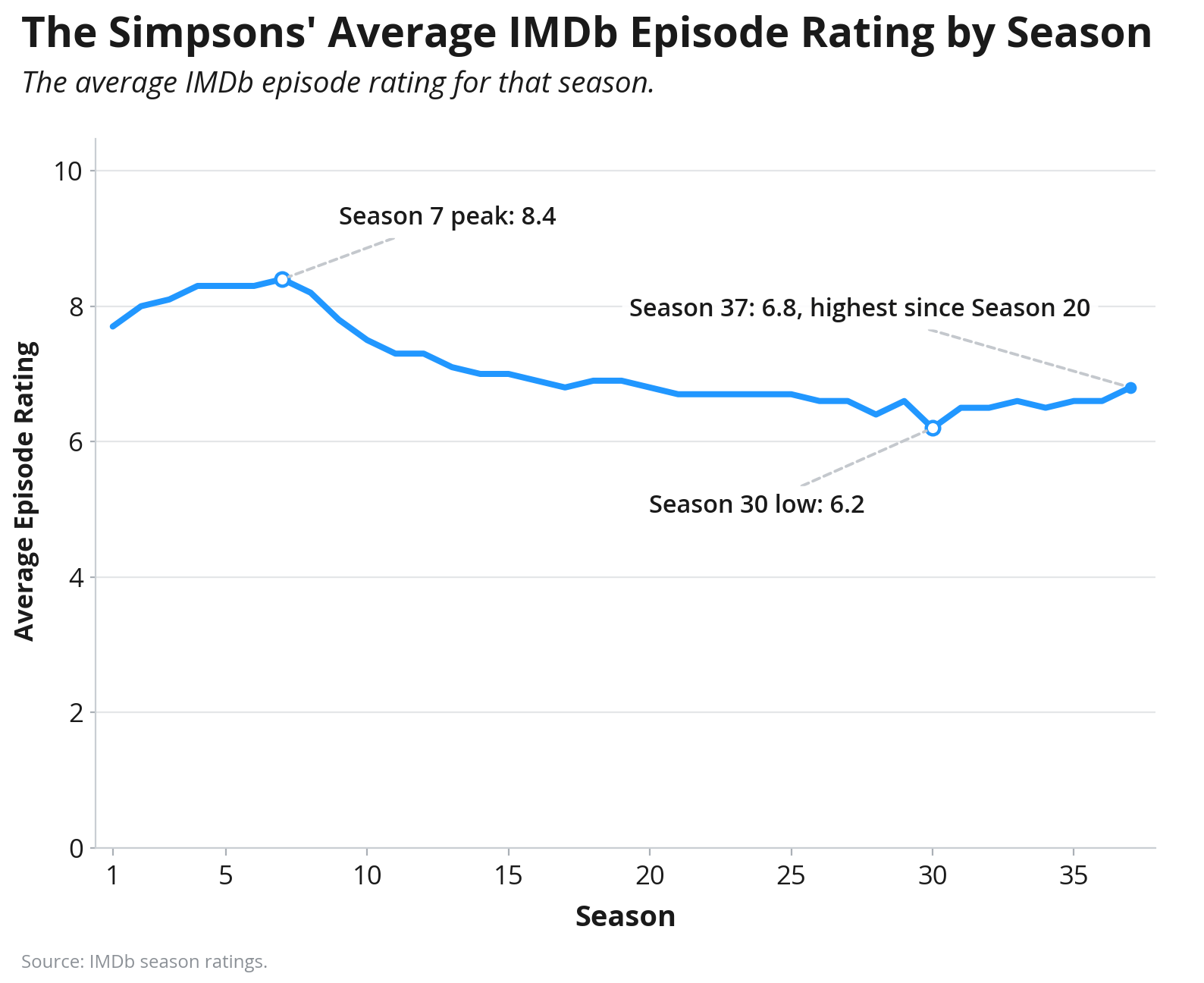
Personally, I think this show needs to end. Just because The Simpsons was once great doesn’t mean it is still great, nor should it coast on cultural nostalgia. Despite the program’s immaculate reputation, The Simpsons saw a considerable drop-off in quality after its seventh season, which was over two decades ago—with online acclaim bottoming out around season 30.
Cable viewership for the show has also reached an all-time low, but that’s pretty much the case for all cable series in general. If the show is indeed canceled after its 40th season, it won’t be because of declining cable viewership, but because the program simply never found an audience on streaming.
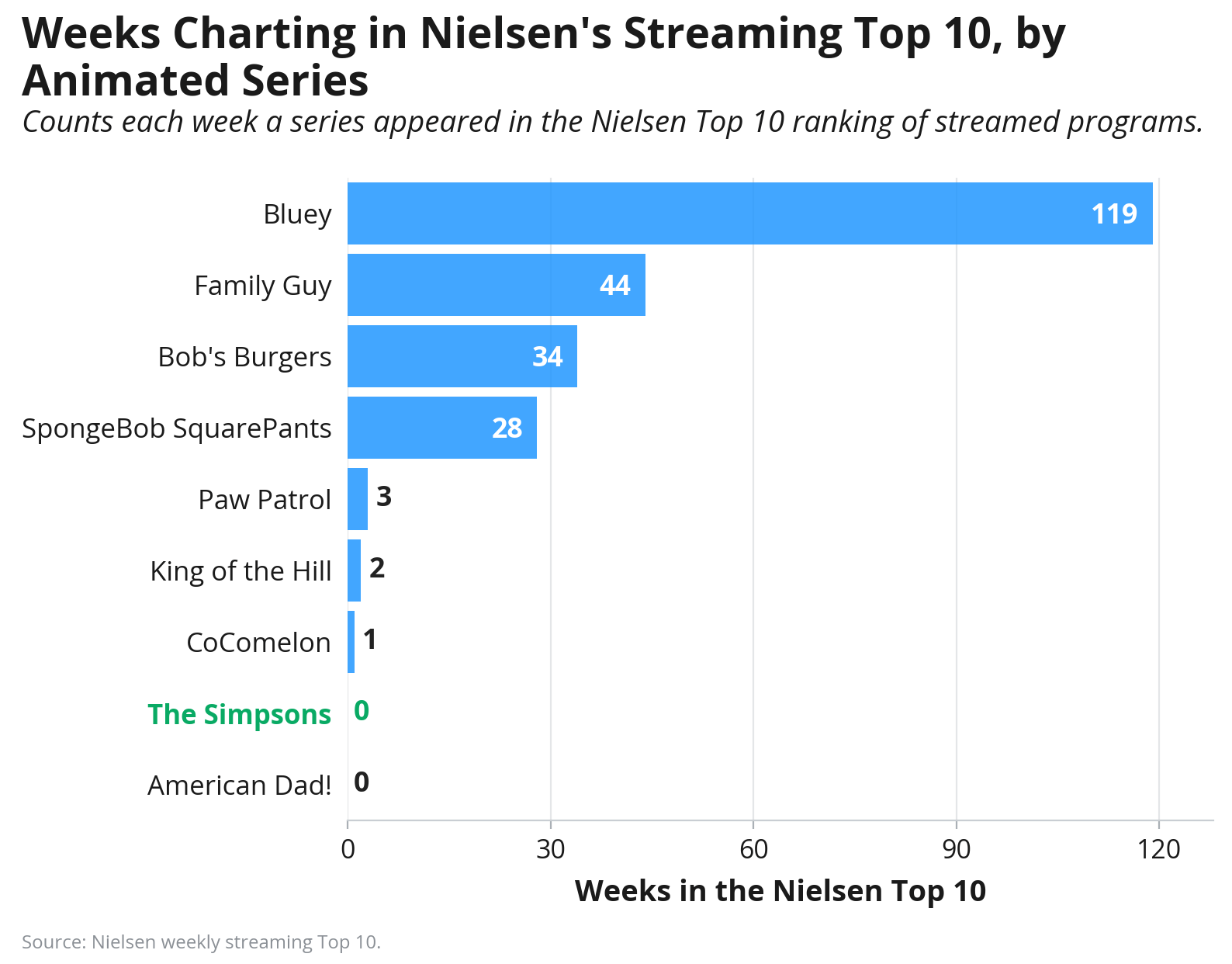
The Simpsons has all the trappings of a streaming juggernaut: it’s accessible to kids and parents alike, boasts an endless catalog of episodes, and offers a timeless cast that never ages. And yet, for some reason, the show has never made the Nielsen Top 10 chart, even as animated successors like Family Guy, Bob’s Burgers, and King of the Hill have garnered meaningful viewership on streamers like Hulu and Disney+.
Somewhere between Gen X and Gen Z, the show simply lost its audience. It’s a missed opportunity for a legendary cultural object—the type of thing that makes you say “D’oh!”
Trend 2: The Return of Myspace
If I told you that “Myspace was trending on TikTok,” would you assume such news was an AI hallucination? Well, it’s not. Myspace—the defunct media platform, once the largest social network on the planet—announced that it would relaunch as a community oriented around “user creativity” and “customization,” which means it will either a) inhabit its previous form, or b) take shape as pretty much anything else.
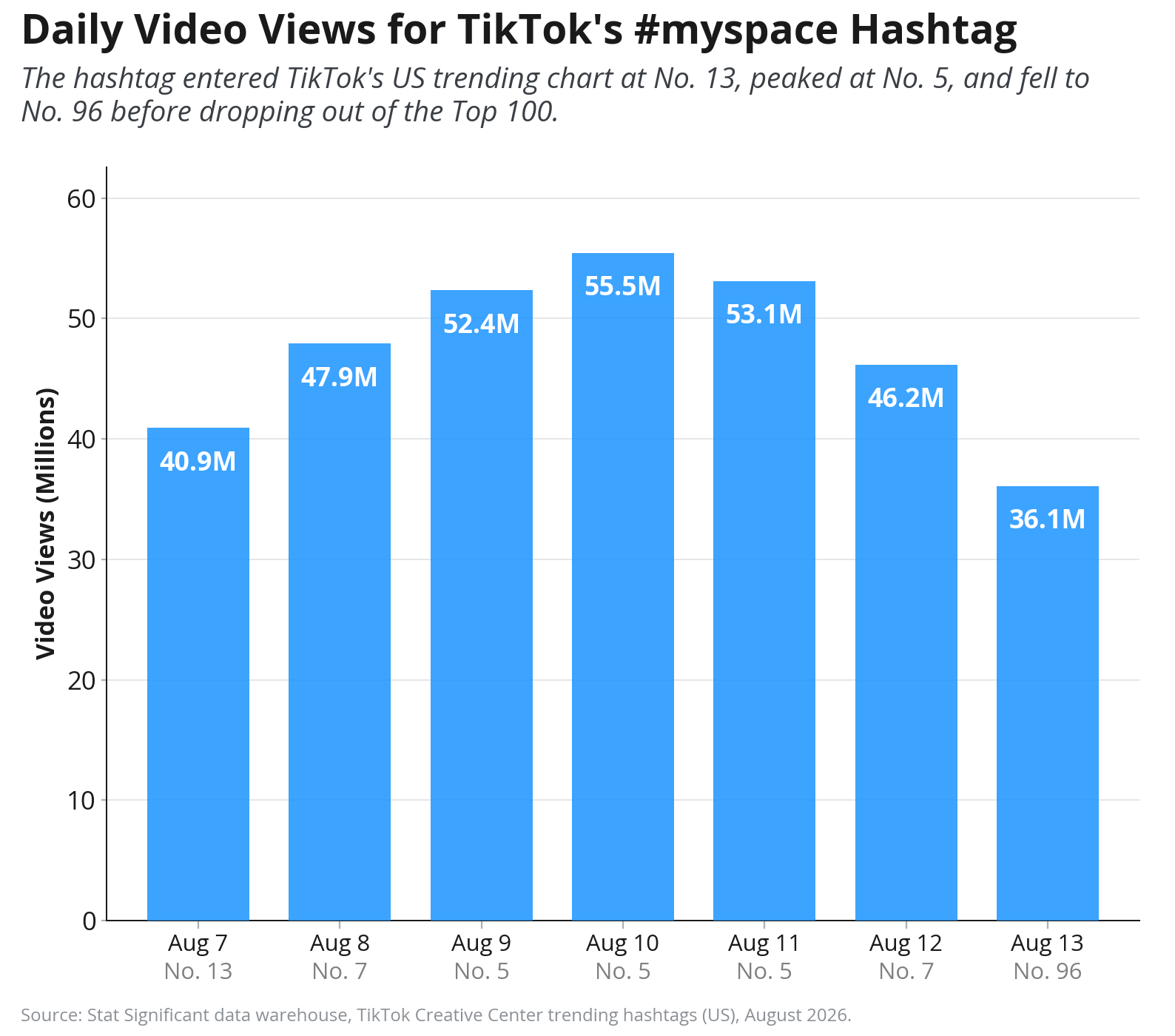
Following this extremely vague relaunch announcement, #myspace began trending on TikTok, eventually peaking as the platform’s 5th most popular hashtag.
Myspace’s revival is the latest instance of a defunct tech brand being revived as an entirely different business. Over the last five years, companies like Napster, LimeWire, and Circuit City have been resurrected by opportunistic entrepreneurs who leverage a well-known brand in get-rich-quick schemes. In most cases, these zombie companies take the form of crypto products or AI tools.
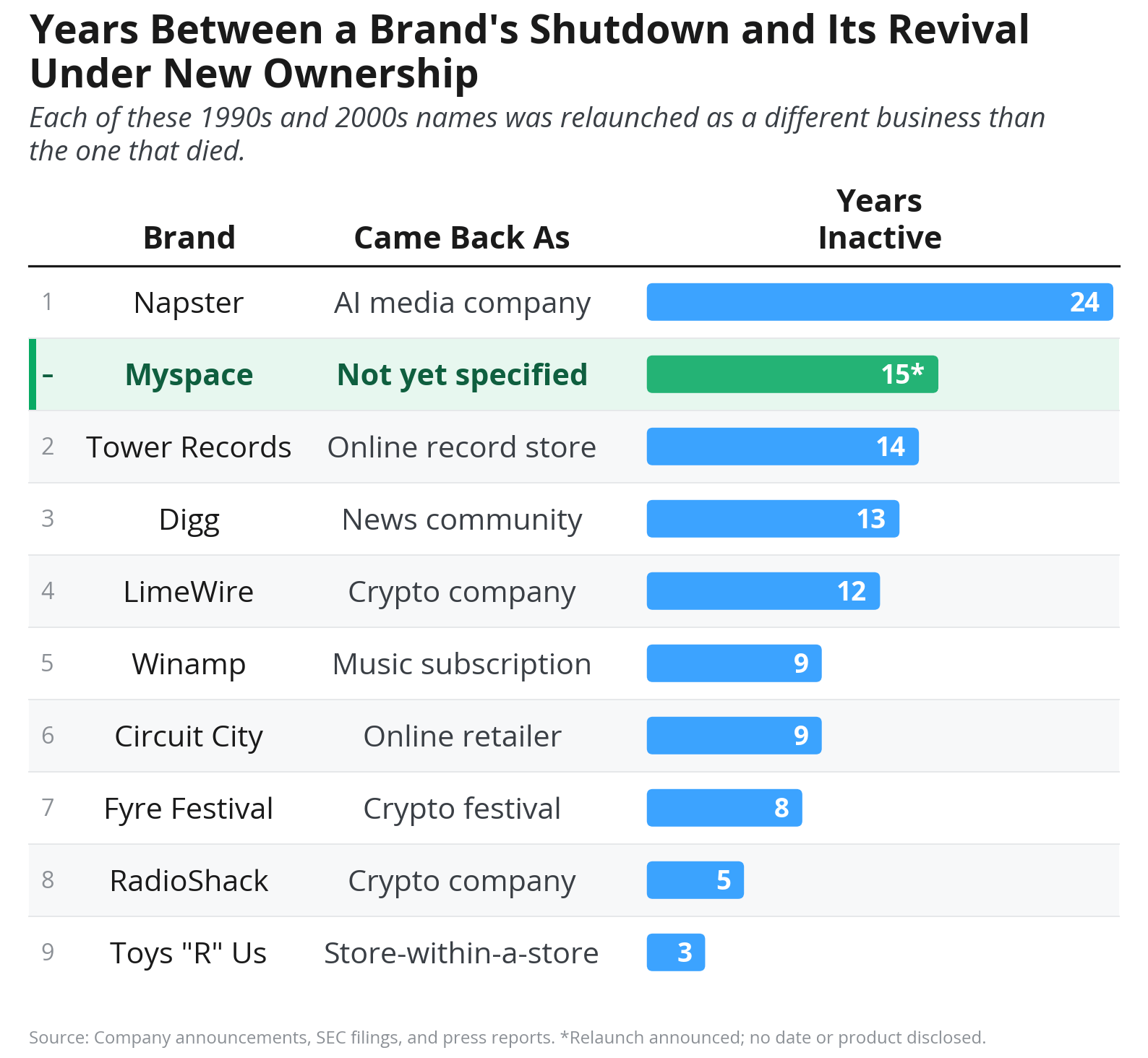
It’s a dispiriting formula that pairs a nascent technology—one usually in the midst of an investment bubble—with a recognizable brand. This Frankenstein website is then used to make a few million dollars before the company is discarded again.
In the entertainment industry, nostalgia is frequently weaponized against sentimentalists via reboots and legacy sequels. In the tech world, this grift takes the form of a crypto token or an AI community focusing on “user creativity.”
Trend 3: Chinese Box Office—The Most Underreported Story in Entertainment
Christopher Nolan’s Odyssey opened in China this past week, with an unusually large rollout across the country’s 800 IMAX screens and a premiere attended by Matt Damon and Nolan himself. China’s embrace of the film is a notable exception to Hollywood’s recent struggles there, as Beijing has sharply reduced approvals for Western films in response to geopolitical tensions between the United States and China.
China’s theatrical embargo of imported films has proven to be a massive issue for the American film industry. In fact, the enormity of this commercial shift is, in my opinion, the single most overlooked story in entertainment in the 2020s.