

Welcome to the Monday Roundup!
A weekly bonus edition featuring data-driven culture stories, curated datasets, and recommended reads. Note: Your regular Wednesday essay remains free for all readers.
This week: six original data stories exploring the most popular Halloween costumes of 2026, Australia’s attempt to curb teenage social media use, Hollywood’s shrinking theatrical windows, the good box office of bad horror movies, America’s love affair with soccer, and the decline of nonfiction books—plus notable reads and 10 public datasets. Free readers get the first two stories; paid subscribers get everything.
Trend 1: The Most Popular Halloween Costumes of 2026
Sometimes I hit a wall with this newsletter and convince myself that I’ve exhausted every angle for dissecting popular culture. How many times can I analyze box office data before I start to bore myself? Number go up; number go down—eventually, the charts start to blend together.
And just as my enthusiasm begins to wane, I’ll stumble upon a fresh perspective, and my passion for chart-making returns. So what’s captured my imagination this time, you ask? Halloween costumes. That’s what.
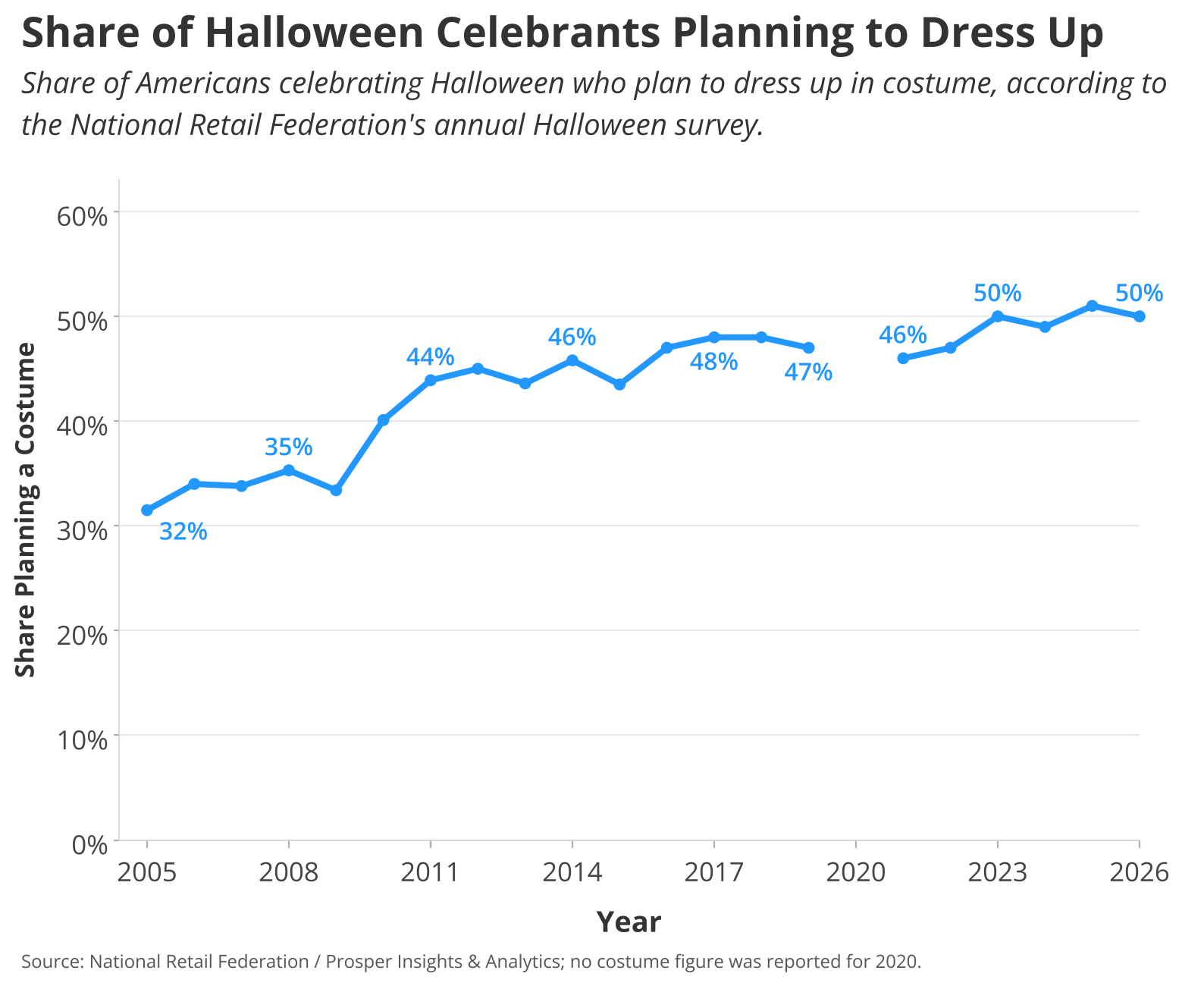
The barrier to entry for Halloween is remarkably low. You don’t have to visit a house of worship or endure a family dinner steeped in antiquated ritual. All you have to do is put on a costume. So, by this measure, are more Americans embracing the holiday? Apparently so. Recent survey data suggests costume-wearing is on the rise.
A Halloween costume can serve many purposes: an excuse to inhabit a different version of yourself, an artistic outlet for crafty moms, or a time capsule of a particular moment in popular culture. Naturally, it’s that last category that interests me most. The year’s most popular costumes offer a snapshot of the cultural zeitgeist, revealing which celebrities, characters, and cultural phenomena captured our collective attention.
So which outfits are leading the pack in 2026? According to Google searches, Spirit Halloween, and a cabal of online list-makers, this year’s most popular costumes include Dolly Parton, Toy Story characters, Freaky Nikki from Obsession, and Spider-Man. It’s an eclectic mix of box-office hits, celebrity tributes, and children’s entertainment franchises.
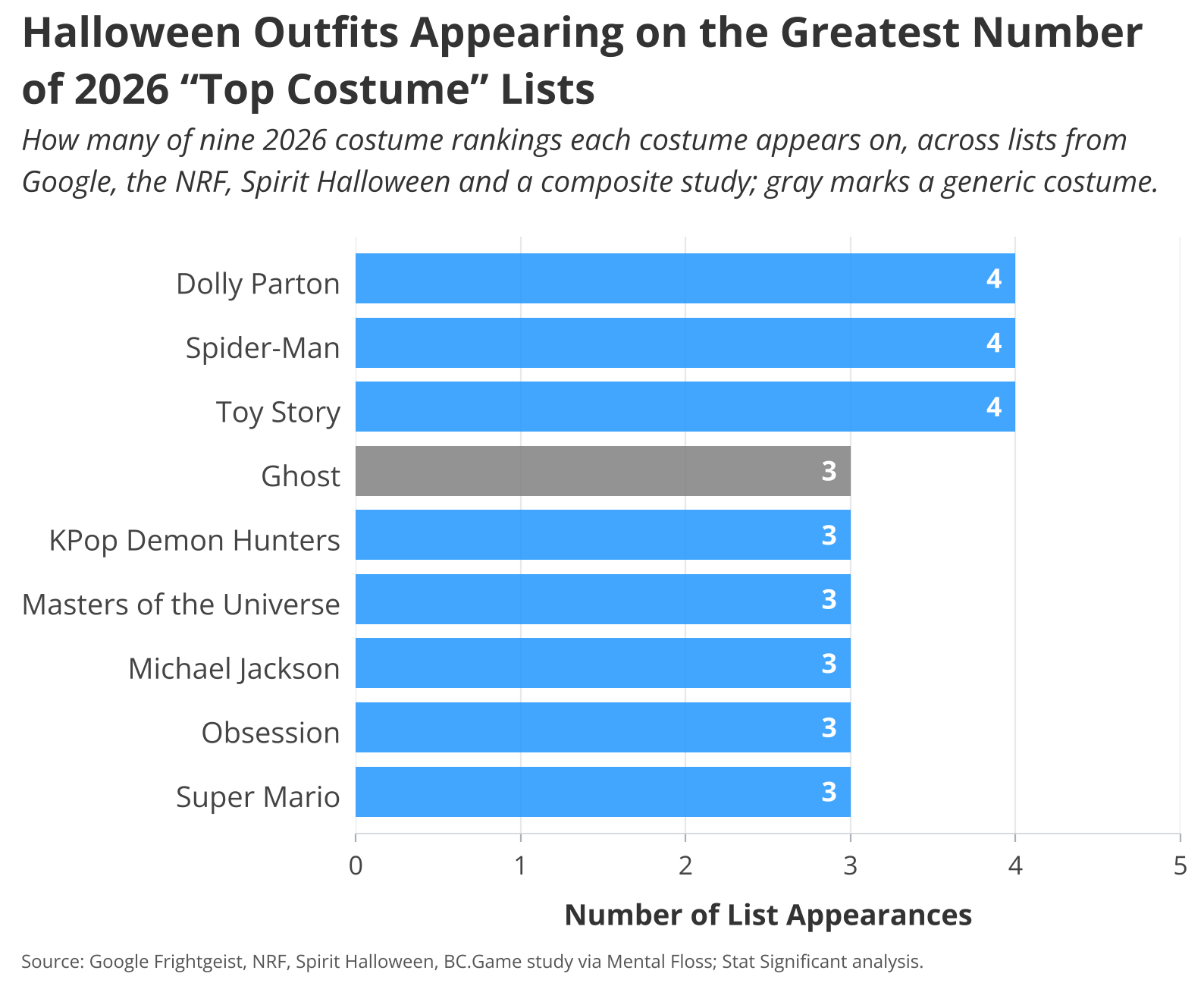
Thirty years from now, you’ll stumble upon an iPhone photo album filled with people dressed as Freaky Nikki. You’ll smile and think, “Oh yeah, that was a pretty big deal in 2026.” And that, in a nutshell, is the beauty of Halloween.
Trend 2: Can Governments Legislate Teens Off Social Media?
Australia is in the midst of a valiant effort to answer an age-old question: Can you close Pandora’s box once it’s been opened? Here, the proverbial box-closing concerns the government’s attempts to restrict teenage social media use.
In November 2024, Australian lawmakers passed a sweeping bill designed to keep children under 16 off major social media platforms. The restrictions took effect in December 2025, requiring platforms to verify users’ ages and prevent minors from creating or maintaining accounts.
And so, 10 months into this ambitious experiment, one question looms large: Has any of it actually worked?
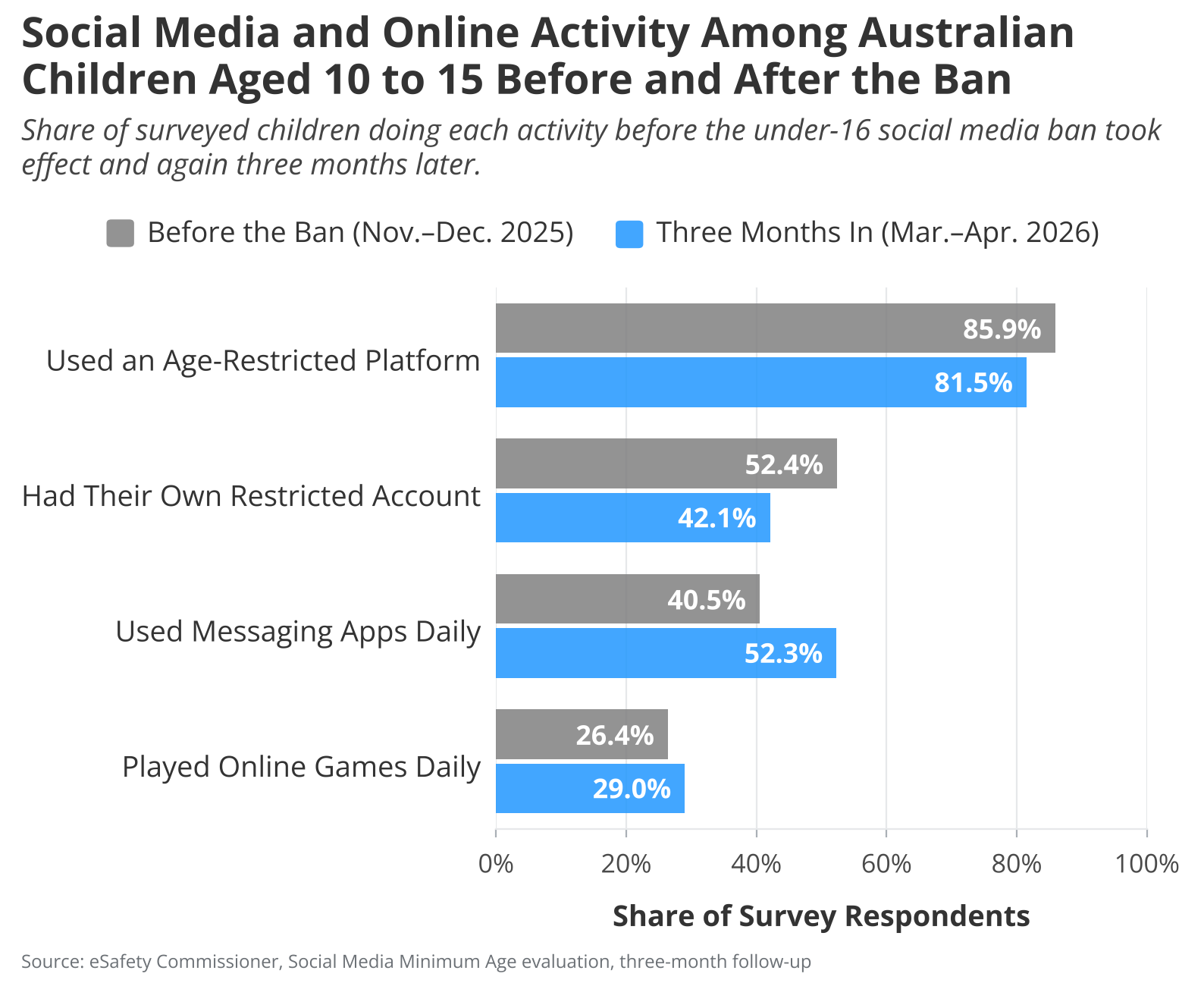
If you were expecting nominal success in the form of a few thousand teens freed from the mind-warping effects of social media, then yes, you could call it a win. But if the goal was a full-scale reinvention of the everyday teenage experience, that doesn’t seem to be the case.
According to an anonymous survey of Australian teens, most kids are still using some form of social media.
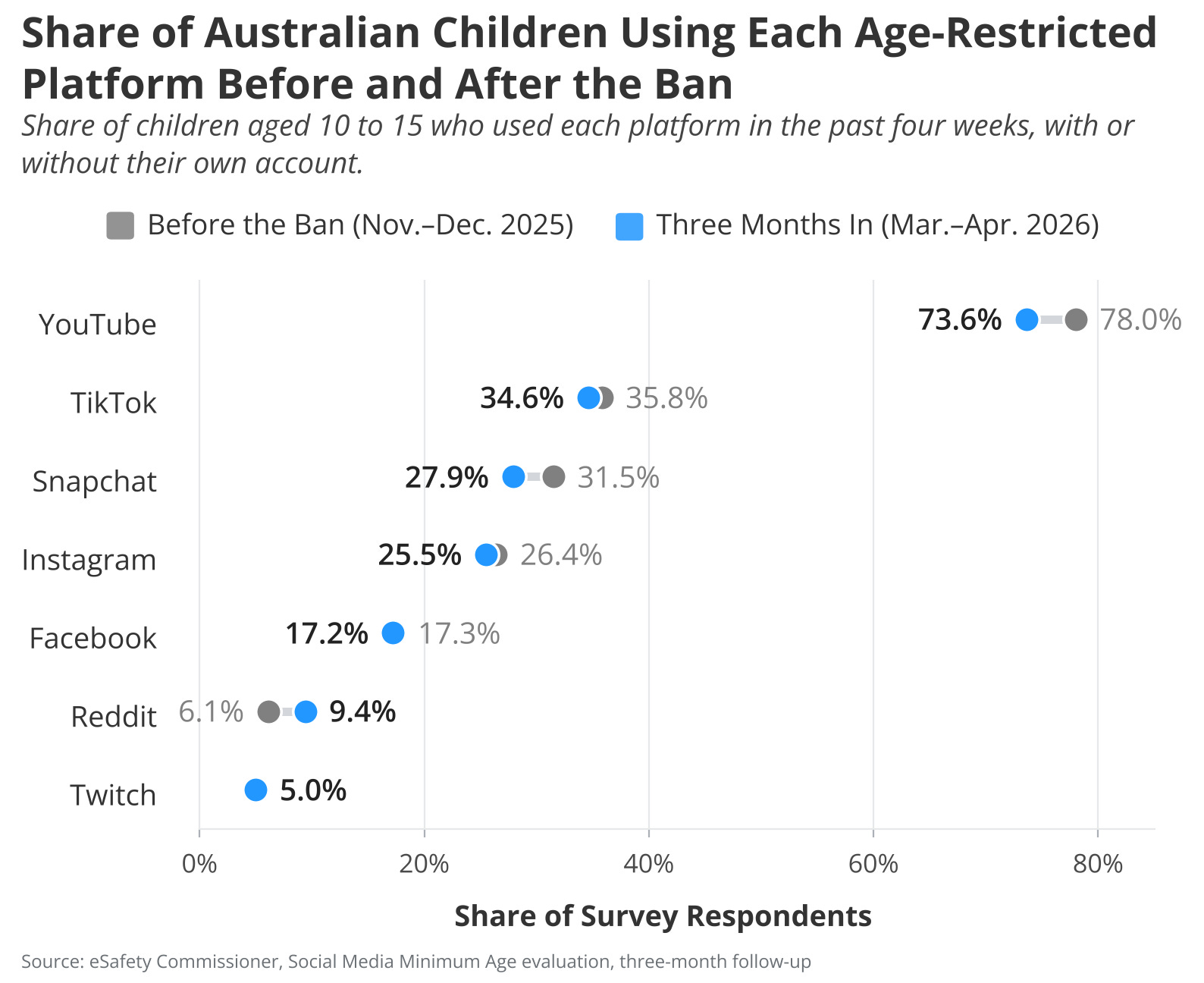
Nearly every restricted platform has seen a small dip in usage over the past six months, except Reddit, which has grown more popular after the ban.
You could write an entire essay on the loopholes and enforcement challenges this legislation creates, but the larger takeaway is simple: You can’t dismantle these pillars of teenage social life overnight. Pandora’s box remains open.
Trend 3: How Quickly Do Movies Reach Streaming?
Disney’s live-action Moana, which reportedly cost $250 million to produce, arrived on Disney+ just 103 days after its theatrical debut—a quick turnaround for a film of its scale.
Sure, the movie was essentially dead on arrival after its first trailer was widely dismissed as overpriced AI slop. Yet the film’s rapid journey to streaming also reflects a broader shift in Hollywood: theatrical windows appear to be shrinking rather than returning to their pre-pandemic norms. Even the biggest movies can land on streaming a few fortnights after their theatrical debut.
So, five years removed from pandemic lockdowns, how have theatrical windows and VOD launch dates changed?