

Welcome to the Monday Roundup!
A weekly bonus edition featuring data-driven culture stories, curated datasets, and recommended reads. Note: Your regular Wednesday essay remains free for all readers.
This week: six original data stories exploring You Can See Everything’s Oscar chances, the soaring value of Pokémon cards, the state of second-season TV renewals, AI-generated music listeners, YouTube’s popularity with older audiences, and the slow death of Google Search—plus notable reads and 10 public datasets. Free readers get the first two stories; paid subscribers get everything.
Trend 1: You Can See Everything’s Oscar Chances
Only a handful of movies in my lifetime have lived up to astronomical levels of hype: The Dark Knight, Inception, Avengers: Endgame. Far more numerous are the films that have fallen short of my unchecked expectations. You Can See Everything belongs to that rare first category—a mega-hyped movie that exceeded my wildest hopes. In short, it rocked.
And guess what? Pretty much everyone else agrees. After the film’s release, its Kalshi odds to win Best Picture surged to 35%, then eventually settled around 20%. You read that correctly: a Best Picture win, as in Nathan Fielder (creator of Dumb Starbucks) being handed an Oscar.
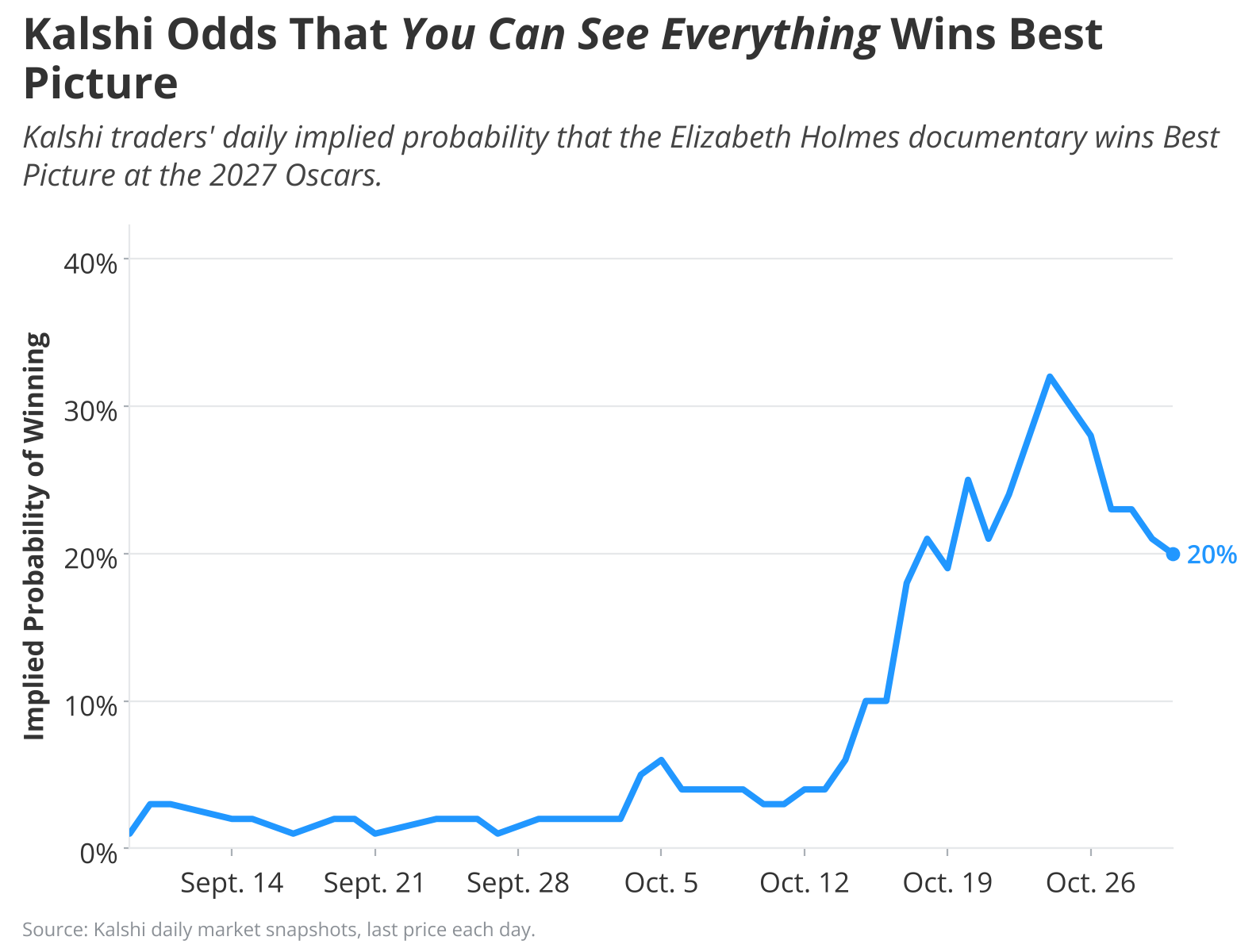
If such a feat occurred, it would mark the first time a documentary had won Best Picture or even earned a nomination
Right now, the prediction markets Kalshi and Polymarket put the likelihood of a nomination at roughly 75%, while the odds of an improbable Best Picture victory hover around 20%. In fact, Fielder’s documentary trails only The Odyssey in its likelihood of winning the award.
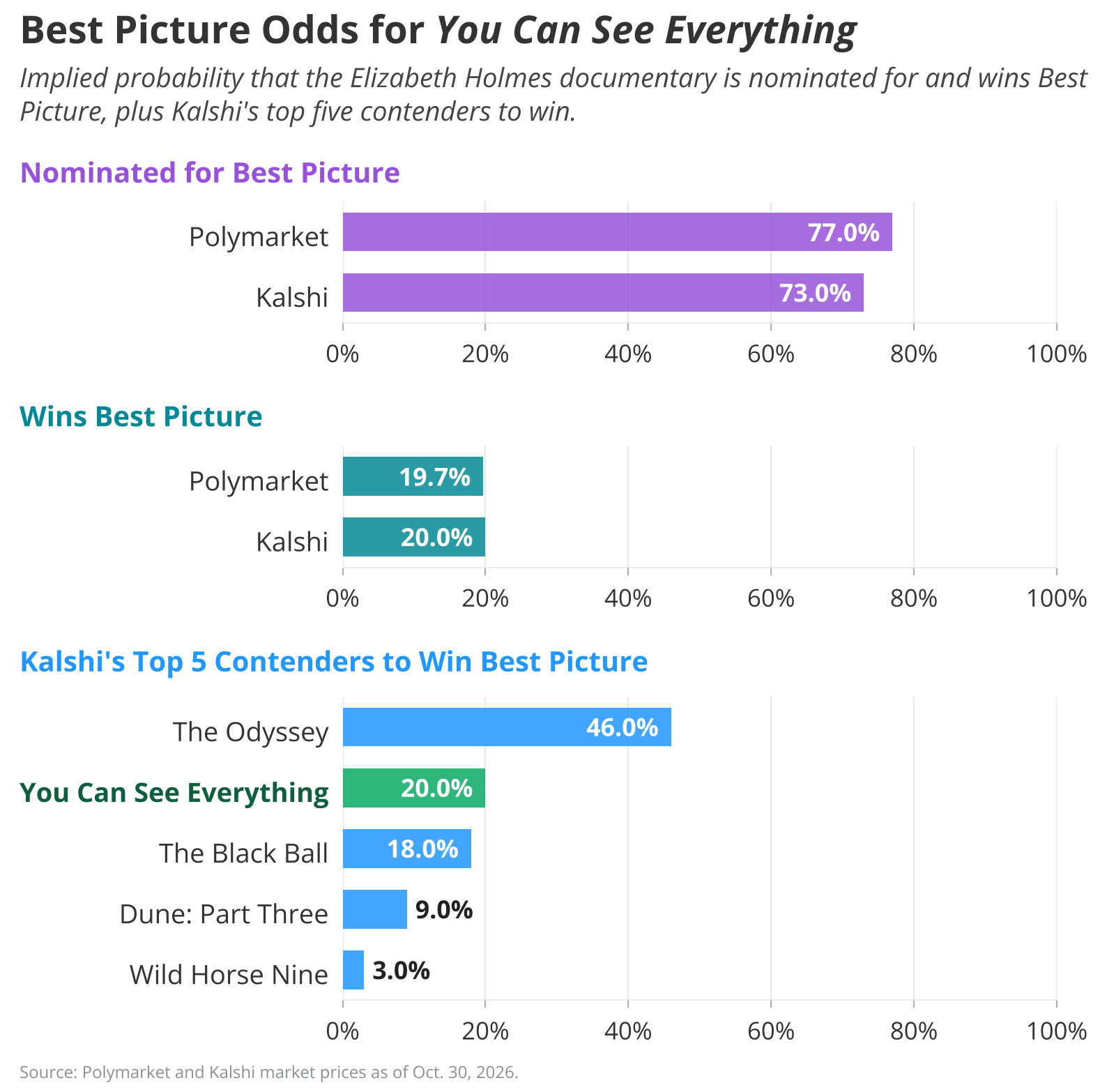
My cynical lizard brain believes the Academy will somehow find a way to snub this film—a genuine phenomenon everyone really seems to love—and instead nominate an uninventive Michael Jackson biopic. My optimistic lizard brain thinks Nathan Fielder may legitimately win an Oscar and feature his awards run in season three of The Rehearsal.
Trend 2: Pokémon’s Financial Appreciation
When I was seven years old, my grandmother walked into a toy store to find a present for her wonderful grandson. Upon noticing a mob of children crammed into one particular aisle, she approached a store clerk and asked what all the commotion was about. A few days later, she presented me with the latest craze sweeping the nation: Pokémon cards.
I studied my new gift for all of one minute before throwing a temper tantrum. What exactly was I supposed to do with these pieces of paper? They weren’t toys! How could a collectible cartoon lizard possess any discernible value?
Clearly, I didn’t have an eye for investing at the tender age of 7, because those Pokémon cards have appreciated wildly in value. In fact, if 7-year-old me had been given the choice between investing his allowance in the S&P 500 or buying the aforementioned pieces of paper, the latter would have won out by a significant margin.
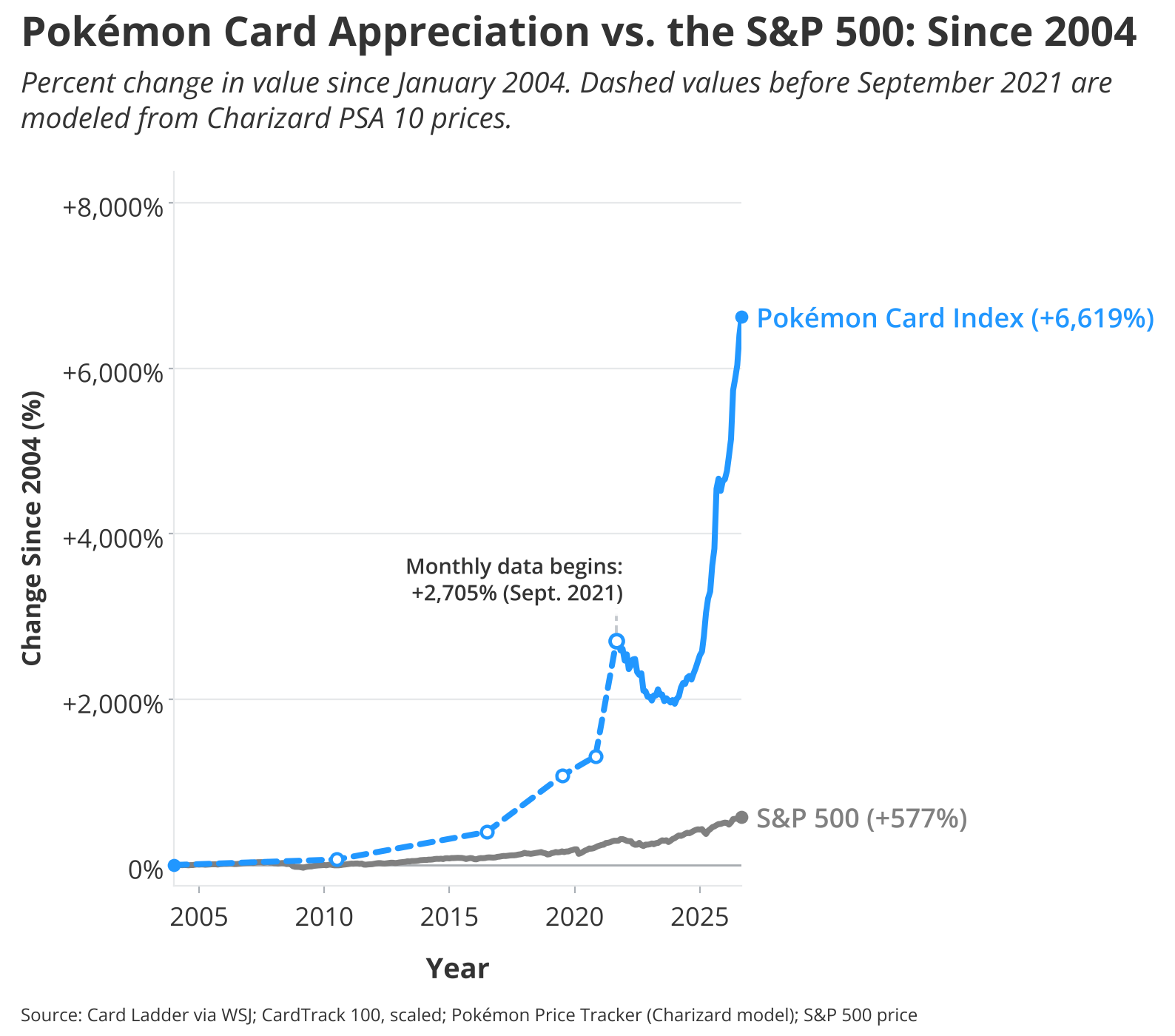
Pokémon is now in its 30th year of existence and is celebrating this feat with a proverbial victory lap, reissuing vintage cards and reminding everyone just how lucrative this memorabilia has become.
Like many collectibles, Pokémon experienced a massive surge in value during the pandemic. But unlike other pandemic-era crazes (NFTs), Pokémon cards have demonstrated remarkable staying power. Even more bizarrely, prices have continued to climb despite increasing supply, with billions of new cards entering circulation each year. Apparently, the demand is simply that high.
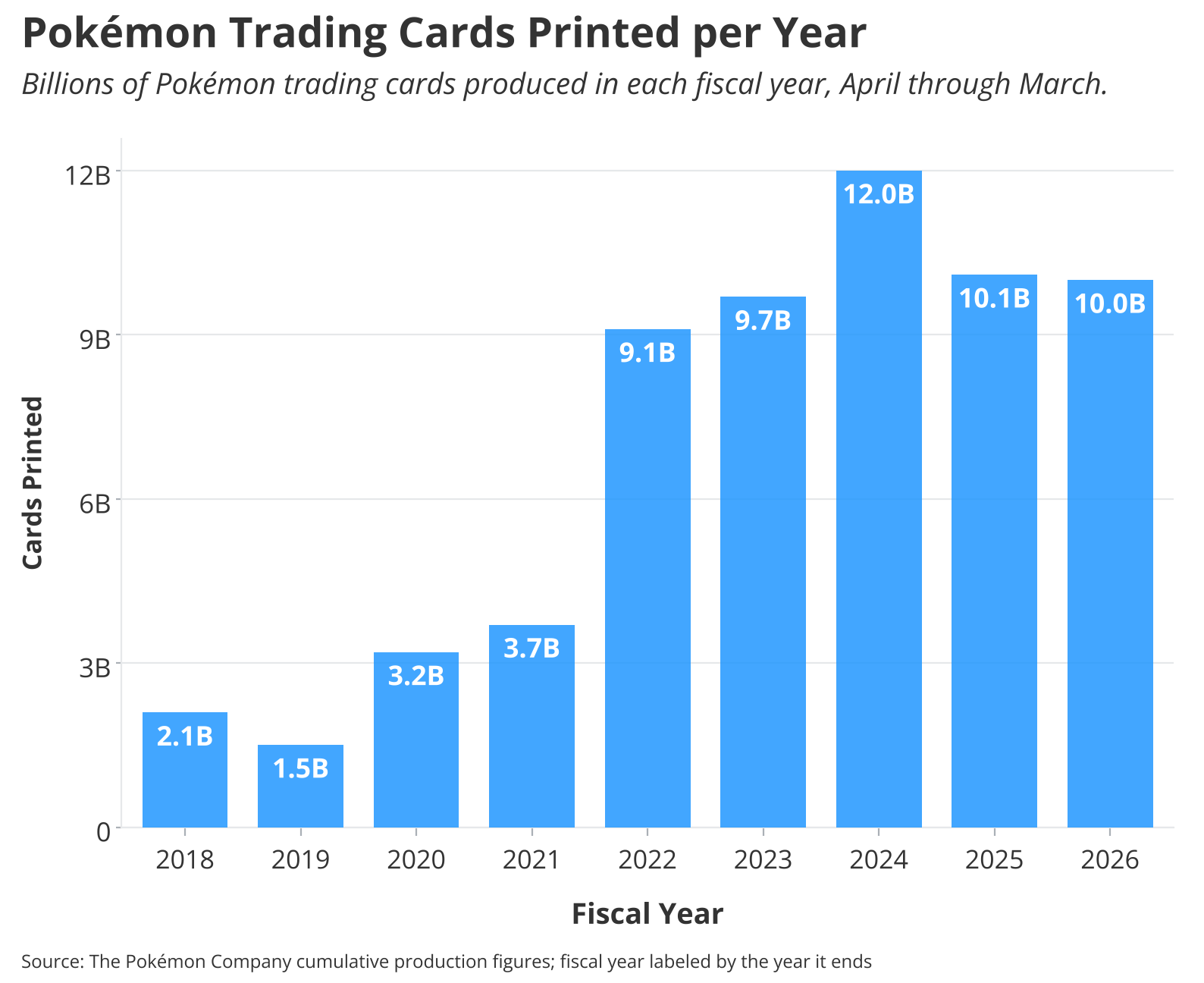
On the one hand, this trend makes me think that the kids are all right, if only because they’re obsessed with something that was popular when I was a child. This is less an endorsement of today’s youth than a validation of my own ego, reassuring me that my childhood proclivities still matter.
The flip side, however, is a broader stagnation of youth culture. How has Pokémon been popular for so long? Shouldn’t a new craze have come along by now and rendered these cards obsolete? Or will kids be obsessing over holographic Charizards until the end of time?
Trend 3: Are AI Bots Listening to Music?
A North Carolina musician was sentenced to 18 months in prison after using AI-generated songs and an army of streaming bots to collect more than $8 million in music royalties.
With sophisticated AI tools now available to degenerates worldwide, platforms like Spotify and Deezer present a lucrative opportunity for scammers, who can easily game both sides of a music streaming marketplace. Someone can generate a song in minutes using a platform like Suno, then deploy AI bots to play the track repeatedly, creating a closed loop capable of generating millions of dollars in fraudulent royalties.
So how widespread is this behavior? Is this North Carolina man an isolated case, or a sign of a much larger fraud problem to come?