

Welcome to the Monday Roundup!
A weekly bonus edition featuring data-driven culture stories, curated datasets, and recommended reads. Note: Your regular Wednesday essay remains free for all readers.
This week: six original data stories exploring the big business of Mariah Carey, this year’s TV winners and losers, The New York Times’ impressive growth, Godzilla and the globalization of cinema, DC Studios’ continued struggles, and the rise of pop culture gambling—plus notable reads and 10 public datasets. Free readers get the first two stories; paid subscribers get everything.
Trend 1: The Mariah Carey Industrial Complex
Every November 1st, Mariah Carey’s bank account comes to life as the world rediscovers a Christmas song that we’ve all heard 800 times and would happily listen to another 800,000 times before we die.
Last year alone, Carey earned an estimated $3.2 million in songwriting and music royalties from streams and downloads of “All I Want for Christmas Is You.” And that figure doesn’t include the singer’s various television specials, radio airplay, or myriad other festive revenue streams.
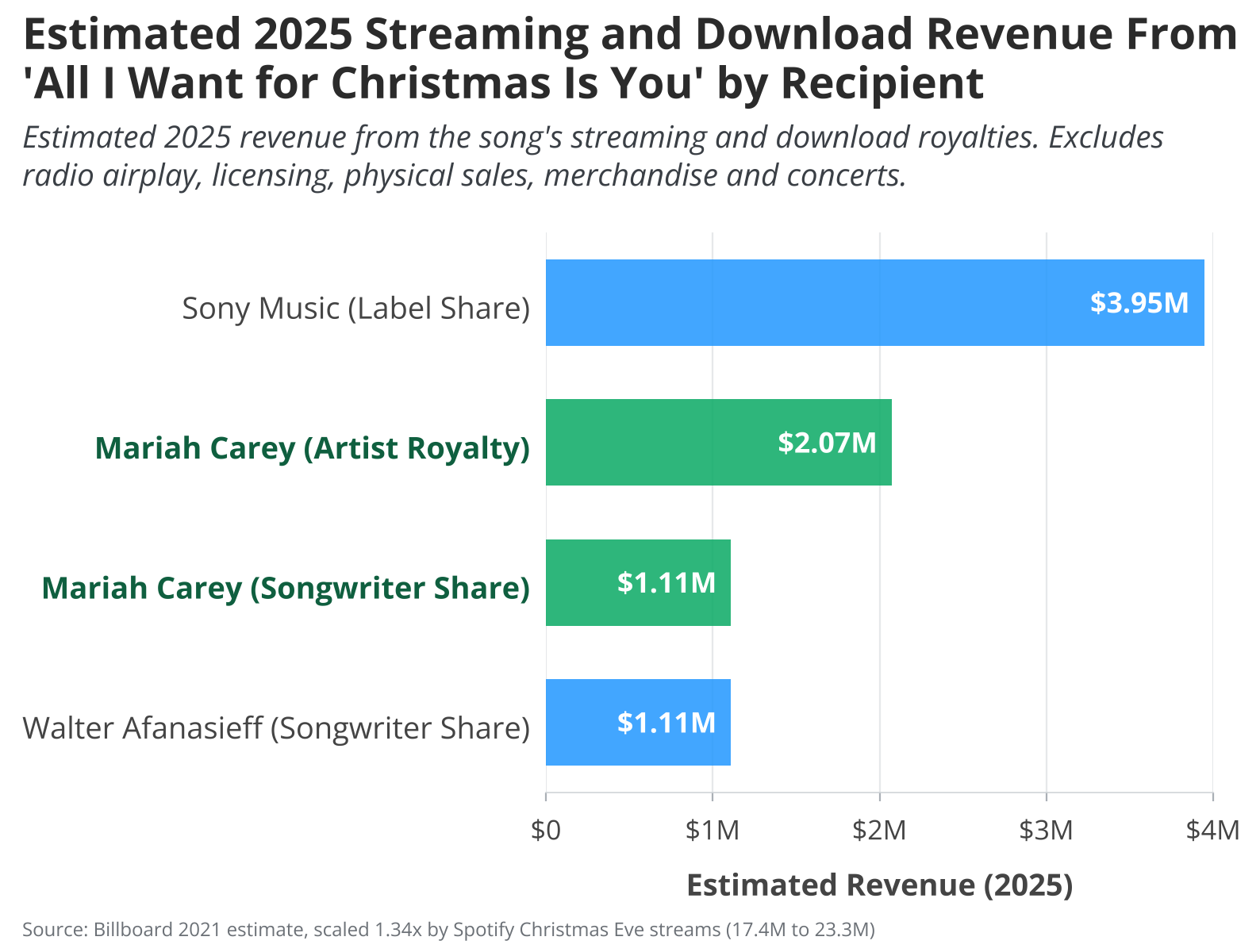
Yet, as I dug into the data on this song, I stumbled upon a fascinating trend I hadn’t expected: “All I Want for Christmas Is You” hasn’t always been this popular.
Over time, Mariah Carey’s Christmas classic has gone from beloved holiday hit to the definitive Christmas song. And much of this transformation seems to be the result of music streaming services and, more specifically, the playlist-ification of Christmas music.
If you’ve ever opened Spotify’s Holiday Hits playlist, you’ve probably noticed that “All I Want for Christmas Is You” is typically in one of the top three spots (usually number one). Meaning, if you’re anything like me, you open the playlist, press play, and inevitably end up listening to Mariah Carey.
The song’s late-blooming popularity is clearly reflected on the Billboard charts. Before 2019, “All I Want for Christmas Is You” had never reached number one on the Hot 100. Now, it reliably claims the top spot every Christmas season. Meanwhile, its Spotify streams on Christmas Eve have continued to climb, suggesting that this 30-year-old song is somehow becoming more popular with each passing holiday season.
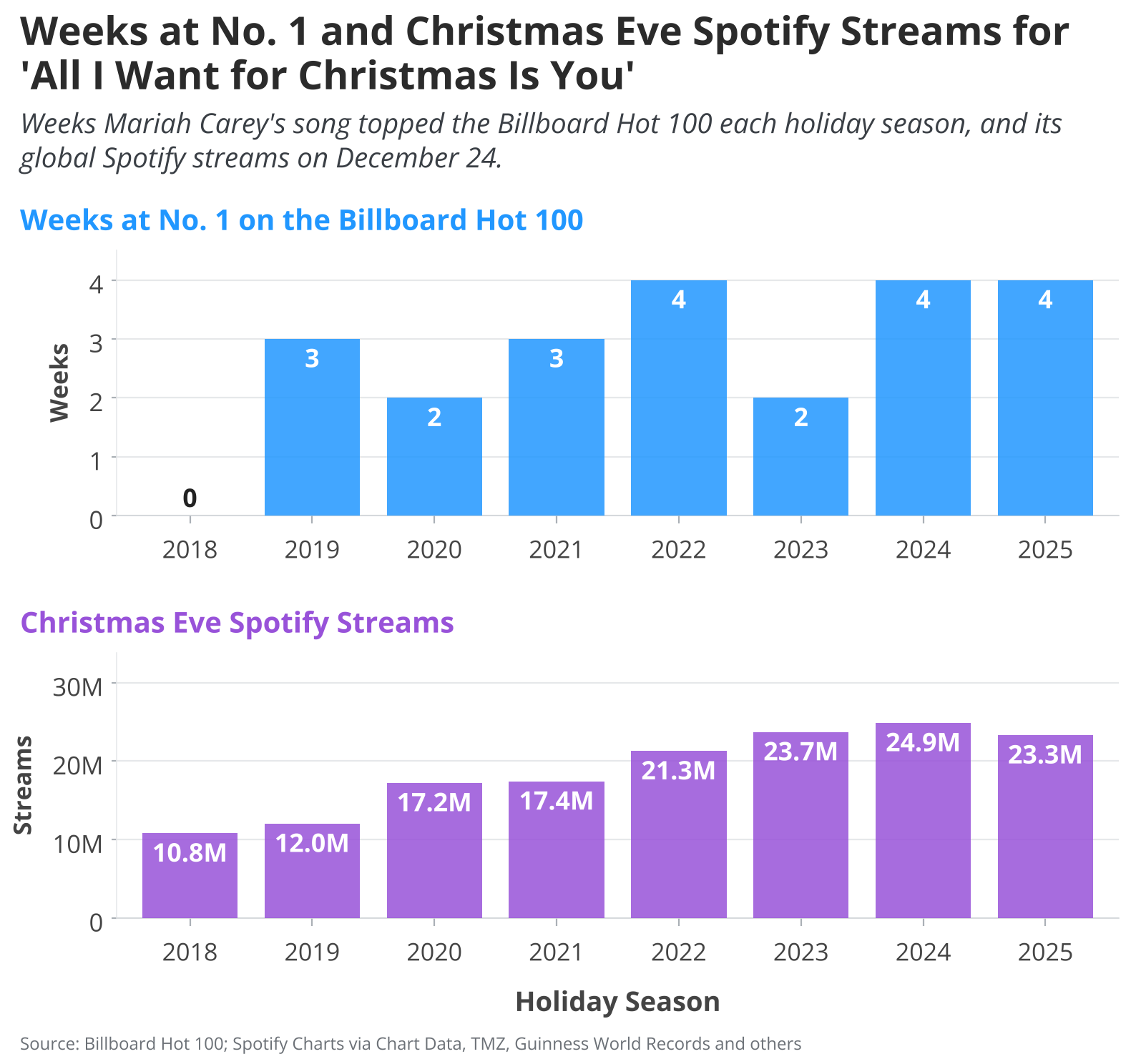
There’s a tacit trade-off underlying this trend, one I’ll call “the stagnation of Christmas culture.” If we lock our favorite holiday songs into playlists that barely change from year to year, the most popular songs will only become more popular, leaving little room for anything new to break through. On the other hand, people simply want to hear the hits, and that’s precisely what Spotify’s playlists give them.
Trend 2: 2026’s TV Winners and Losers
Nielsen released its latest streaming market share data this past week, revealing which platforms Americans turn to when they’d rather not be alone with their thoughts. But before digging into the latest viewership figures, let’s consider how television fits into American daily life—and how that relationship has changed over the past decade.
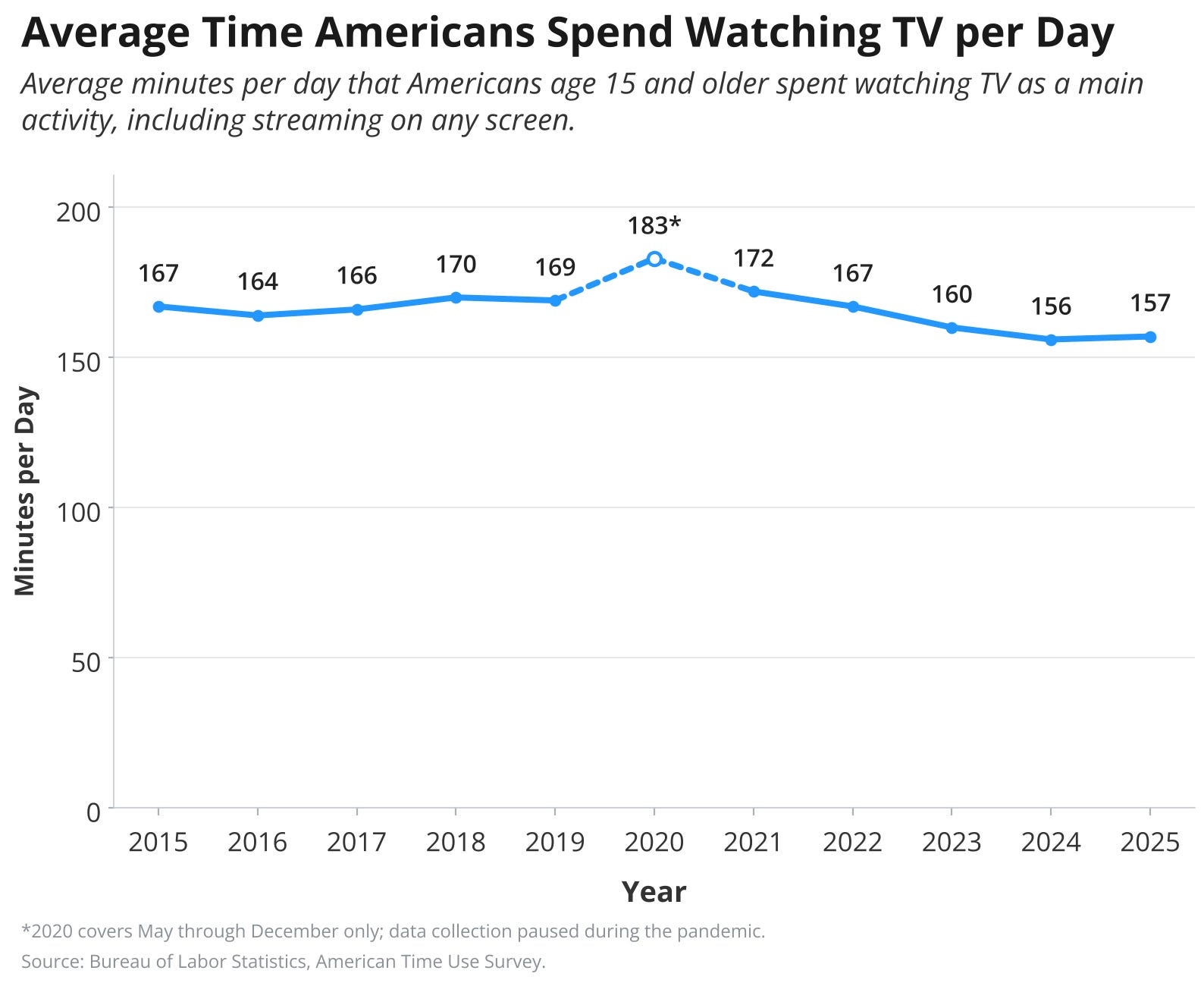
Despite an abundance of programming unleashed by the so-called streaming wars, the amount of television Americans watch daily has steadily declined since the pandemic, falling below pre-2020 levels.
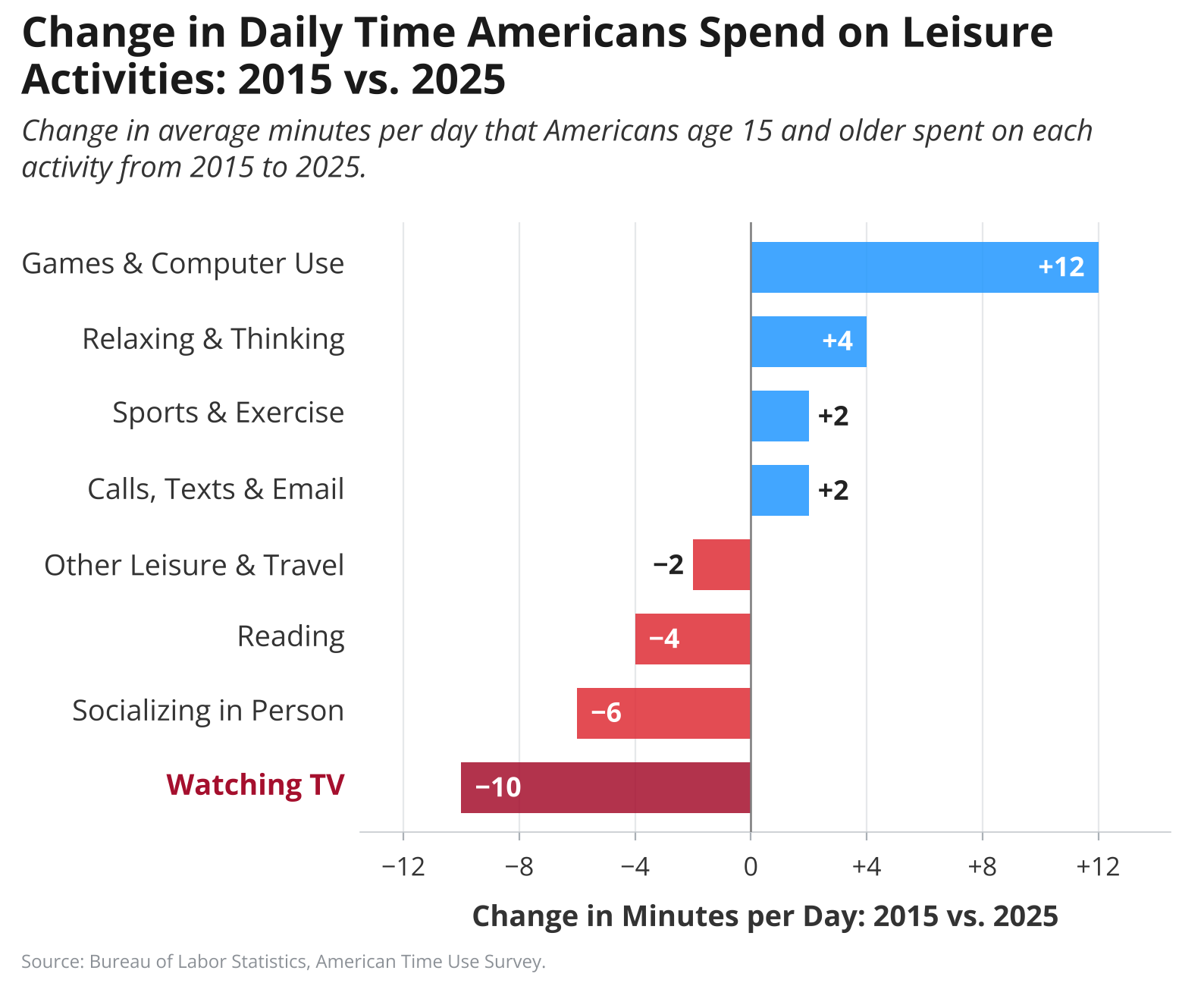
According to the annual American Time Use Survey, time once spent watching television has instead gone toward computer use, gaming, and “relaxing and thinking” (the government’s soulless terminology for being alone with one’s thoughts).
Which brings us back to streaming market share. When Americans do sit down to watch television, which platform are they turning to?
Since the beginning of 2026, virtually every major streaming service has lost market share, with Netflix taking an especially sizable hit. Meanwhile, YouTube has been gobbling up a growing share of television viewing time.
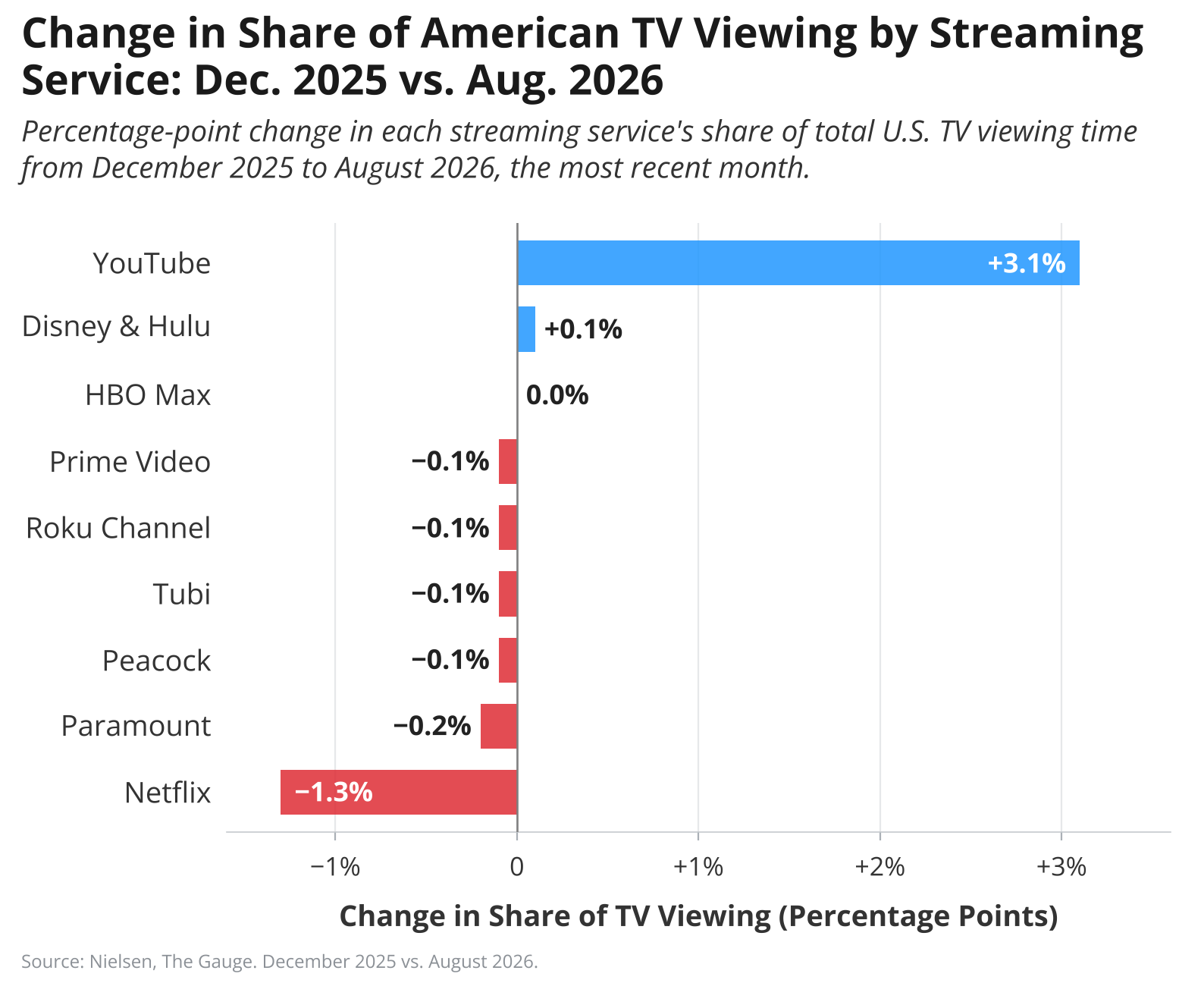
So, to recap: Americans are watching less television, and when they do tune in, they’re spending more of that time watching a social media platform they could just as easily access on their phone or computer.
Woof. Perhaps the real loser of the streaming wars is anyone who bothered to compete.
Trend 3: How The New York Times Is Thriving While the Rest of News Media Struggles
A few weeks back, I analyzed the state of journalism—or, more specifically, legacy news outlets—which, as you might have guessed, haven’t been doing all that well. The TL;DR of that story was that newsroom employment has fallen to roughly 20% of its 1990 level.
Amid the wreckage of news media, a handful of winners have emerged, including solo newsletter operators, The Wall Street Journal, and our focus for this particular trend: The New York Times.
Two weeks ago, America’s largest newspaper released its Q3 earnings report, giving us a chance to answer a question central to the future of journalism: How does a legacy news publication survive, and perhaps even thrive, in 2026?