

Welcome to the Monday Roundup!
A weekly bonus edition featuring data-driven culture stories, curated datasets, and recommended reads. Note: Your regular Wednesday essay remains free for all readers.
This week: six original data stories exploring ChatGPT’s strategic missteps, Pandora’s demise, the Christmas movie boom, Paramount-Skydance’s financial struggles, YouTube’s use as a sleep aid, and the decline of music blogs—plus notable reads and 10 public datasets. Free readers get the first two stories; paid subscribers get everything.
Trend 1: ChatGPT’s Strategic Missteps
Imagine I gave you three seconds to name the most successful AI chatbot. Most people would probably default to ChatGPT. Those people, however, would only be partially right.
A new market-share report on chatbot web traffic shows considerable gains for OpenAI’s competitors, mainly Google’s Gemini and Anthropic’s Claude. ChatGPT’s waning dominance comes amid Anthropic’s recent IPO filing, which values the company at a mind-boggling $1.2 trillion.
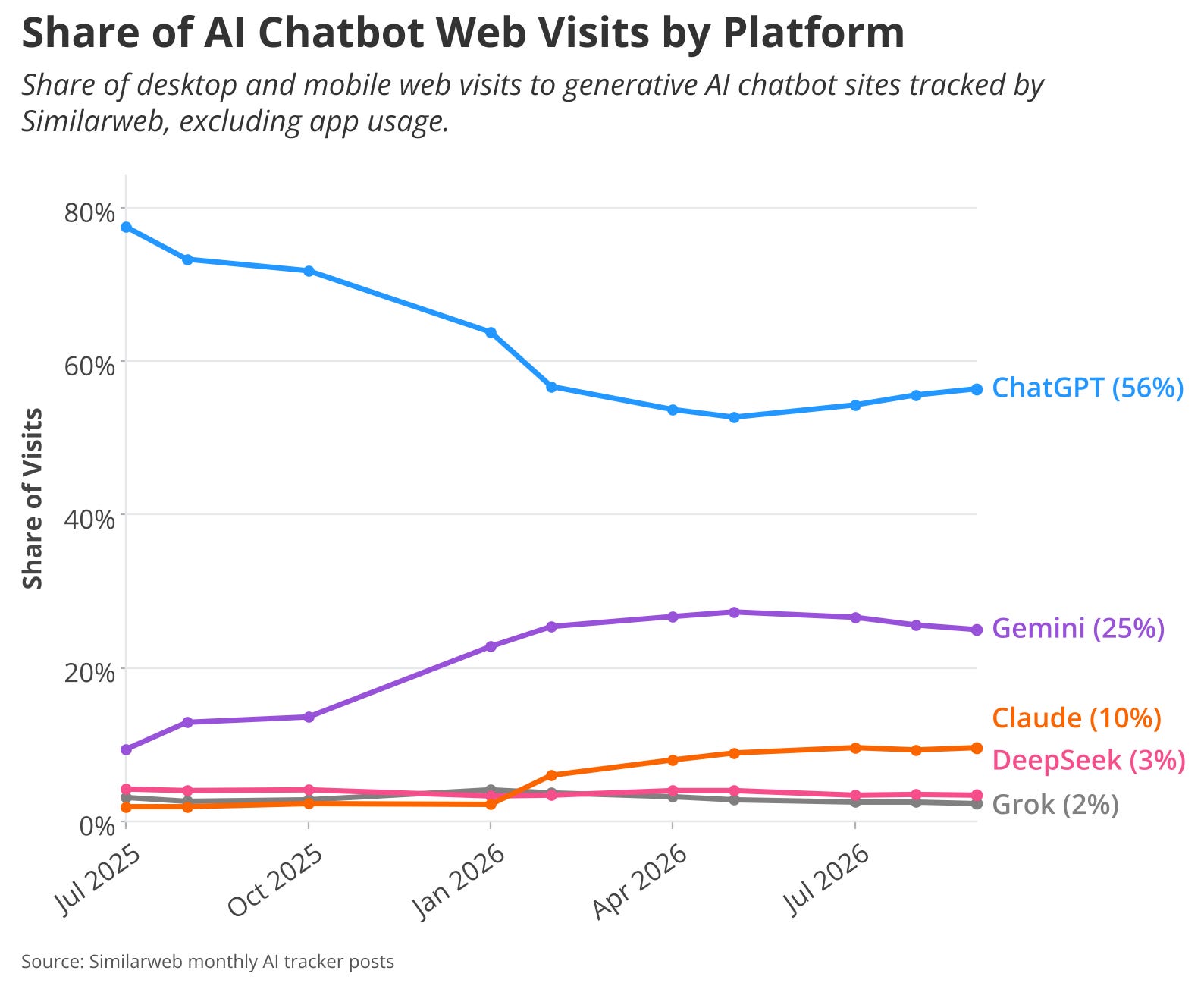
However, this market-share graphic is somewhat misleading, if only because the purpose of a business isn’t to accumulate web traffic. It’s to make money 🤯. And by this measure, the clear winner is Claude.
Anthropic’s Claude Code product has found a lucrative audience among enterprise customers willing to pay hundreds of dollars a month to save thousands in software engineering costs. This “killer app” has helped Anthropic generate nearly twice OpenAI’s annual revenue. In fact, the company posted $1 billion in operating profit in the second quarter—a rather unusual feat for a Silicon Valley startup.
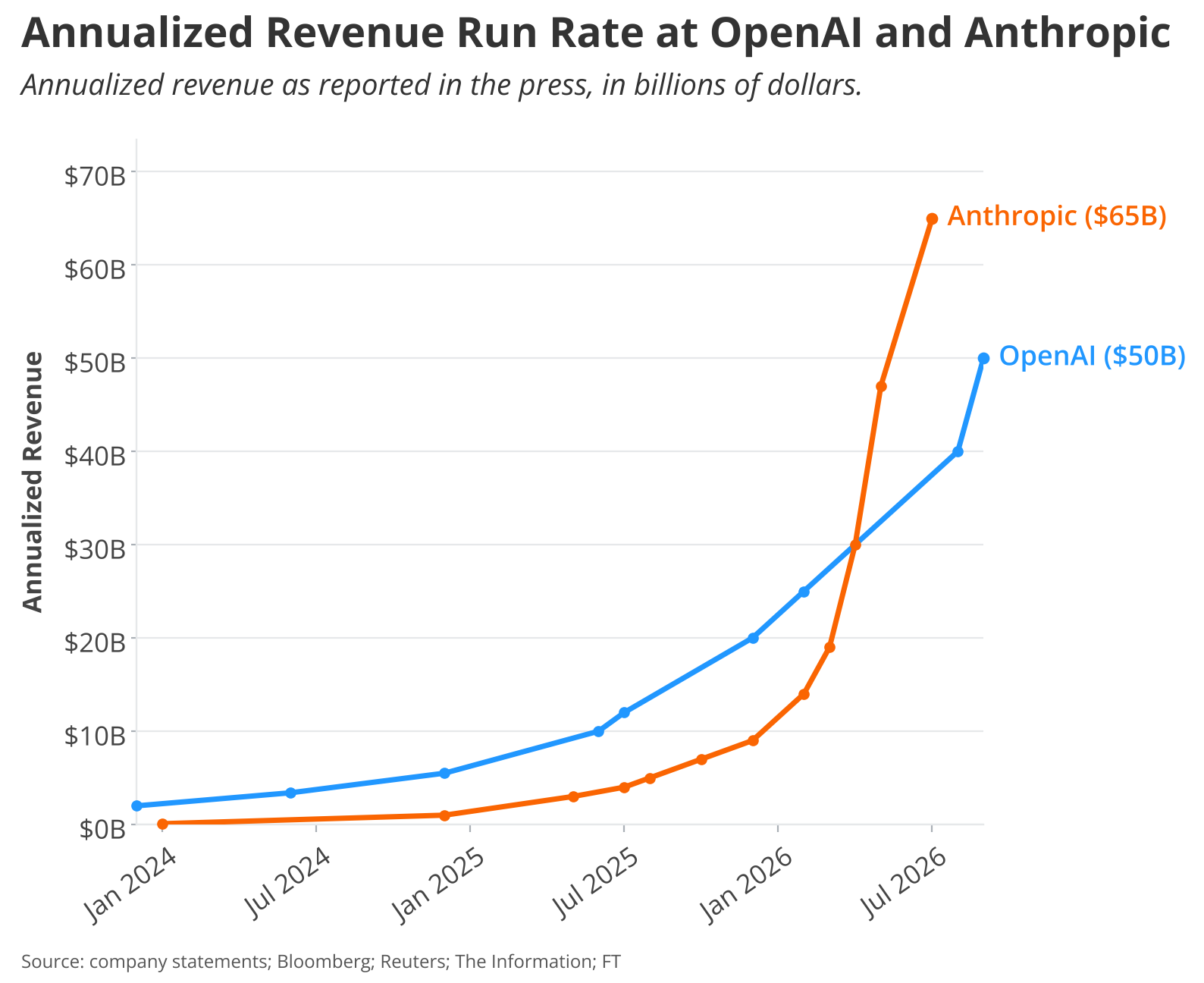
While ChatGPT has excelled at attracting AI slop spammers churning out junk articles for next to nothing, Anthropic has cornered a market of startups happy to shell out hundreds of dollars. Thirty years from now, business schools will teach this ordeal as a case study in market positioning.
Trend 2: Pandora’s Demise
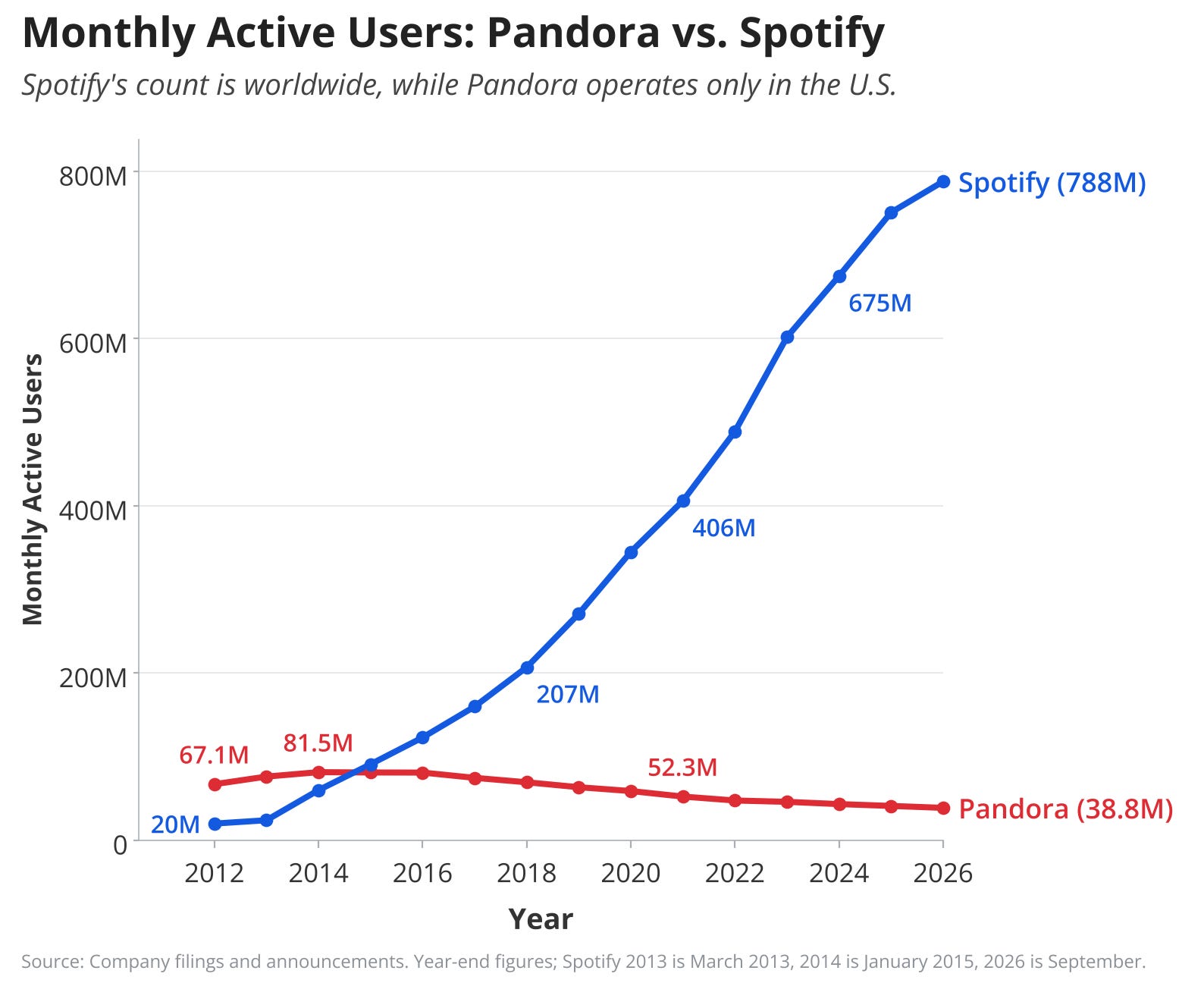
In 2012, the Oakland skyline was dominated by a large office building bearing the name of Pandora, the streaming giant that pioneered personalized radio. At the time, an entire building dedicated to this platform made sense. Pandora was an early mover in digital streaming and one of the biggest names in the music industry. Today, not so much.
Last week, the Frankenstein radio entity known as SiriusXM-Pandora reported a 6.6% decline in revenue, along with a drop in active users. Underlying this news is an unmistakable reality: radio—whether terrestrial, satellite, or digital—is not a growth industry. I could overcomplicate this case study, but the explanation is fairly simple: Spotify arrived with a superior product and quickly reached critical mass worldwide.
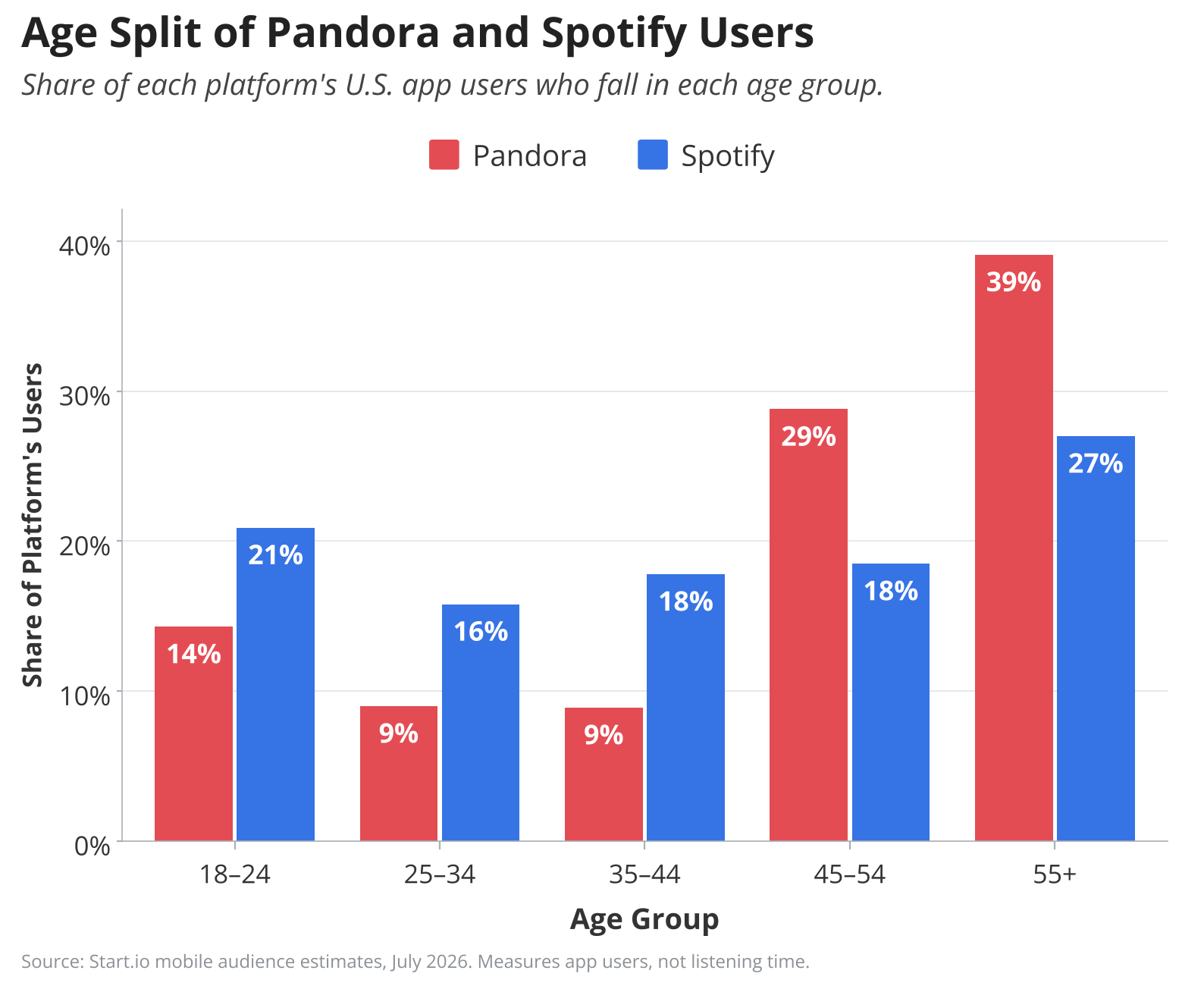
Pandora has struggled to attract younger listeners, with the majority of its user base now aged 45 and above. There’s nothing inherently wrong with older folks using your product, unless you’re a publicly traded company and this demographic skew is interpreted as a leading indicator of your eventual obsolescence (which appears to be the case for SiriusXM-Pandora).
Today, Pandora occupies just 20% of the aforementioned Oakland office building, with the remaining space leased to other companies. There will probably come a day in the not-so-distant future when the building loses its Pandora logo and becomes another soulless skyscraper.
Trend 3: Are There Too Many Christmas Movies?
What if I told you that “Christmas” has already been underway for nearly three weeks? Surely you’d be surprised. You’d probably also wonder who gets to decide when the holiday season officially begins. Is it the radio stations that start playing Christmas music? The first person on your block to hang Christmas lights? Or Hallmark, the American greeting card company turned television network that unleashes a barrage of holiday movies each winter?
For our purposes, we’re going with Hallmark, whose annual Countdown to Christmas kicked off on October 16. From mid-October onward, the greeting card company spends the better part of three months inundating the world with mediocre holiday movies.
Yet Hallmark is hardly alone in its festive programming. Other entertainment companies have begun adopting the same strategy, with Netflix emerging as perhaps its most prominent imitator. This abundance of festive programming raises an extremely important question: Are there now too many Christmas movies?